Discover the role, process and significance of the TGA in the Australian health sector
About the Therapeutic Goods Administration (TGA)
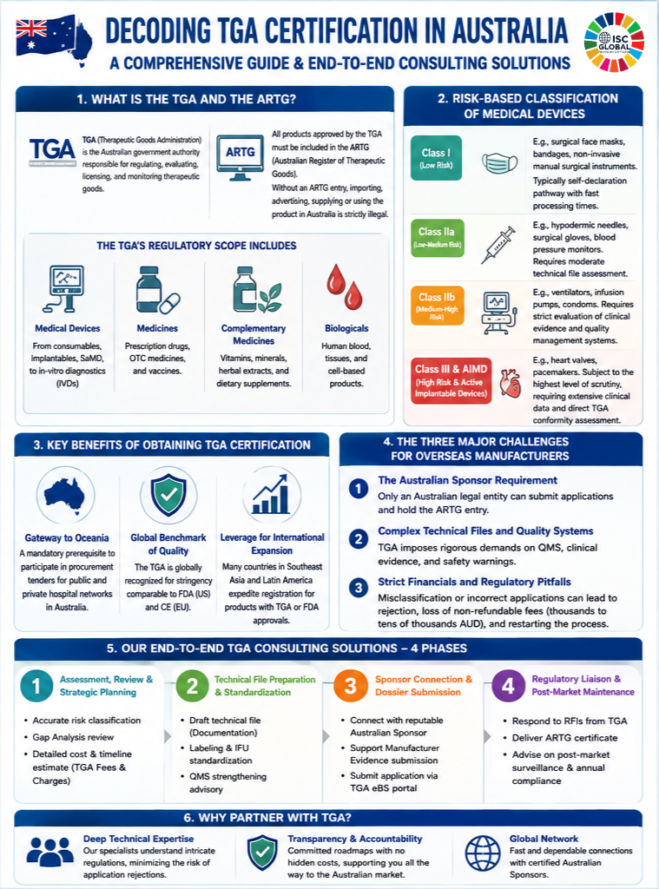
The Therapeutic Goods Administration (TGA) is Australia’s national health regulator, under the Department of Health. The TGA is responsible for administering, evaluating, licensing and monitoring all therapeutic goods used in Australia – including medicines, vaccines, medical devices, diagnostic instruments, therapeutic cosmetics, supplements and blood or blood products.
The TGA plays a central role in protecting public health by ensuring that medical products circulating in Australia meet safety, quality and efficacy standards. Any business that wants to bring a therapeutic product into the Australian market must comply with the regulations and go through a rigorous review process by the TGA.
Role and scope of management of the TGA
- Evaluation and licensing of new therapeutic goods to the Australian market.
- Post-market monitoring to ensure products continue to meet safety standards.
- Updates, adjustments, or recalls of unsafe products.
- Formulate and maintain standards and technical regulations for therapeutic goods.
- International cooperation, sharing information and experience with global health regulators.
Classification of therapeutic goods by TGA
The TGA regulates a wide range of therapeutic goods, including:
- Medicines: prescription drugs, over-the-counter drugs, complementary medicines, vaccines, blood products, herbal medicines.
- Medical Devices: machines, instruments, diagnostic test tubes, assistive devices, and implants.
- Complementary Medicines: vitamins, minerals, herbs, dietary supplements.
- Biologicals: stem cells, biological tissues, biological vaccines.
The products are classified based on the level of risk. High-risk products will be subject to stricter controls.
TGA Registration and Certification Process
1. Determine the type of product and classify the risk
Businesses need to accurately determine the type of therapeutic goods and the risk level of the product. The correct classification is an important step, deciding the next review process.
2. Prepare the registration dossier
Records include technical literature, clinical or non-clinical data, information on ingredients, manufacturing processes, quality standards, labels, instructions for use, and evidence of efficacy and safety.
3. Submit dossiers and scientific assessments
The TGA will review the records, evaluate the data, and may request additional information or conduct additional tests. For new or complex products, the review process can take 6-18 months or more depending on the case.
4. Register with ARTG (Australian Register of Therapeutic Goods)
If the product fully meets the requirements for safety, quality, and efficacy, it will be registered in the Australian Therapeutic Goods Register (ARTG). Only products named in the ARTG are allowed to be imported, manufactured, distributed and sold in Australia.
5. Supervision and post-inspection
After licensing, the TGA continues to monitor the product through a problem reporting system, periodic inspections, and product recalls if new risks are detected.
Meaning of TGA Certification
TGA certification is a mark that confirms that a therapeutic product has passed Australia’s stringent safety and efficacy standards. This offers many benefits:
- Increased credibility and reliability: TGA certified products are recognized in many other developed countries.
- Expand access to global markets: Many international markets refer to the TGA standard when considering licensing.
- Public health protection: Thanks to strict control, potential risks are detected and eliminated in a timely manner.
- Support businesses: Transparent and clear processes help businesses build effective product development strategies.
Challenges of obtaining TGA certification
- The evaluation process is long and complicated: Requires thorough dossier preparation and complete scientific data.
- High cost: Includes the cost of testing, evaluation, clinical trials, and registration fees.
- Requirements for compliance with international quality standards: Production and inspection must comply with international standards (GMP, ISO, etc.)
- Regularly update and change regulations: Businesses need to keep a close eye on changes in Australian law.
Compare TGA Certification with other international certifications
- TGA and FDA (US): Both agencies have rigorous review processes, but standards and documentation requirements may differ. Some products that have been approved by the FDA still need to be resubmitted according to TGA standards when entering Australia.
- TGA and CE Marking (Europe): CE focuses on product safety and performance when circulating in the European market; The TGA has tighter control over testing and after-sales supervision.
- Mutual recognition: Australia participates in a number of international agreements that ease the formalities with products that have been approved in a number of other developed markets.
Notes when preparing for TGA certification
- Understand the type of product and applicable regulations.
- Prepare scientific documentation, complete and transparent testing.
- Contact experienced experts or consultants about the Australian market.
- Ensure the production process and quality management meet international GMP and ISO standards.
- Regularly monitor the TGA website for the latest regulations.
TGA certification is a mandatory “passport” for therapeutic products wishing to enter the potential Australian market and is also a testament to the quality of products at the international level. Meeting the TGA requirements not only protects the health of users but also helps businesses improve their reputation, expand export markets and develop sustainably in the global health sector.



No responses yet