As global brands and retailers intensify their demands for traceability, sustainability, and supply chain transparency, industrial hemp has emerged as a premier “climate-smart” raw material. Yet to access these high-value markets, suppliers need one thing above all: independently verified proof. That is precisely what the Responsible Hemp Standard (RHS) delivers.
This comprehensive guide from ISC Global explains what RHS is, what it certifies, the step-by-step certification process, and why it matters now more than ever for Vietnam’s rapidly growing hemp and textile sector.
What Is the Responsible Hemp Standard (RHS)?
The Responsible Hemp Standard (RHS) is the world’s first chain-of-custody certification program built specifically for industrial hemp. It was developed and is managed by INCCert, a mission-driven organization that creates standards and certification programs for emerging climate-smart commodities, and was officially launched in late 2024.
What sets RHS apart from many other certifications is its scope. Rather than certifying only the finished product, RHS certifies the entire supply chain — from field to finished product — across all of hemp’s diverse uses.
The exclusive Certification Body for the program is Control Union, a respected international inspection and certification organization that conducts the independent third-party audits at the heart of RHS credibility.
In short: RHS = Chain-of-custody certification + Traceability + Good Agricultural Practices (GAP) + Good Manufacturing Practices (GMP) + Social compliance, purpose-built for industrial hemp.
Why RHS Matters Now — Especially for Vietnam
Two converging trends make RHS uniquely relevant for Vietnam in 2026:
- Vietnam is now the largest textile exporter to the United States, having surpassed China in 2025.
- Recent policy changes opened Vietnam to raw hemp fiber imports for the first time in late 2025, allowing Vietnamese mills to leverage their world-class degumming, spinning, weaving, and garment capabilities to build a “farm-to-fashion” hemp value chain.
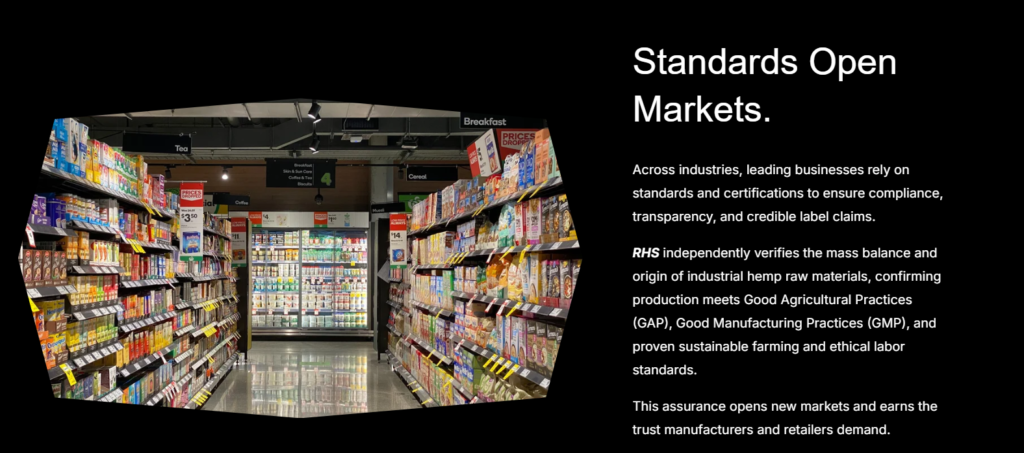
For American and European brands sourcing from Vietnam, supply chain transparency is non-negotiable. RHS gives Vietnamese farmers, processors, mills, manufacturers, and brands a credible, third-party-verified way to prove their hemp is responsibly sourced — turning sustainability claims into market access.
What Does RHS Certify?
RHS independently verifies five core pillars across the hemp supply chain:
- Good Agricultural Practices (GAP): soil management, water conservation, integrated pest management, optimal harvest timing (including THC compliance), and proper post-harvest handling.
- Good Manufacturing Practices (GMP): clean facility standards, equipment maintenance and calibration, quality control, and prevention of contamination from non-certified materials.
- Environmental Impact: sustainable production methods and waste management.
- Social Compliance: working conditions aligned with ILO core conventions, no child labor, fair living wages, and freedom of association.
- Supply Chain Traceability: complete chain-of-custody documentation, mass balance verification, and batch tracking.
Certified hemp can be traced through an immutable SaaS platform, and each shipment can be backed by a Transaction Certificate verifying the mass balance and origin of the raw material.
Which Industries Does RHS Cover?
One of RHS’s greatest strengths is its breadth. The program applies to virtually all uses of industrial hemp:
| Industry | Example Products |
|---|---|
| Textiles & Fashion | Yarn, fabric, apparel, home goods |
| Construction Materials | Insulation, hemp-lime concrete (hempcrete), bio-composites |
| Food & Feed | Hemp seed, protein powder, livestock feed |
| Cosmetics & Personal Care | Skincare, haircare, wellness products |
| Industrial Applications | Bioplastics, paper, packaging |
This versatility means RHS can serve farmers, processors, manufacturers, brands, and retailers under a single, harmonized framework.
The Business Case for RHS Certification
In today’s market, sustainability claims without verification can damage brand credibility. RHS provides exactly the independent validation that sourcing executives, investors, and conscious consumers demand. Key benefits include:
- Risk Mitigation: verify every supplier claim with chain-of-custody documentation.
- Market Access: meet retailer sustainability requirements and ESG reporting standards.
- Premium Positioning: differentiate products in competitive markets and command premium value.
- Consumer Trust: make credible, independently verified sustainability claims.
- Global Network Access: RHS connects your supply chain to INCCert and Control Union’s global network, opening doors to major CPGs and high-value buyers.
- First-Mover Advantage: early adopters stand out as leaders in sustainability and social responsibility.
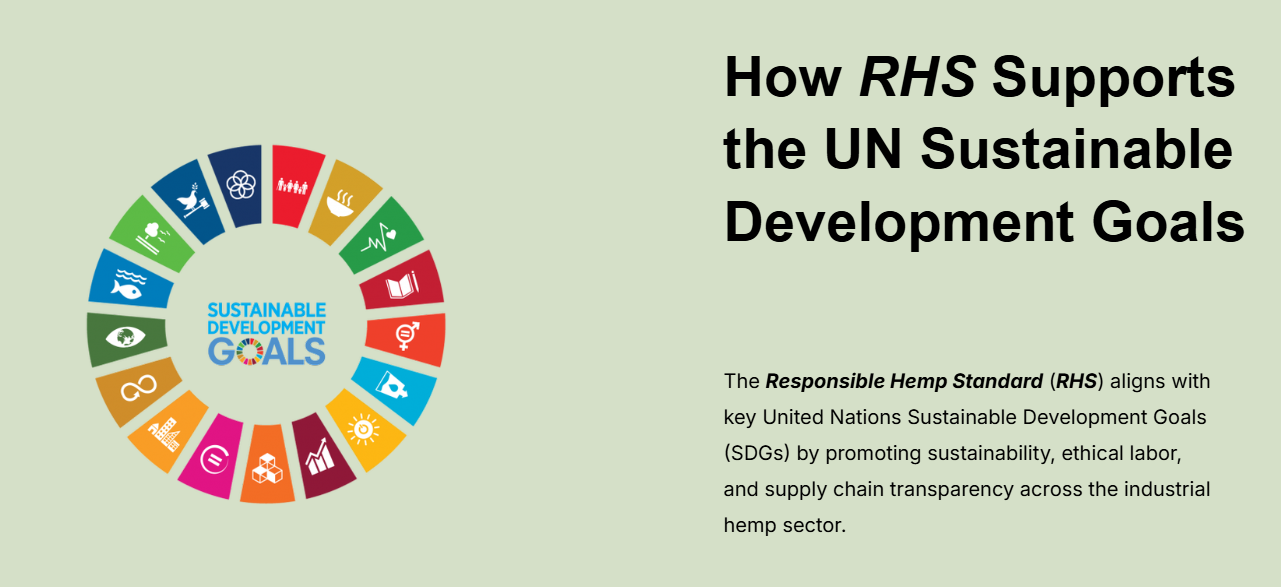
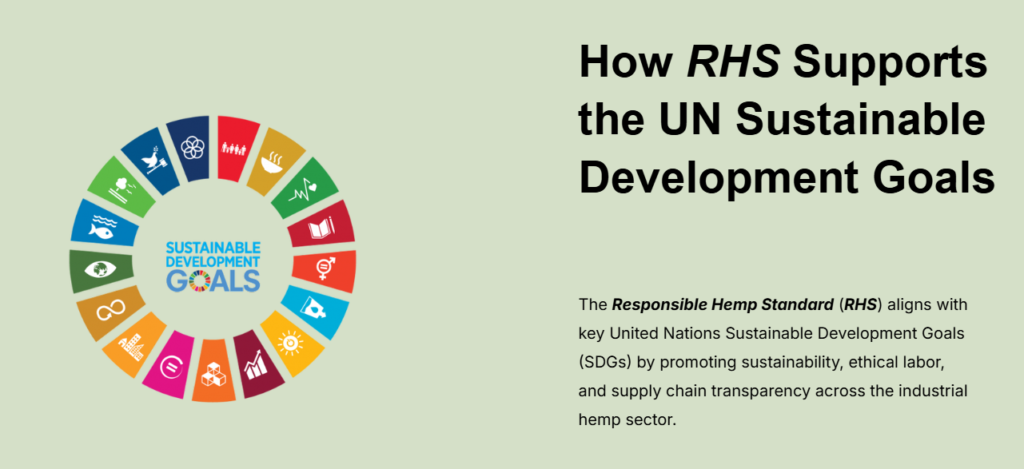
RHS also aligns with the UN Sustainable Development Goals (SDGs), supporting credible communication around climate action, ethical labor, and supply chain transparency.
The RHS Certification Process: 4 Phases, 8 Steps
Phase 1 — Application & Initial Assessment
- Step 1: Submit application to the Certification Body, provide company/product information and preliminary supply chain documentation, and pay the application fee.
- Step 2: Eligibility review, initial supply chain assessment, scope definition, and a quote for certification costs.
You’ll need: company registration documents, current supplier list, product specifications and intended uses, and existing quality management documentation.
Phase 2 — Documentation Review
- Step 3: Supply chain mapping, mass balance calculations, chain-of-custody record establishment, and internal QMS review.
- Step 4: Standards compliance check, gap analysis, corrective action planning, and pre-audit preparation.
Key documents: supplier certificates, production and batch records, quality control procedures, environmental management documentation, and social compliance records.
Phase 3 — On-Site Audit
- Step 5: Independent Control Union auditors inspect all supply chain facilities, verify production processes, review records, and interview staff.
- Step 6: Verification of GAP, GMP, environmental management, social compliance, and chain-of-custody validation.
Phase 4 — Certification Decision
- Step 7: Audit report review, non-conformance resolution, corrective action implementation, and final compliance verification.
- Step 8: Certificate issuance, scope and validity definition, logo usage guidelines, and marketing support materials.
RHS certificates are valid for one year, with annual surveillance audits and full recertification required to maintain certified status.
How ISC Global Helps You Get RHS Certified
Building traceability systems, GAP/GMP documentation, and preparing for a third-party audit can be daunting. ISC Global, together with its affiliated entities Duc Luong Services and STC VN Co., Ltd. (Staunchly Vietnam), offers end-to-end support:
- Awareness and in-depth training on RHS, GAP, GMP, and chain-of-custody principles.
- Gap analysis against RHS requirements.
- Bilingual documentation development (procedures, forms, manuals).
- Traceability and mass balance system setup.
- Internal auditor training and pre-audit preparation.
- Full support throughout the Control Union audit and annual maintenance.
Frequently Asked Questions (FAQ)
1. How is RHS different from certifications like GRS or OEKO-TEX? RHS is a chain-of-custody certification purpose-built for hemp, covering everything from cultivation (GAP) to manufacturing (GMP) across multiple industries. GRS focuses on recycled content, while OEKO-TEX focuses on chemical safety of finished textiles. RHS can complement them depending on your target market.
2. Who should pursue RHS certification? Farmers, processors, spinning and weaving mills, food, construction, and cosmetics manufacturers, brands, and retailers working with industrial hemp.
3. How long is an RHS certificate valid? One year, with annual surveillance audits required to maintain it.
4. What happens if we fail the initial audit? Non-conformances are typically resolved through corrective action plans. The Certification Body works with you to achieve compliance rather than simply failing operations.
5. Do our suppliers need separate certifications? Each facility in the supply chain requires RHS certification, but the process is coordinated to minimize duplication and cost.
Contact Us for RHS Certification Consulting
ISC Global Co., Ltd.
📞 Hotline: +84 933 096 426 – +84 868 591 260
✉️ Email: info@iscglobal.asia | van.pham@iscglobal.asia
🌐 Website: iscglobal.asia | iscglobal.edu.vn
Contact us to download the bilingual English-Vietnamese PDF standard: from only $50
On the path toward integration and export, correctly understanding and applying international standards is essential. Yet language and technical terminology often pose real barriers. We are pleased to introduce our bilingual (English – Vietnamese) standards documentation service, translated by our own team of certification consultants.
What We Provide
• A clause-by-clause bilingual comparison, easy to consult and file.
• Professional Vietnamese translation in correct technical terminology, ready to use.
• Interpretation notes and application guidance from hands-on experts.
• Fast delivery in editable, easy-to-store PDF/Word format.
Standards Covered
ISO management systems (9001, 14001, 45001, 37001); sustainability certifications (ISCC, FSC, VFCS/PEFC); textiles and recycled materials (GRS, OCS, OEKO-TEX); social responsibility and ESG (SMETA, EcoVadis, Fairtrade), and many other industry standards upon request.
Why Choose Us
Our documents are translated by professionals who directly consult on and audit certifications, so the translation is accurate not only in language but also in real-world application — saving you time and reducing errors when preparing documentation.
Pricing
From only USD 50 per document, depending on length and complexity. Please send us the standard name to receive a free, accurate quotation.
How to Order
1. Contact us with the name of the standard you need.
2. Receive a quotation and delivery time.
3. Make payment and receive your document by email.
Payment
Bank transfer via QR code (provided with the quotation), or via PayPal: ducluongservices@gmail.com.
We look forward to accompanying you on your certification journey.
Best regards,
CONTACT INFORMATION
ISC Global
Hotline: +84 933 096 426 – +84 868 591 260
Email: info@iscglobal.asia
Website: iscglobal.asia | iscglobal.edu.vn
No responses yet