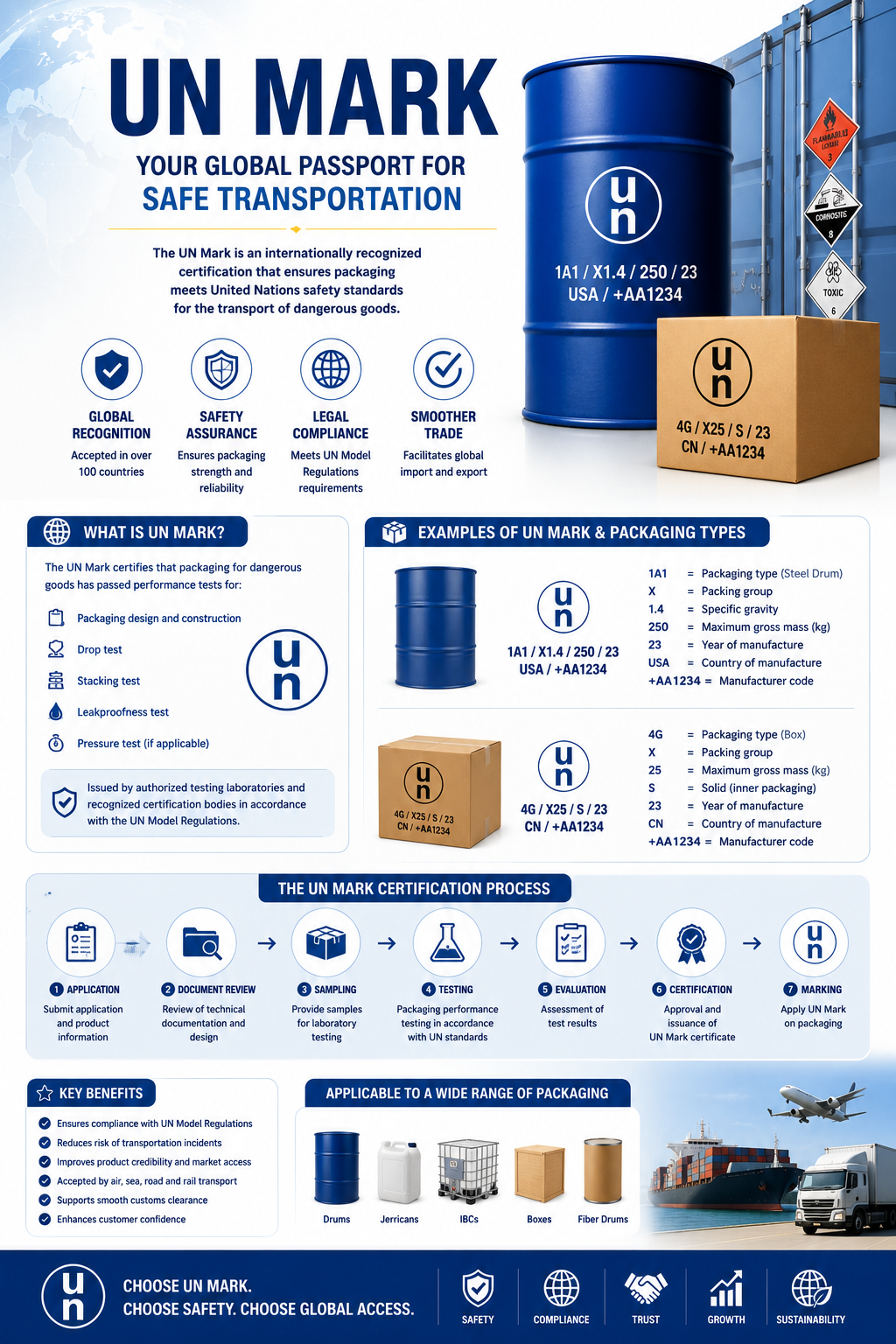
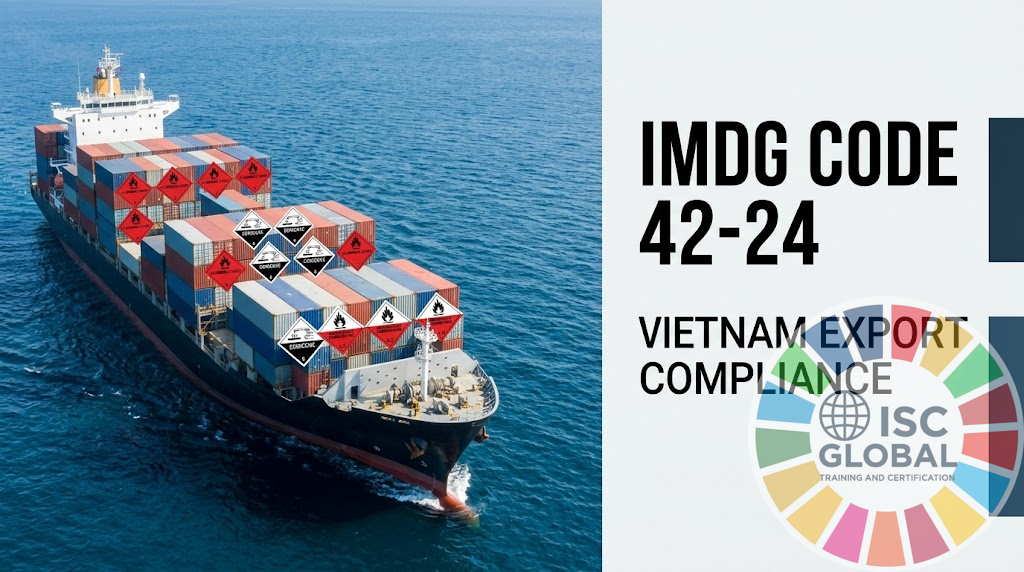
If corporate executives still view the UN MARK characters stamped on cargo boxes or containers as a mere technical formality for the warehousing department, your enterprise is missing an invaluable strategic positioning tool at the macro level. In a flat world where high-tech industries — from next-generation energy batteries and green chemicals to semiconductor components — are accelerating cross-border integration, safety and flow velocity serve as a company’s true currency. The UN MARK framework is the ultimate power passport of the physical world — a supreme, standardized language that enables enterprises, shipping lines, and international customs authorities to establish instant trust and alignment across three dimensions: Identity Recognition, Structural Insurance, and Response Synchronization.
Standardizing processes under the UN MARK system is not an administrative box-checking exercise; it is a journey toward constructing proactive defense capabilities for the supply chain. When UN numbers are scientifically managed and applied, enterprises are no longer caught off guard by stringent technical barriers. Instead, they confidently turn compliance into a distinct competitive advantage, accelerating the capital rotation of their product flows.
The Value-Creation Philosophy of the UN MARK System (Collaborative Safety Frame): The UN MARK system was not engineered as a punitive tool to choke the tempo of global trade. The essence of this framework is to establish a synchronized and predictive safety corridor to protect corporate assets. By scientifically encoding physicochemical attributes ($Hazard\ Classes$), standardizing the load resilience of containment packaging ($Packaging\ Groups$), and interconnecting emergency response data, the UN MARK helps logistics pivot from “crisis remediation” to “proactive risk elimination.” This absolute alignment ensures your enterprise remains the most dependable partner in the global value chain.
For modern supply chain managers and global transportation experts with a long-term vision, mastering the operational art of the UN MARK system is the golden key to optimizing insurance costs, liberating cargo flows, and safeguarding brand reputation on a global scale.
1. System Architecture: Three Core Pillars Elevating the Safety Envelope and Circulation Velocity of UN MARK
The UN MARK framework is designed as a standardized global matrix, enabling enterprises to manage material risks from their root causes through three interconnected components:
Pillar 1: A Universal Identification Language and Scientific Categorization
- The 4-Digit Identification Code (UN ID): Translating complex chemical nomenclatures into a single, globally consistent digit string (e.g.,
UN 3481for Lithium-ion batteries packed with equipment). This numerical system entirely eliminates language barriers and discrepancies within national legislative systems. - 9 Hard Categories of Physical Hazards: Transparently classifying the physical and chemical properties of material flows to deliver optimal stowage and handling playbooks. Accurate classification ensures all stakeholders respect the natural limitations of physical matter, protecting transport vehicles and human lives alike.
Pillar 2: Validated Performance Packaging and Structural Resilience
- Risk-Adjusted Packing Groups (X, Y, Z): Guiding the shop floor to select the precise enclosure corresponding to the sensitivity of the internal material: from Group I (
X– maximum protection for high-danger substances) to Group III (Z– standard protection). UN-certified enclosures must endure intense field validation, including drop-testing and hydraulic pressure metrics, to prove their structural integrity against deep-sea oceanic transit. - The Technical Packaging Code Matrix: The characters embossed on the outer shell decrypt the exact material composition, configuration, and structural limits of the packaging. This serves as a technical warrant from the packaging manufacturer, allowing enterprises to seamlessly validate the legitimacy of their packing procedures during customs inspections.
Pillar 3: Information Synchronization and Emergency Response Readiness
- Data Alignment via Safety Data Sheets (SDS): Synchronizing UN info from the factory lab directly into the Dangerous Goods Declaration ($DGD$) and onto the physical labels. This absolute consistency is the baseline requirement for captains to calculate optimal vessel load configurations ($Stowage\ Plan$).
- Integration with the Emergency Response Guidebook (ERG): Every UN number functions as a portal to standardized rescue blueprints used by international emergency teams. Should an anomaly manifest during transit, the crew relies on the UN number to instantly execute the optimal suppression strategy, safeguarding property and ecosystems.
2. Implementation Mechanisms: Converting UN MARK Standards into Intelligent Operational Drive
Rather than relying on dry commands, the UN MARK framework supplies intelligent data verification mechanisms, empowering enterprises to master and optimize their own specialized logistics:
- Automated Compliance and Screening Filters: In the era of digital logistics, UN MARK data is integrated straight into the carrier booking pipelines. Automated algorithms cross-reference the UN number with the acceptance criteria of transit and destination ports, catching regulatory bottlenecks while the cargo is still resting in domestic yards.
- Risk-Adjusted Financial and Insurance Optimization Models: Maritime underwriters utilize UN MARK compliance as a direct proxy to score corporate operational discipline. When an enterprise deploys a high-standard UN-certified packaging system, the operational hazard coefficient plummets, enabling the negotiation of preferential insurance premiums and driving down Total Logistics Costs.
- Smart Material Segregation and Stowage Matrices: Within advanced logistics hubs and maritime ports, terminal operating systems rely on UN numbers to automate space allocation. Placing compatible UN-marked containers adjacent to one another and segregating cross-reactive substances is not just a regulatory compliance matter; it is the ultimate safeguard for the collective asset value loaded onto the vessel.
3. Strategic Value: Transforming UN MARK Compliance into Competitive Differentiation and Brand Trust
Rigorous implementation of the UN MARK system draws a sharp line between market leaders and amateur operators:
| Strategic Growth Indicators | Enterprises Mastering UN MARK | Legacy and Reactionary Operators |
| Flow Velocity and Hidden Frictional Expenses | Fully optimized. Specialized cargo flows smoothly through checkpoints, vaporizing the risks of cargo detention and compounding port storage penalties . | Constantly trapped in “red-lane” audits; cargo is routinely impounded for physical inspection, driving up opportunity costs and financial burdens. |
| Global Client Retention and Affinity | Emerges as the most reassuring choice for multinational brands thanks to an impeccable safety profile, consistently honoring on-time delivery commitments. | Fragile market credibility; faces abrupt contract cancellations when errors in material codes or port penalties occur. |
| Safety Margins and Crisis Remediation | Maintained in a position of legal autonomy; fully indemnified and protected by tier-one underwriters when force majeure events manifest. | Exposed to multi-million dollar lawsuits, asset forfeitures, catastrophic infrastructure damage liabilities, and permanent brand degradation. |
4. The 4-Step Transformation Roadmap: Cultivating a UN MARK Compliance Culture from Shop Floor to Deep Sea
The implementation of the UN MARK framework follows a sequential rollout, fostering a sustainable shift in both corporate mindset and execution:
- Step 1 – Material Discovery & Mapping: Conducting deep-dive physical and chemical audits to decode the exact attributes of each product line. Mapping precise UN numbers and mandatory packing groups creates an ironclad “safety resume” for the entire product portfolio.
- Step 2 – Packaging System Supply Chain Alignment: Standardizing the sourcing of containment systems to ensure 100% utilization of UN-certified enclosures from reputable vendors. This turns product wrapping into a resilient armor designed for international maritime conditions.
- Step 3 – On-site Skill Building and Placarding Discipline: Training and auditing the warehouse teams on precise packaging procedures and correct warning placard ($Placards$) placements. Establishing shop floor discipline ensures every outbound unit is a textbook example of global safety benchmarks.
- Step 4 – Digital Sign-off & Continuous Kaizen Integration: Integrating UN MARK technical data directly into the Warehouse Management System (WMS) and ERP architecture. Establishing automated cross-check guardrails prior to dispatch eliminates human errors and locks in a culture of continuous improvement across the supply chain.
Conclusion
The UN MARK framework is far from an administrative hurdle designed to complicate specialized transport, nor is it a negotiable operational line item. It is the universal bridge of trust — It is the global bridge of confidence and the definitive benchmark of modern corporate operational governance.
Embracing the UN MARK matrix with an active, forward-looking mindset is how an enterprise builds world-class stature. It stands as the most authentic commitment to safety and operational excellence, shielding corporate balance sheets from maritime risks while granting the enterprise unfettered access to elite, sustainable global value chains.
CONCLUSION: A Living System, Not a Filing Cabinet
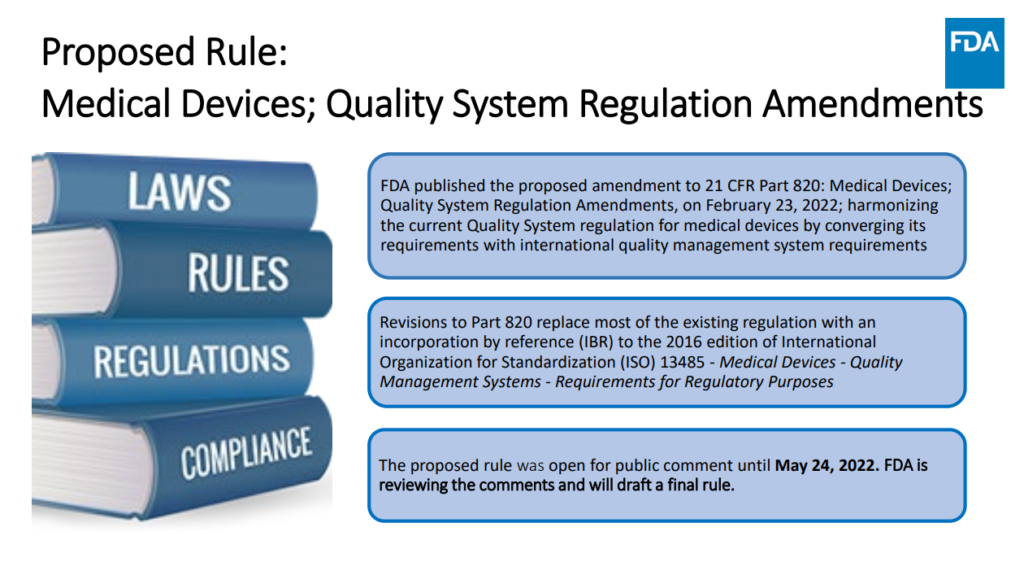
The move to QMSR represents a transition from reactive compliance to proactive, risk-based management. It is a realization that in a global MedTech market, quality cannot be siloed by geography or administrative legacy.
The heart of your regulatory operations is no longer a static filing cabinet filled with DHFs and DMRs; it is a living, connected system that integrates risk management across the entire product lifecycle. As the line between international standards and U.S. law vanishes, one question remains for leadership: Is your quality system a barrier to entry, or is it your most valuable commercial asset?
Contact us to download the bilingual English-Vietnamese PDF standard: from only $50
On the path toward integration and export, correctly understanding and applying international standards is essential. Yet language and technical terminology often pose real barriers. We are pleased to introduce our bilingual (English – Vietnamese) standards documentation service, translated by our own team of certification consultants.
What We Provide
• A clause-by-clause bilingual comparison, easy to consult and file.
• Professional Vietnamese translation in correct technical terminology, ready to use.
• Interpretation notes and application guidance from hands-on experts.
• Fast delivery in editable, easy-to-store PDF/Word format.
Standards Covered
ISO management systems (9001, 14001, 45001, 37001); sustainability certifications (ISCC, FSC, VFCS/PEFC); textiles and recycled materials (GRS, OCS, OEKO-TEX); social responsibility and ESG (SMETA, EcoVadis, Fairtrade), and many other industry standards upon request.
Why Choose Us
Our documents are translated by professionals who directly consult on and audit certifications, so the translation is accurate not only in language but also in real-world application — saving you time and reducing errors when preparing documentation.
Pricing
From only USD 50 per document, depending on length and complexity. Please send us the standard name to receive a free, accurate quotation.
How to Order
1. Contact us with the name of the standard you need.
2. Receive a quotation and delivery time.
3. Make payment and receive your document by email.
Payment
Bank transfer via QR code (provided with the quotation), or via PayPal: ducluongservices@gmail.com.
We look forward to accompanying you on your certification journey.
Best regards,
CONTACT INFORMATION
Hotline: +84 933096426 – +84 868 591 260
Email:
Website:
No responses yet