
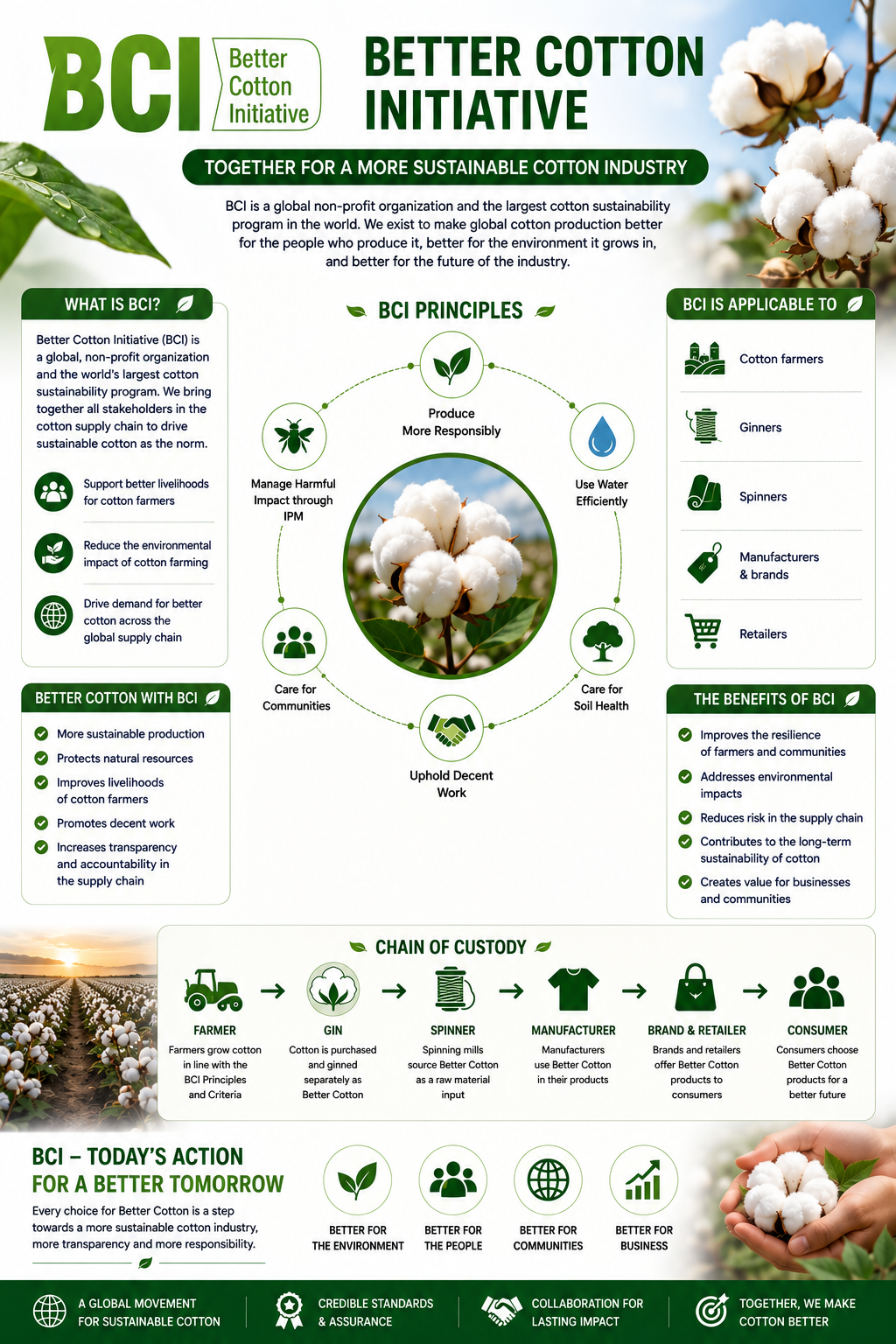
In the world of high finance and global industrial migration, capital recognizes no loyalty. Capital flows only to where efficiency is maximized and risk is minimized. If you still view the Business Climate Index (BCI) as a collection of lagging statistical charts from trade associations, you are a dinosaur walking into a cataclysm. The BCI is not an academic essay; it is an Early Warning System (Early Warning System), a real-time digital dashboard flashing the risk tolerance thresholds of global investment funds and Tier-1 conglomerates. This framework dissects the macro environment into three cold, quantitative pillars: Capital Deployment Speed, Institutional Friction Costs, and Future Infrastructure Load Capacity.
When BCI scores tank, it is not an abstract paper warning — it is a sirens-blaring alarm triggering capital flight, project deferrals, and shadow credit downgrades by upper-tier financial institutions. Conversely, a steadily climbing BCI index acts as an absolute magnet, re-pricing a nation’s entire portfolio of strategic assets.
The Capital Friction Reference Frame: BCI does not measure satisfaction; it measures the velocity of capital rotation and the opportunity cost of a single US Dollar. We structure the BCI system around high-stakes tactical variables: Capital Elasticity (Capital Elasticity), Institutional Friction Coefficients (Friction Coefficient) calibrated by the exact number of days lost in customs gridlocks or fire-safety approvals, and the Green Margin (Green Margin) protecting operations against global carbon penalties. Any environment failing to optimize these hard metrics automatically writes its own name onto the blacklist of global risk mitigation committees.
For seasoned investors, Chief Financial Officers (CFOs), and pragmatic policymakers, decoding the underlying movements behind the BCI is a matter of survival to hedge investment portfolios, optimize operating expenditure (OPEX) structures, and seize the initiative across all recessionary scenarios.
1. Anatomical Blueprint: Three Kinetic Engines Dictating Global Capital Flows
The core architecture of the BCI is split into three dynamic axises, directly dictating the migration of institutional wealth:
Pillar 1: Capital Elasticity & Backlog Dynamics
- Deployment Velocity and Reinvestment Coefficients: This ignores superficial Memorandums of Understanding (MOUs). The BCI measures the actual rate of cash injected into the market for capital expenditure (CapEx) and greenfield factory construction. This is the highest-conviction indicator of capital confidence.
- The Order Book and Chain Velocity: Reading the real-time status of the order books (Order Book) of anchor enterprises over the next 6-12 months. When this indicator peaks, it triggers a chain reaction: higher machinery utilization, aggressive mass recruitment, and spiking credit demand.
Pillar 2: Institutional Friction Costs & Policy Fluctuation Risks
- Administrative Downtime: Quantifying environmental friction by the average number of days an enterprise requires to secure investment licenses, clear Environmental Impact Assessments (EIAs), or clear specialized equipment through customs. Every day of delay is calculated directly as interest expense and lost market opportunity.
- Predictability and Policy Volatility Risk: Measuring the variance of the legal framework. A top-tier BCI environment mandates ironclad consistency across tax codes, tariffs, and industry regulations, completely neutralizing sudden legislative turnarounds that disrupt a project’s financial model.
Pillar 3: Core Infrastructure Capacity & Green Margins (Infrastructure & ESG Readiness)
- Power Grid and Logistics Stability: Evaluating the reliability of the industrial power grid (frequency of unannounced blackouts), clean water supply capacity, and logistics costs per finished unit. Substandard infrastructure is the silent killer eating away an investor’s net margins.
- Green Infrastructure and Renewable Energy Access: This is the decisive variable in the modern BCI matrix. A jurisdiction incapable of provisioning Renewable Energy Certificates (RECs) or Direct Power Purchase Agreements (DPPAs) will be instantly axed by multinational corporations protecting their Net-Zero carbon mandates.
2. Operational Mechanics: The Analytical Algorithms Decoding Real-World BCI Data
To ensure the BCI does not fall into the trap of subjective surveys, modern governance employs sharp forensic field-checks:
- Investment Intent Sentiment Forensic Filters: The BCI algorithm filters out diplomatic corporate politeness. The system scans deep into hard behaviors: the volume of open high-skilled job listings, raw material forward contract volumes, and real-time cash velocity passing through commercial banking systems to pinpoint the exact inflection point of the business cycle.
- The Macro Attractiveness Pricing Equation (Business Attractiveness Formula): Investment funds utilize mathematical models derived from BCI component data to run stress simulations before capital allocation:Expected Investment Performance (R)=Administrative Friction Coefficient×Infrastructure Disruption RiskTarget Yield TargetIf the administrative friction coefficient spikes due to a stagnant public sector, the score R drops below the floor threshold, automatically triggering a capital freeze from the international investment committee.
- The Technical Barrier Cross-Check Matrix: The BCI functions as the medical chart of an economy. It continuously cross-references domestic regulations against high-standard Free Trade Agreements (FTAs). Any protectionist friction or regulatory misalignment hindering import-export flows is unmasked by a dropping score in specialized sub-indices.
3. The Strategic Balance Sheet: Valuation of the Business Environment via Financial & Efficiency Metrics
Operating within a high-BCI environment allows an enterprise to strip out hidden cost structures and unlock the full potential of its balance sheet:
| Financial & Operational Indicators | Top-Tier BCI Governance | Danger-Zone Low-Tier BCI Environments |
|---|---|---|
| Cost of Capital (Cost of Capital) | Low. Enterprises seamlessly raise international capital, issue green bonds, or borrow with minimal Country Risk Premiums (Country Risk Premium). | High. Banks raise net interest margins to offset policy instability risks; domestic capital chokes under a defensive defensive mindset. |
| Capacity Utilization Rate (Capacity Utilization) | Stabilizes at 85−95% fueled by predictable global order pipelines, seamless utility infrastructure, and a 24/7 auxiliary supply chain. | Depressed and highly volatile due to logistics bottlenecks, localized labor shortages, or bureaucratic customs delays at ports. |
| Compliance and Hidden Friction Costs | Near zero. Unified digitalization eliminates non-official fees, rent-seeking behaviors, and administrative gatekeeping. | Becomes a massive operational tax, consuming 5−10% of revenue due to overlapping mandates and protracted approval timelines. |
4. The 4-Step Assault Roadmap: Eradicating Bottlenecks, Escalating Field BCI Scores
Improving a nation or region’s BCI is not a PR campaign; it is an aggressive surgical overhaul executed via 4 tactical phases:
- Step 1 – Scout & Target Bottlenecks: Deploying data task forces to audit the entire chain of administrative workflows. Isolating the exact agency, bureau, or regulation choking the capital circuitry and dragging down the sector’s BCI rating.
- Step 2 – Digital Overhaul Enforcement: Stripping human agency out of sensitive licensing pathways by porting 100% of workflows to digital platforms with automated response timers. Any bureaucrat stalling processing windows without explicit technical justification is automatically flagged and disciplined by the system.
- Step 3 – Systemic Policy Stress Tests: Simulating severe macro disruptions (energy shocks, deep-water port logistics failures) to test the elasticity of the physical infrastructure and the response speed of regulatory bodies. Recalibrating policy based strictly on the empirical data of the stress test.
- Step 4 – Lock Targets & Narrow-Band Monitoring: Establishing narrow-band monitoring mechanisms to audit BCI scores on a monthly frequency. Converting BCI component indexes into mandatory, non-negotiable KPIs for the heads of executive agencies, ensuring the reform engine has zero room to reverse gears.
Conclusion
The BCI index is not an honorary award for show, nor is it a metric that can be manipulated by public relations engineering. It is either an indictment or a manifesto of an economy’s core competitiveness before the supreme court of global capital.
Any nation or enterprise that knows how to read, command, and weaponize BCI metrics will always secure priority status from the smartest money on earth. It stands as an ironclad declaration of operational execution, smashing through recessionary barriers and securing a dominant grip on the heights of the global value chain.

CONCLUSION: A Living System, Not a Filing Cabinet
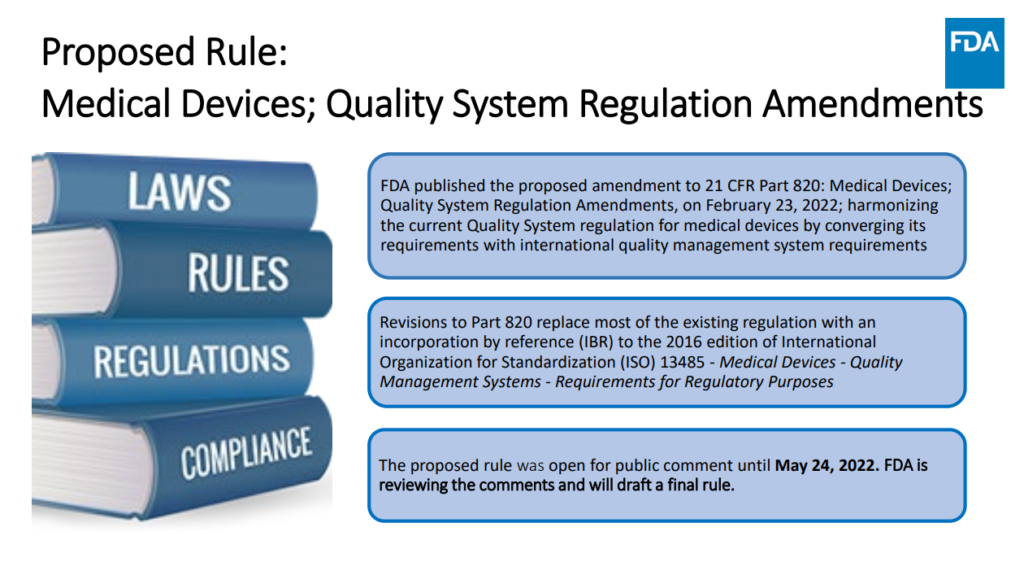
The move to QMSR represents a transition from reactive compliance to proactive, risk-based management. It is a realization that in a global MedTech market, quality cannot be siloed by geography or administrative legacy.
The heart of your regulatory operations is no longer a static filing cabinet filled with DHFs and DMRs; it is a living, connected system that integrates risk management across the entire product lifecycle. As the line between international standards and U.S. law vanishes, one question remains for leadership: Is your quality system a barrier to entry, or is it your most valuable commercial asset?
Contact us to download the bilingual English-Vietnamese PDF standard: from only $50
On the path toward integration and export, correctly understanding and applying international standards is essential. Yet language and technical terminology often pose real barriers. We are pleased to introduce our bilingual (English – Vietnamese) standards documentation service, translated by our own team of certification consultants.
What We Provide
• A clause-by-clause bilingual comparison, easy to consult and file.
• Professional Vietnamese translation in correct technical terminology, ready to use.
• Interpretation notes and application guidance from hands-on experts.
• Fast delivery in editable, easy-to-store PDF/Word format.
Standards Covered
ISO management systems (9001, 14001, 45001, 37001); sustainability certifications (ISCC, FSC, VFCS/PEFC); textiles and recycled materials (GRS, OCS, OEKO-TEX); social responsibility and ESG (SMETA, EcoVadis, Fairtrade), and many other industry standards upon request.
Why Choose Us
Our documents are translated by professionals who directly consult on and audit certifications, so the translation is accurate not only in language but also in real-world application — saving you time and reducing errors when preparing documentation.
Pricing
From only USD 50 per document, depending on length and complexity. Please send us the standard name to receive a free, accurate quotation.
How to Order
1. Contact us with the name of the standard you need.
2. Receive a quotation and delivery time.
3. Make payment and receive your document by email.
Payment
Bank transfer via QR code (provided with the quotation), or via PayPal: ducluongservices@gmail.com.
We look forward to accompanying you on your certification journey.
Best regards,
CONTACT INFORMATION
Hotline: +84 933096426 – +84 868 591 260
Email:
Website:

No responses yet