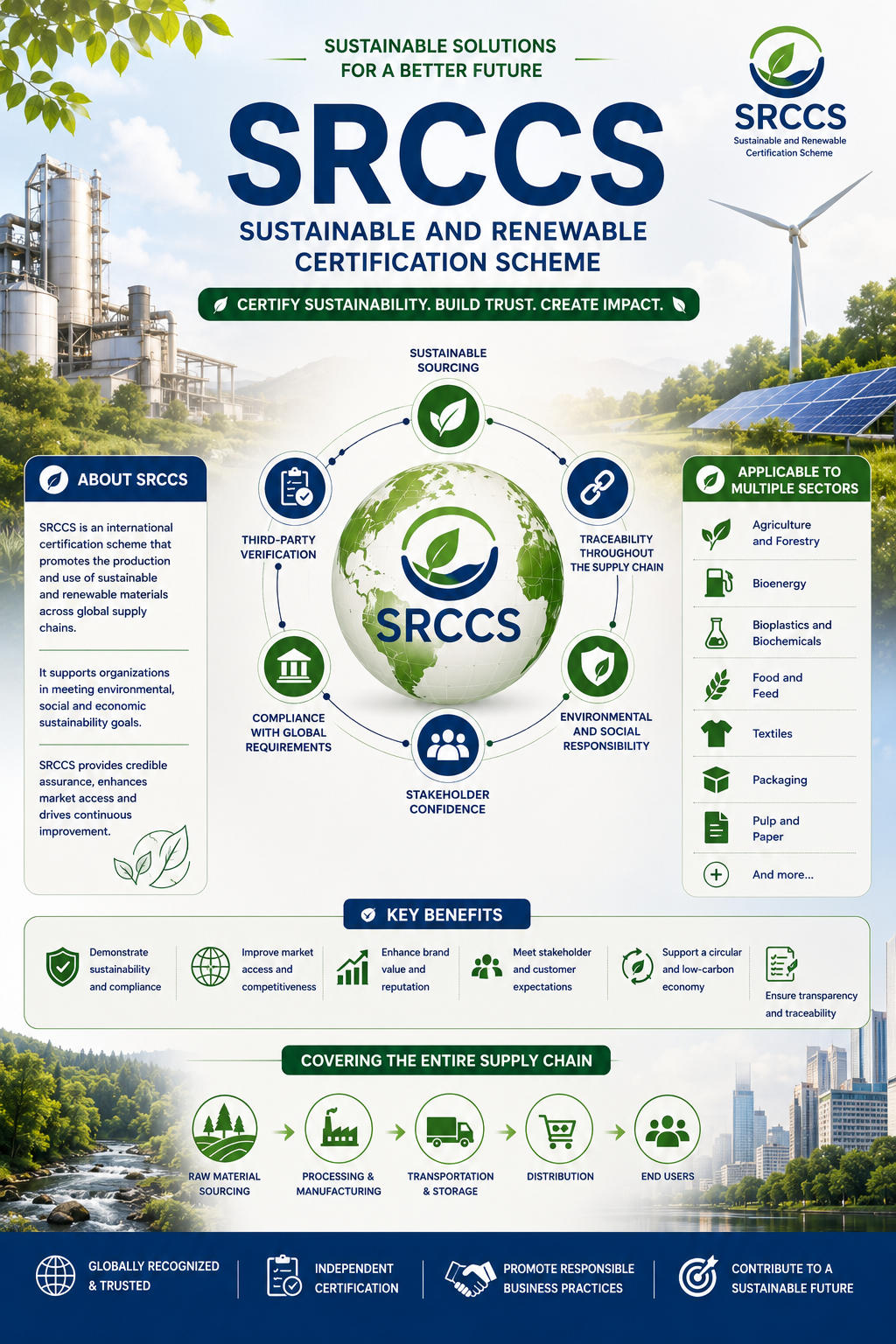
If your executive board and supply chain management team still view the SRCCS Standards as a rigid technical barrier or a mandatory Code of Conduct imposed by upper-tier brands, your enterprise is missing a critical turning point to elevate its strategic positioning. In an era where the global economy is shifting dramatically from “cost optimization” to “continuity and reliability insurance,” multinational conglomerates and Tier-1 retailers are no longer merely looking for cheap assembly plants; they are seeking partners who speak the same governance language. The SRCCS Standard Matrix is that shared language — a standardized framework that allows businesses to demonstrate autonomy, integrity, and operational resilience across three critical dimensions: Responsibility, Compliance, and Core Capacity.
Transitioning to meet the SRCCS standards is not an administrative box-checking exercise; it is a journey of self-upgrading your enterprise’s operating system. When all operational tolerances are quantified and controlled, your business is no longer passive during audits. Instead, it confidently establishes a secure safety corridor for all cross-border product flows.
The Collaborative Excellence Frame of SRCCS Standards: We do not approach SRCCS as a punitive tool or a trap to catch factory errors. The essence of this standard system is to establish a structured and predictive capacity development roadmap. By quantifying metrics from upstream material supply chains ($Traceability$), optimizing actual overall equipment effectiveness ($OEE$) to eliminate over-capacity pressure, and cultivating a human-centric workplace, SRCCS helps factories pivot from a “crisis management” mindset to “proactive prevention.” This synchronization ensures your enterprise remains the most reassuring choice for major brands in a volatile world.
For modern supply chain managers and forward-thinking corporate executives, mastering the SRCCS system serves as the ultimate commercial passport, converting compliance pressure into an absolute competitive advantage on the international stage.
1. System Architecture: Three Core Pillars Elevating the Foundation for Sustainable Supplier Operations
The SRCCS standard system acts as a sturdy tripod, helping enterprises comprehensively standardize corporate culture, legal transparency, and core manufacturing capacity:
Pillar 1: Supplier Responsibility Standard (Human-Centric & Safety Culture)
- Respectful and Equal Labor Culture: This standard places people at the center of development. By guaranteeing core rights such as reasonable working hour limits, fair compensation systems, open dialogue, and non-discrimination, SRCCS helps factories cultivate a highly engaged workforce. This directly reduces employee turnover rates — the root cause of quality instability.
- Occupational Health & Safety System (OHS): Standardizing the shop floor by identifying and eliminating hazardous risks. From optimizing ventilation, dust control, and noise reduction to standardizing fire protection systems and enforcing proper PPE usage, this standard protects your company’s most valuable asset: the health and peace of mind of your workforce.
Pillar 2: Supplier Compliance Standard (Transparency & Climate Risk Containment)
- Business Integrity and Clean Data Culture: Establishing a business ethics standard that never compromises on data tampering or short-term fixes. SRCCS encourages the digitalization of record-keeping (from HR to production), ensuring all data is consistent, transparent, and verifiable, thereby building absolute trust with international auditors.
- Environmental Governance & Green Economy Readiness (EHS): Moving beyond basic waste treatment compliance, this standard guides factories to control energy flows, minimize resource waste, and quantify the carbon footprint of each product. This serves as a vital stepping stone for enterprises to cross green barriers such as Europe’s CBAM.
Pillar 3: Supplier Capacity Standard (Technology Capability & Process Strength)
- Efficiency Optimization and Statistical Process Control ($SPC$): Accurately quantifying actual production capacity based on technical indicators such as cycle time ($Cycle\ time$), process capability ($Cpk$), and overall equipment effectiveness ($OEE$). This allows businesses to confidently regulate lead times and accurately assess capacity to prevent system overloads that cause mass defects.
- Supply Chain Risk Management and Business Continuity Planning (BCP): Extending control to Tier-2 and Tier-3 suppliers. This standard requires businesses to have contingency scenarios for raw material sourcing, preventive equipment maintenance, and process digitalization (ERP/MES) to ensure the production chain remains uninterrupted during market shocks.
2. Implementation Mechanisms: Turning Standards into Action via Smart Solutions
Rather than relying on top-down commands, the SRCCS standard provides smart tools and mechanisms for factories to measure and improve themselves:
- Automated Smart Data Verification Systems: The standard encourages data integration across departments: from electronic timecard systems and manufacturing execution systems (MES) to payroll accounting. This synchronization allows plant management to capture the true operational picture, resolving HR or equipment bottlenecks before they mutate into systemic failures.
- Scientific Capacity Optimization Models: SRCCS provides a mathematical framework to define a factory’s safe production ceiling:$$\text{Optimal Capacity (P)} = \text{Total Available Equipment} \times \text{Actual Availability Coefficient} \times \text{Target Quality Index}$$Through this formula, factories and clients can establish harmonious ordering plans, completely eliminating the risk of time pressure leading to unauthorized subcontracting outside of technical controls.
- Collaborative Open-Chain Traceability Matrix: Establishing a transparent information-sharing chain from raw material suppliers to the final product. By digitalizing upstream documentation, enterprises not only protect themselves against strict customs checks but also demonstrate the added value of their products through verifiable origin authenticity.
3. Strategic Value: Leveraging SRCCS Compliance to Drive Profit Margins and Brand Reputation
Adopting the SRCCS standard is not a passive compliance expense; it is a strategic investment that yields tangible, long-term financial returns:
| Strategic Growth Indicators | Factories Mastering SRCCS Standards | Factories Running on Legacy Mindsets |
| Bargaining Position and Order Value | Ranked as a Strategic Partner; granted the right to participate in joint product development from early stages with superior profit margins. | Acts merely as an easily replaceable transaction-based workshop; faces constant price pressure and abrupt cancellation risk. |
| Waste Ratios and Hidden Operational Costs | Minimizes hidden scrap and rework costs by up to $40\%$ through standardized $SPC$ processes and scheduled preventive maintenance. | High hidden costs due to volatile defect rates; unexpected machine breakdowns disrupt scheduling and erode real profits. |
| Brand Attraction and Access to Capital | Seamlessly accesses green financing and attracts international financial institutions thanks to an excellent ESG profile. | Restricted from accessing major capital pools; faces exclusion risks as global markets tighten sustainability criteria. |
4. Four-Step Collaborative Roadmap: Transitioning Factories to International Benchmarks
The implementation of SRCCS standards is designed as a sequential rollout, transforming operations step-by-step to maintain production stability:
- Step 1 – Compass & Gap Mapping: Conducting on-site technical reviews and operational dialogues to understand the factory’s real-world floor challenges. Mapping the exact gaps between current workflows and the SRCCS Standard to plot a tailored transition blueprint.
- Step 2 – Capability Building and System Upgrades: Launching synchronized upgrades: from optimizing shop floor layouts and deploying safety SOPs to digitalizing data management and upskining internal QC and engineering teams.
- Step 3 – Simulation & Internal Audits: Running the system under simulated peak production stress to test process durability. Encouraging internal teams to actively identify vulnerabilities and implement fast-cycle feedback adjustments.
- Step 4 – Sign-off & Kaizen Culture: Awarding the SRCCS compliance certification to the facility. Establishing a consultative periodic review mechanism to foster a continuous improvement culture (Kaizen), ensuring the standard evolves alongside corporate growth.
Conclusion
The SRCCS Standard is no longer just a set of rules to satisfy, nor is it merely pressure exerted by buyers. It is a strategic compass—a comprehensive restructuring solution that helps businesses construct a healthy, transparent, and resilient operational ecosystem capable of withstanding external shocks.
Mastering the SRCCS framework with a proactive and collaborative mindset is how an enterprise asserts its world-class caliber. It stands as the strongest commitment to quality, trust, and sustainable growth, empowering your business to step through the gates of elite global value chains and command a leading position on the industrial map.
CONCLUSION: A Living System, Not a Filing Cabinet
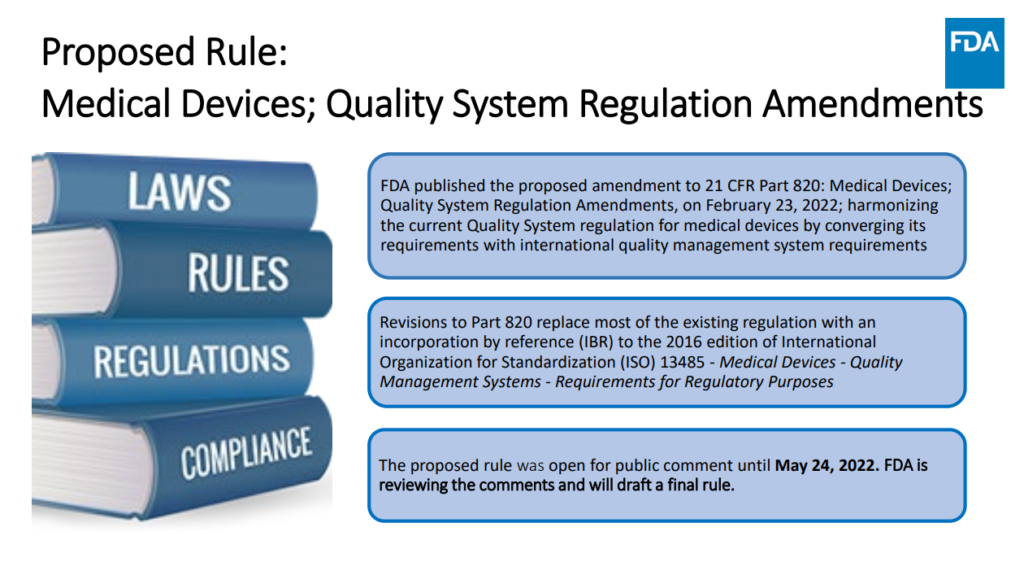
The move to QMSR represents a transition from reactive compliance to proactive, risk-based management. It is a realization that in a global MedTech market, quality cannot be siloed by geography or administrative legacy.
The heart of your regulatory operations is no longer a static filing cabinet filled with DHFs and DMRs; it is a living, connected system that integrates risk management across the entire product lifecycle. As the line between international standards and U.S. law vanishes, one question remains for leadership: Is your quality system a barrier to entry, or is it your most valuable commercial asset?
Contact us to download the bilingual English-Vietnamese PDF standard: from only $50
On the path toward integration and export, correctly understanding and applying international standards is essential. Yet language and technical terminology often pose real barriers. We are pleased to introduce our bilingual (English – Vietnamese) standards documentation service, translated by our own team of certification consultants.
What We Provide
• A clause-by-clause bilingual comparison, easy to consult and file.
• Professional Vietnamese translation in correct technical terminology, ready to use.
• Interpretation notes and application guidance from hands-on experts.
• Fast delivery in editable, easy-to-store PDF/Word format.
Standards Covered
ISO management systems (9001, 14001, 45001, 37001); sustainability certifications (ISCC, FSC, VFCS/PEFC); textiles and recycled materials (GRS, OCS, OEKO-TEX); social responsibility and ESG (SMETA, EcoVadis, Fairtrade), and many other industry standards upon request.
Why Choose Us
Our documents are translated by professionals who directly consult on and audit certifications, so the translation is accurate not only in language but also in real-world application — saving you time and reducing errors when preparing documentation.
Pricing
From only USD 50 per document, depending on length and complexity. Please send us the standard name to receive a free, accurate quotation.
How to Order
1. Contact us with the name of the standard you need.
2. Receive a quotation and delivery time.
3. Make payment and receive your document by email.
Payment
Bank transfer via QR code (provided with the quotation), or via PayPal: ducluongservices@gmail.com.
We look forward to accompanying you on your certification journey.
Best regards,
CONTACT INFORMATION
Hotline: +84 933096426 – +84 868 591 260
Email:
Website:
No responses yet