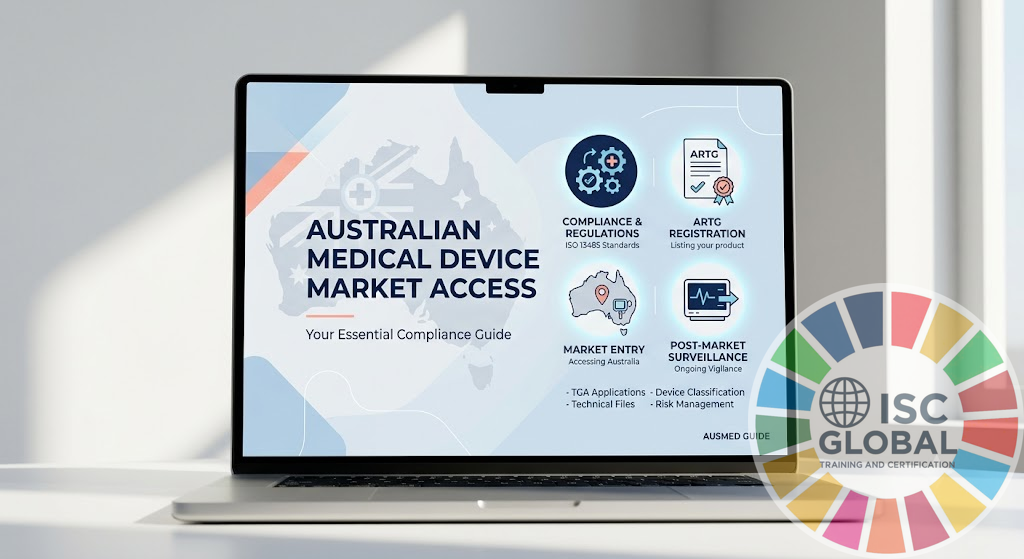
Entering Australia is not a matter of obtaining a single “TGA certificate.” The Therapeutic Goods Administration is the Australian Government regulator, while the usual commercial objective is inclusion of a kind of medical device in the Australian Register of Therapeutic Goods (ARTG) through an eligible Australian Sponsor.
Vietnamese manufacturers may already hold ISO 13485 certification, FDA establishment registration, device listings, 510(k) clearances or EU certificates. Those assets can be valuable, but they must be mapped to the Australian legal manufacturer, device scope, risk class and conformity assessment route. A disciplined market-access project prevents the company from paying for a Sponsor, MDSAP audit or new testing before the evidence strategy is understood.
1. What the TGA regulates
The TGA regulates therapeutic goods in Australia, including medical devices and IVDs, and oversees how they are manufactured, supplied, advertised and monitored. Unless an exemption, exclusion or special pathway applies, a medical device generally needs an ARTG entry before lawful supply in Australia.
KEY DISTINCTION The TGA is a regulator, not an ISO-style standard. ARTG inclusion, Manufacturer Evidence acceptance and a TGA Conformity Assessment Certificate are different regulatory outcomes and should not be marketed as interchangeable.
The first regulatory questions are therefore product-specific: Is the product a medical device under Australian law? What is its classification? How should models be grouped into a kind of device? What GMDN term applies? Which evidence route is acceptable? How many ARTG entries are likely to be required?
2. Why an Australian Sponsor is required
A foreign manufacturer normally needs an Australian-based legal entity that meets the statutory definition of Sponsor. The Sponsor submits applications through TGA Business Services, holds the ARTG entry, maintains access to evidence and has ongoing regulatory duties while the device is supplied.
- The manufacturer remains responsible for device design, production, classification, conformity assessment procedures and technical evidence.
- The Sponsor interfaces with the TGA and supports Australian post-market reporting, corrective action and recall obligations.
- The consulting team translates regulatory requirements into a controlled data and documentation programme; it does not replace the Sponsor or regulator.
Sponsor due diligence should cover fee structure, TGA portal governance, post-market service levels, access to technical documentation, change notification, transfer rights and termination. A low annual fee is not enough if the contract creates lock-in or unclear safety responsibilities.
3. Risk classification drives evidence and cost
Australia applies a risk-based classification framework. Non-IVD devices range from Class I to Class III, with specific categories such as Class I sterile and Class I measuring; IVDs use a separate system. Classification is based on the Australian rules and may differ from the US or EU result.
| Class | General risk level | Typical regulatory impact |
| Class I | Low | Some non-sterile, non-measuring devices may use self-declaration, while all applicable Essential Principles and post-market duties still apply. |
| Class Is / Im / IIa | Low to medium | Appropriate conformity assessment evidence and a consistent QMS/technical dossier are required. |
| Class IIb | Medium to high | Greater technical and clinical scrutiny; in-scope devices are subject to the UDI rollout from 1 July 2026. |
| Class III / AIMD | High | Strong QMS and design evidence; deeper application audit or conformity assessment costs may arise. |
Intended purpose, invasiveness, duration of contact, implantability, active functions, software, materials and specific rule wording all matter. A product name such as “dental instrument” or “monitor” is not a sufficient classification basis.
4. The end-to-end ARTG pathway
- Confirm the product is a medical device and determine whether ARTG inclusion is required.
- Lock intended purpose, legal manufacturer, manufacturing sites, models, accessories and key claims.
- Apply Australian classification rules and document the rule, rationale, assumptions and open questions.
- Determine the GMDN term, kind-of-device grouping and expected ARTG entry count.
- Select the conformity assessment evidence route, including any use of comparable overseas regulator evidence.
- Remediate technical documentation and Australian documents against the Essential Principles.
- Appoint the Australian Sponsor; submit Manufacturer Evidence where required, followed by the ARTG application.
- Respond to application audits or queries and establish annual charge, UDI, vigilance and change-control processes.
5. What a submission-ready technical dossier should contain
The depth varies by device, but a coherent dossier should allow the Sponsor and TGA to trace every key claim to risk controls and objective evidence. Typical components include:
- Device description, variants, accessories, principles of operation, intended users and patient population.
- Essential Principles checklist with document-level evidence references.
- Lifecycle risk management, benefit-risk analysis and production/post-production information.
- Design verification and validation, including biocompatibility, electrical safety/EMC, software, cybersecurity, usability, sterilisation, packaging and shelf-life where relevant.
- Clinical evaluation and clinical evidence appropriate to intended purpose and risk.
- Labelling, instructions for use, Australian Declaration of Conformity, PMS plan, vigilance and recall procedures.
6. How ISO 13485, FDA, EU and MDSAP evidence may be used
ISO 13485 is a strong QMS foundation, but it is not ARTG inclusion. TGA guidance identifies circumstances in which an ISO 13485 certificate alone is not acceptable Manufacturer Evidence for non-IVD devices. Certificate scope, sites, legal entity and the issuing body must be reviewed rather than relying on the certificate title.
The TGA recognises a range of assessments and approvals from comparable overseas regulators and assessment bodies, including certain evidence from EU bodies, the US FDA, Health Canada, MDSAP auditing organisations, Japan and Singapore. Recognition is evidence-specific. FDA establishment registration and device listing are not product clearance or approval; 510(k), De Novo or PMA evidence must be distinguished and may need supporting QMS evidence.
EVIDENCE STRATEGY Build an Evidence Acceptance Matrix before purchasing MDSAP, new testing or direct TGA conformity assessment. The matrix should map each device and site to QMS evidence, product authorisation, technical reports, clinical support, validity dates and identified gaps.
7. What changed in 2026
TGA fees from 1 July 2026
For non-IVD medical devices, the official 2026 schedule lists an ARTG application fee of AUD 651 for Class I categories, AUD 1,244 for Class IIa/IIb and AUD 1,603 for Class III. Annual charges are separate: AUD 121 for Class I other, AUD 879 for Class I sterile/measuring, AUD 1,305 for Class IIa/IIb and AUD 1,662 for Class III/AIMD. Application audit fees may be added.
UDI commenced with higher-risk devices
From 1 July 2026, in-scope Class IIb and Class III devices must meet Australian Unique Device Identification requirements, with lower-risk classes and IVDs following later phases. Manufacturers and Sponsors should plan identifiers, packaging levels, label control, AusUDID data and change-control rules; UDI is not merely a barcode artwork task.
8. ISC Global consulting methodology
ISC Global provides training, regulatory assessment, documentation consulting and compliance coordination for medical device manufacturers. The engagement begins with a controlled decision gate so that regulatory assumptions are validated before major third-party costs are triggered.
- Executive and cross-functional training on TGA, ARTG, Sponsor, Manufacturer Evidence, UDI and post-market duties.
- Product classification, GMDN and kind-of-device/ARTG grouping analysis.
- Gap assessment of ISO 13485, FDA/EU/MDSAP evidence and technical documentation.
- Drafting or review of the Essential Principles matrix, Australian Declaration of Conformity, labelling/IFU and PMS documentation within the agreed scope.
- Australian Sponsor and laboratory/assessment-body coordination after written approval of the third-party scope and quotation.
- Submission readiness, query tracking, audit support and regulatory handover for ongoing maintenance.
9. Deliverables that support internal ownership
Consulting should leave the manufacturer with a maintainable regulatory system, not only a set of meetings. Depending on scope, deliverables may include:
- Classification and ARTG Grouping Report with rule rationale and assumptions.
- Evidence Acceptance Matrix and prioritised gap register.
- Data Request List with owners, dates and expected evidence.
- Essential Principles Evidence Matrix and Australian document set.
- Testing and standards matrix, where relevant.
- Sponsor handover pack or submission-ready dossier under defined acceptance criteria.
- Query tracker, change log and close-out/maintenance plan.
10. Indicative timeline and budget logic
For a pilot product family with a reasonably mature dossier, classification, grouping and evidence-route assessment may target the first three to four weeks. Dossier remediation and submission readiness can require several additional weeks or months. New testing, MDSAP, clinical work, direct TGA conformity assessment and application audits can extend both timeline and budget.
The official ARTG fee is only one layer. A complete first-year budget may include consulting, Sponsor, TGA charges, testing, QMS/certification, translations, samples and post-market setup. It is better to approve these items at milestones than to treat every possible cost as mandatory on day one.
- Pilot with the product family that has the strongest technical and overseas market evidence.
- Confirm the expected ARTG entry count before obtaining a Sponsor quotation.
- Approve new testing only against a documented gap and current standard edition.
- Maintain a 10-15% contingency for queries, retesting, logistics and currency movement.
- Separate professional fees, government charges and third-party invoices in the commercial proposal.
11. Professional principles
ISC Global acts as an independent adviser connecting legal requirements with design, manufacturing, quality, clinical and market evidence. The consulting approach is based on four principles:
- Evidence-based conclusions: every classification, grouping and route states its basis and assumptions.
- Transparent cost gates: Sponsor, TGA, auditing organisation and laboratory costs require an approved scope and quotation.
- No misleading equivalence: ISO 13485 or FDA registration is never presented as TGA product approval.
- Clear role separation: the TGA, Sponsor, certification body, auditing organisation and laboratory remain independent decision-makers or service providers.
Frequently asked questions
Does the TGA issue one certificate for the whole company?
No. The usual market-authorisation outcome is ARTG inclusion for a kind of medical device, supported by appropriate conformity assessment evidence. A manufacturer may have multiple ARTG entries and evidence routes.
Can a Vietnamese manufacturer submit directly to the TGA?
A foreign manufacturer normally works through an eligible Australian-based Sponsor. The Sponsor submits and holds the ARTG entry while the manufacturer remains responsible for the device and supporting evidence.
Is ISO 13485 enough?
Not by itself in many non-IVD cases. It supports the QMS, but acceptable Manufacturer Evidence depends on device type, class and evidence route.
Does FDA registration count as Australian approval?
No. Establishment registration and device listing are not product clearance or approval. Any 510(k), De Novo or PMA evidence must be assessed for its Australian relevance and supporting QMS evidence.
How many products can be included in one ARTG entry?
The entry is based on a kind of medical device, not simply a catalogue. Models may be grouped only when they meet the applicable criteria; a grouping assessment is required.
Can a consultant guarantee an ARTG inclusion date?
No responsible consultant should guarantee the regulator’s decision or processing time. The consultancy can commit to defined deliverables and response support within its control.
Contact our business advisory team
Discuss your product classification, evidence route, dossier readiness and Australian market-access plan with our consulting team.
ISC Global
Hotline / Zalo: +84 933 096 426 | +84 868 591 260
Email: info@iscglobal.asia | van.pham@iscglobal.asia
Website: iscglobal.asia | iscglobal.edu.vn
No responses yet