
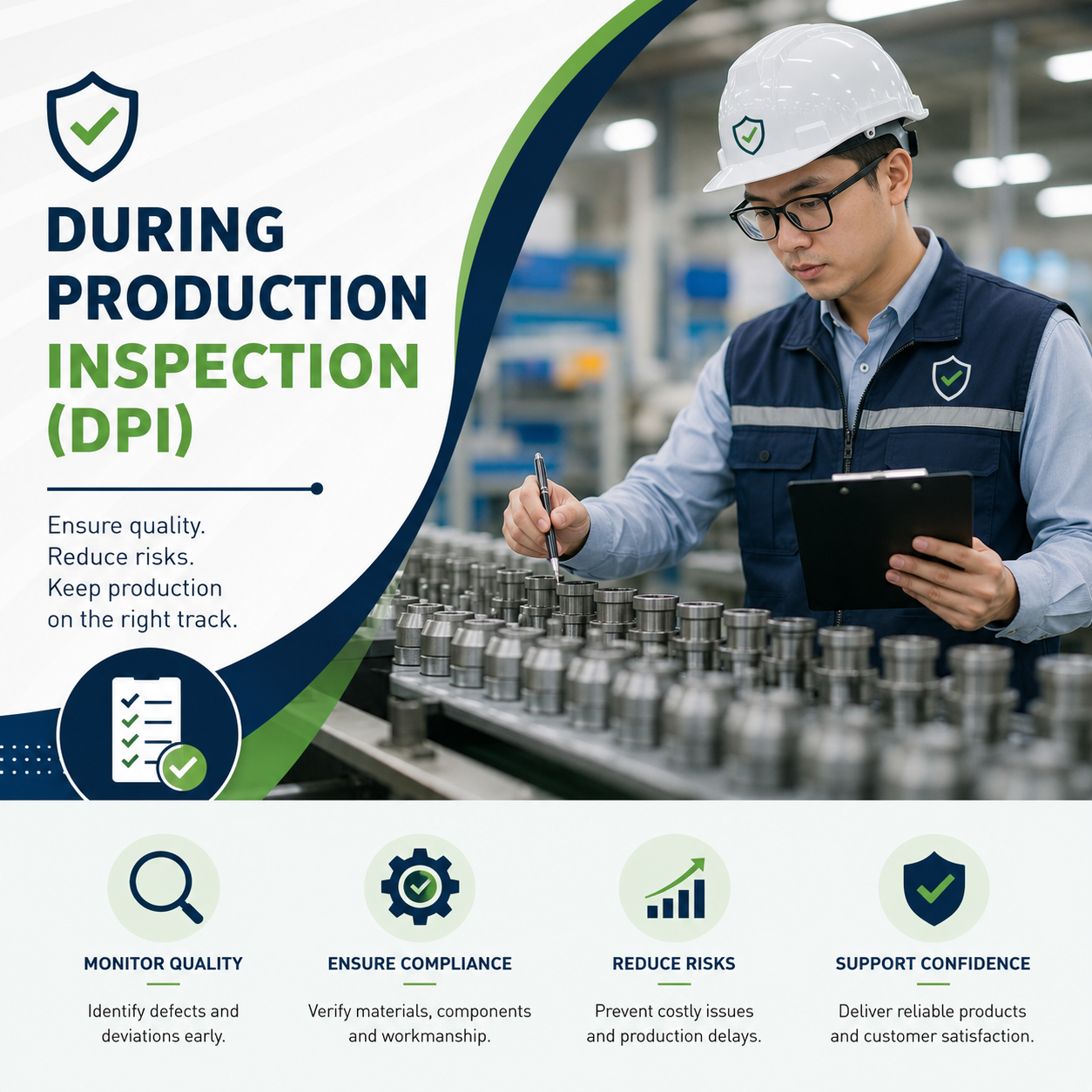
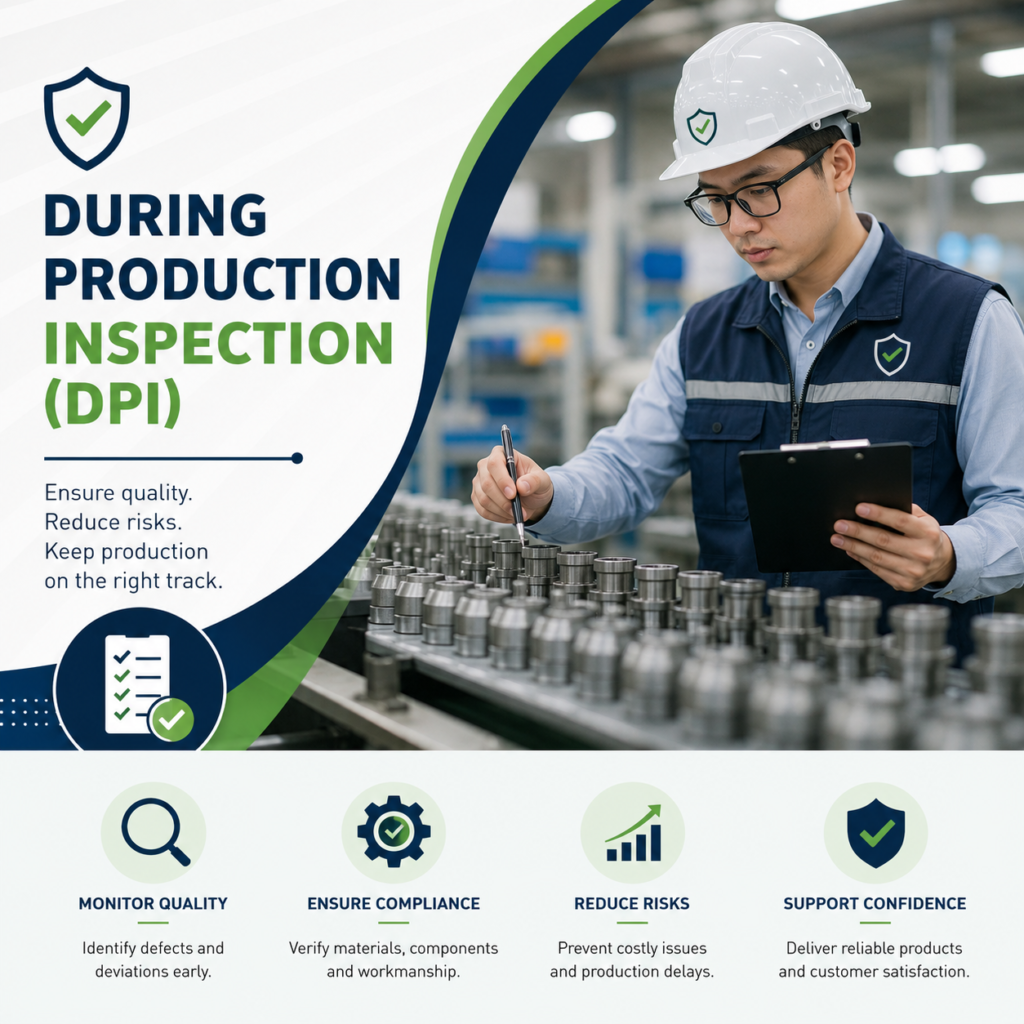
If your executive team, supply chain management heads, and quality control (QA/QC) engineers still view the During Production Inspection (DPI / DUPRO) process as a superficial, progress-checking routine or a mere inventory headcount when production is half-finished, your enterprise is betting its entire asset portfolio and reputation on an extreme-risk blind spot. In the era of technocratic manufacturing and compressed supply chains, multinational conglomerates and Tier-1 retail networks never assume that a line meeting specifications at $10\%$ output (IPC) will automatically maintain that perfection through completion; they deploy the DPI mid-stream inspection matrix to unmask machinery parameter drift ($Machine\ Drift$), jig-clamping force degradation due to mechanical fatigue, and hidden process violations as the line scales between $30\%\text{ and }50\%$ output.
The legitimacy of a line running at peak capacity tolerates zero behavioral margins. A microscopic mold wear phenomenon ($Mold\ Wear$), drying heat drift under continuous operation, or loose internal QC checks caused by mid-shift production volume pressure will instantly subject tens of thousands of units produced during this phase to accumulated systematic errors ($Accumulated\ Systematic\ Error$). The cascading consequences result in multiple shipping containers of defective goods caught during final pre-shipment inspection (PSI), the total rupture of global distribution networks, severe contractual breach penalties, and potential corporate insolvency driven by massive scrap and rework costs.
The Clinical Scaling-Stage Evaluation Reference Frame (DPI Reference Frame): We do not execute DPI audits through subjective observations or factory paper reports. The core of a technocratic DPI audit rests on the operational capability to quantify process stability ($Process\ Stability$) at peak system output. This framework mandates locking down 3 technical pillars: Measuring $Cpk$ index drift and geometric dimensioning tolerances ($GD\&T$), auditing the structural integrity of work-in-progress components ($WIP – Work\ In\ Progress$), and cross-examining the defect detection competence of on-line QC personnel. A single oversight in detecting heat deflection temperatures in packaging films or torque decay in assembly fasteners during the DPI phase is enough to reduce an entire mid-run production batch to industrial waste.
For Supply Chain Directors, Plant Managers, and Global QA/QC Heads, commanding this DPI audit blueprint serves as the ultimate technocratic weapon to intercept mass defects at the mid-stream divide, protect operational expenditure (OPEX) cash flow, and enforce absolute technical discipline across factory operations.
1. Systemic Bottlenecks: Equipment Degradation Mechanics and Micro-Deformations Silently Destroying Mid-Run Batches
Through manufacturing line forensic audits (Production Line Forensic Audit) and large-scale scrap crisis interventions across production facilities, we have isolated 3 core blind spots that routinely break quality integrity during the DPI stage:
- Thermal and Mechanical Parameter Drift: Continuous high-speed machine operation generates thermal friction and sustained mechanical vibration, leading to mold cavity expansion, hydraulic clamping force reduction, or ultrasonic welding frequency drift. Components produced during the mid-cycle phase begin suffering from micro-deformations, warping, or unsealed joints undetectable to the naked eye.
- Work-In-Progress (WIP) Degradation and Process Contamination: Large volumes of work-in-progress accumulate at intermediate stations without standardized protection: exposed to dust contamination, humidity absorption, stacking scratches, or batch cross-contamination . When fed into final assembly stations, these hidden defects become permanently encapsulated within the finished product.
- Internal Quality Control Discipline Erosion Under Volume Stress: Under intense pressure to hit shift production targets (KPI/Shift), factory line QC staff begin ignoring minor non-conformities, loosening visual limit boundaries, or failing to log worker SOP violations. This behavioral relaxation creates a “grey zone” that allows thousands of defective units to slip past control checkpoints.
The consequence of neglecting the DPI audit stage is falling into an irreversible trap: discovering failures only after 100% of the order has been cartoned and sealed. This forces total packaging destruction and complete product teardown for rework at costs 10 times higher than intercepting and containing the failure during the DPI phase.
2. Solution Matrix: Locking Mid-Stream Tolerances via 4-Tier Technocratic Quality Gates
To eliminate scaling-drift variables and ensure 100% of units manufactured within the 30% to 50% range meet absolute precision parameters, our DPI framework deploys 4 closed-loop technical checkpoints:
- Statistical Sampling and WIP Gate under ANSI/ASQ Z1.4 Standards: Drawing representative samples directly from active assembly lines and work-in-progress ) staging zones according to strict statistical sampling tables. Analyzing the defect matrix against Acceptance Quality Limit thresholds to decide the fate of the active production lot.
- Geometric Dimensioning Audits and Statistical Process Control : Utilizing high-precision instruments (2D/3D CMMs, tensile strength testers, spectrometers) to cross-check mid-run product dimensions and functional performance against technical engineering drawings. Recalculating the process capability index Cpk to verify the line has not drifted outside approved tolerance corridors.
- Packaging Station Audits and Barcode Validation: Pulling live data at active packaging stations to verify barcode and QR code readability, warning label compliance, net weight consistency, and carton structural integrity (drop tests and stacking tests). Eliminating mislabeling risks at the initial 10% packaging threshold.
- Machinery Recalibration and Limit Sample Locking: Requiring plant technicians to re-measure actual mold temperatures, pneumatic wrench torque output, and air pressure values during the audit. Re-aligning visual limit samples with line QC personnel to re-establish strict defect identification boundaries.
3. Performance Metrics: Converting Mid-Stream Compliance Margins into Operating Capital Surplus (OPEX Optimization)
Operating an empirical, data-backed DPI system is a high-yield financial strategy to prevent large-scale capital loss and safeguard global delivery schedules:
| Operational Risk Indicators | Technocratic DPI Line Governance | Passive Operations (PSI Inspection Only) |
| Cost of Poor Quality | Intercepts systemic errors early at 30% output, cutting raw material scrap and rework costs by 90%. | Unmonitored parameter drift destroys 100% of the order, forcing total lot scrapping or expensive product teardown. |
| Gantt Chart Delivery Buffer Safety | Uncovers technical variances 5 to 7 days before job completion, providing adequate lead time for correction without missing vessel deadlines. | Defects are identified during final PSI checks when zero factory buffer time remains, causing severe export delays and delivery breach penalties. |
| Pre-Shipment Inspection Pass Rate (PSI Pass Rate) | Guarantees absolute final inspection pass rates (> 99.9%) because mid-run parameter drift was corrected and isolated mid-cycle. | Final pre-shipment inspection becomes a high-risk gamble; skyrocketing rework and re-inspection fees drain operational cash flow. |
4. Technical Action Roadmap: Phasing DPI Controls from Heat Treatment Stations to WIP Staging Zones
Our DPI deployment strategy follows a strict sequential audit protocol executed on the factory floor when production reaches 30% to 50% completion:
- Step 1 – Realized Progress Audit and WIP Flow Mapping: Auditing physical shop-floor logs to reconcile actual finished quantities against master scheduling targets. Inspecting WIP staging areas to detect improper storage or cross-contamination risks.
- Step 2 – Statistical Sampling and Clinical Defect Analysis: Pulling random samples from packaged finished goods and active line WIP according to AQL guidelines. Categorizing defects into 3 clinical severity tiers: Critical, Major, and Minor.
- Step 3 – Live Machine Parameter Audit: Deploying independent diagnostic tools to measure live operational parameters (temperature profiles, pressure gauges, line speed, current draw). Triggering an immediate Emergency Line Stop if operating parameters drift beyond 5% of the approved parameter sheet.
- Step 4 – Corrective Action Preventive Action (CAPA) Issuance and Line Re-clearance: Issuing a mandatory CAPA notice if defect rates exceed AQL limits. The line is re-cleared to execute the remaining 50% output only after non-conforming units are isolated and machinery is recalibrated.
5. Driving Verifiable ESG Milestones via Mid-Stream Manufacturing Governance
Enforcing rigorous DPI protocols provides concrete proof of an enterprise’s execution of its ESG (Environmental, Social, Governance) mandates through operational excellence:
- The Environmental Pillar (Environment): Intercepting non-conformities at 30% – 50% production prevents wasting tons of raw materials, chemical coatings, and plastic packaging, directly lowering embedded carbon emissions in scrap items.
- The Social Pillar (Social): Protects worker well-being and eliminates extreme forced overtime. Early defect detection allows plant management to balance production schedules smoothly, preventing emergency night shifts to repair defective goods at the last minute.
- The Governance Pillar (Governance): Establishes independent cross-check controls, eradicating progress report manipulation and defect concealment by factory management, securing the integrity of supply chain governance data.
Conclusion
During Production Inspection (DPI) is no longer a progress-checking factory stopover or an optional milestone left to factory discretion. It is the core technocratic competency that dictates process stability, guards OPEX cost structures, and acts as a dam preventing large-scale scrap disasters in modern industrial manufacturing.
Commanding a rigid DPI audit framework backed by statistical measurement data provides your business with complete schedule sovereignty, eliminates parameter drift risks, and cements your standing as an elite supply chain partner before the world’s most demanding buyers.
CONCLUSION: A Living System, Not a Filing Cabinet
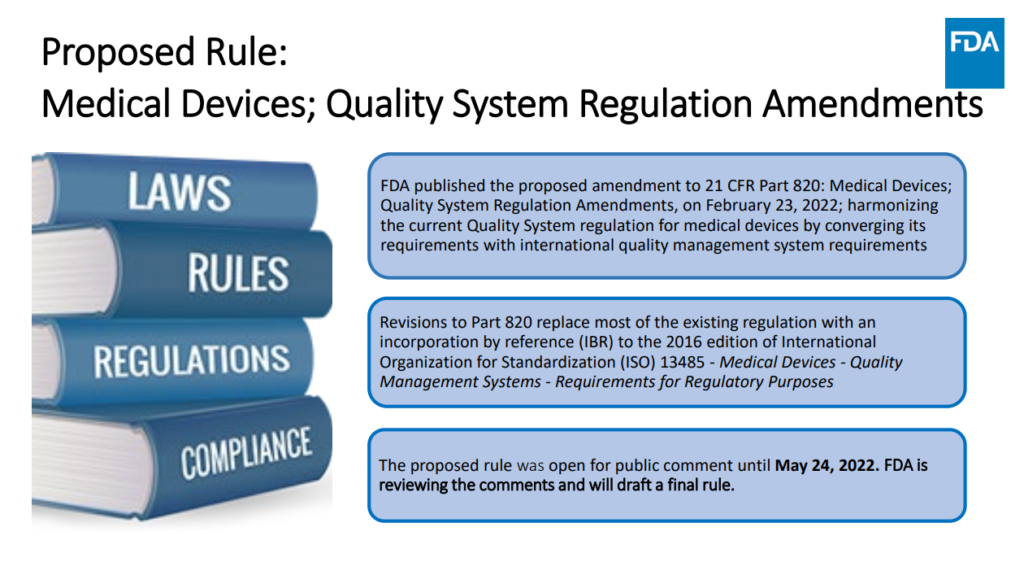
The move to QMSR represents a transition from reactive compliance to proactive, risk-based management. It is a realization that in a global MedTech market, quality cannot be siloed by geography or administrative legacy.
The heart of your regulatory operations is no longer a static filing cabinet filled with DHFs and DMRs; it is a living, connected system that integrates risk management across the entire product lifecycle. As the line between international standards and U.S. law vanishes, one question remains for leadership: Is your quality system a barrier to entry, or is it your most valuable commercial asset?
Contact us to download the bilingual English-Vietnamese PDF standard: from only $50
On the path toward integration and export, correctly understanding and applying international standards is essential. Yet language and technical terminology often pose real barriers. We are pleased to introduce our bilingual (English – Vietnamese) standards documentation service, translated by our own team of certification consultants.
What We Provide
• A clause-by-clause bilingual comparison, easy to consult and file.
• Professional Vietnamese translation in correct technical terminology, ready to use.
• Interpretation notes and application guidance from hands-on experts.
• Fast delivery in editable, easy-to-store PDF/Word format.
Standards Covered
ISO management systems (9001, 14001, 45001, 37001); sustainability certifications (ISCC, FSC, VFCS/PEFC); textiles and recycled materials (GRS, OCS, OEKO-TEX); social responsibility and ESG (SMETA, EcoVadis, Fairtrade), and many other industry standards upon request.
Why Choose Us
Our documents are translated by professionals who directly consult on and audit certifications, so the translation is accurate not only in language but also in real-world application — saving you time and reducing errors when preparing documentation.
Pricing
From only USD 50 per document, depending on length and complexity. Please send us the standard name to receive a free, accurate quotation.
How to Order
1. Contact us with the name of the standard you need.
2. Receive a quotation and delivery time.
3. Make payment and receive your document by email.
Payment
Bank transfer via QR code (provided with the quotation), or via PayPal: ducluongservices@gmail.com.
We look forward to accompanying you on your certification journey.
Best regards,
CONTACT INFORMATION
Hotline: +84 933096426 – +84 868 591 260
Email:
Website:

No responses yet