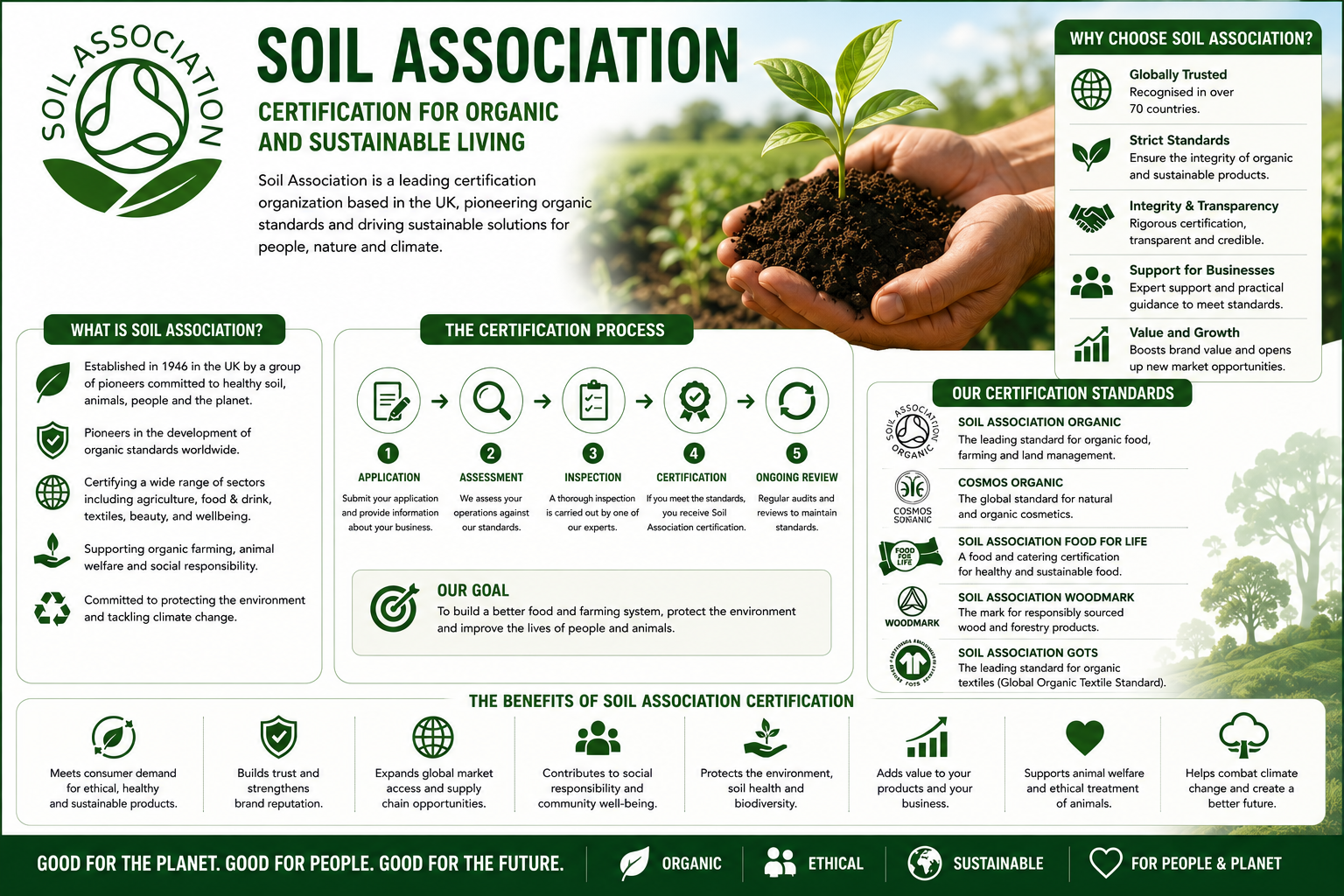
In the powerful global shift toward green consumption and sustainable development, a generic “natural” or “clean” label is no longer enough to persuade demanding markets. Enterprises require a standardized, iconic language to assert superior quality. The Soil Association Standard is the most prestigious green passport — a comprehensive governance framework establishing one of Europe’s oldest and most rigorous organic benchmarks (exceeding even the baseline EU Organic regulations). This standard enables producers, processors, and international retail conglomerates to establish absolute peace of mind across three core dimensions: Soil Integrity & Biodiversity, Pure Processing Technology, and Eco-Friendly Packaging.
Adopting the Soil Association standard is not a passive compliance cost burden, but a transformative journey to elevate an enterprise’s biological assets. When parameters regarding soil health, chemical-free extraction processes, and the carbon footprint of packaging are quantified and made transparent, enterprises can confidently unlock access to top-tier retail chains (such as Harrods, Waitrose, and Marks & Spencer) while building a sustainable business model that yields impressive net margins and contributes positively to the planet.
The Value-Creation Philosophy of the Soil Association Standard (Collaborative Ecological Frame): Soil Association was not designed as a restrictive set of rules to burden farmers or enterprises. The essence of Soil Association is to establish a corridor that nurtures soil life and preserves natural value for bio-based product flows. By regenerating soil fertility ($Soil\ Organic\ Matter$), strictly banning synthetic chemicals & $GMOs$, and integrating digital farm logs ($Digital\ Farm\ Log$), Soil Association helps enterprises transition from a mindset of “reacting to technical barriers” to “proactively fueling premium brand growth.” This alignment guarantees that your products consistently maintain a leadership position in the premium consumer segment.
For modern agricultural managers, Product Development Directors, and Sustainable Supply Chain Specialists, mastering the Soil Association Standard is the golden key to optimizing commercial value, attracting ESG investment capital, and consolidating a pioneering position in the global green economy.
1. System Architecture: Three Core Pillars Elevating the Bio-Value of Soil Association
The Soil Association standard is structured as a comprehensive ecological governance matrix, enabling enterprises to standardize every link in the value chain — from field soil to the consumer experience:
Pillar 1: Soil Regeneration & Biodiversity
- Regenerating Soil Health: Mandating a strict conversion period ($2-3$ years) to eliminate all legacy chemical residues. Soil Association emphasizes replenishing soil organic humus, maintaining crop rotation, and dedicating a minimum of $5\%$ of farm acreage to natural buffer zones to attract beneficial organisms and foster a self-balancing ecosystem.
- 100% Non-GMO & Clean Inputs: Completely eliminating genetically modified organisms, chemically treated seeds, and soluble inorganic fertilizers. All input materials are rigorously audited to ensure they are free from heavy metal residues and industrial antibiotics.
Pillar 2: Pure & Minimal Processing
- Minimal Additives & Maximum Nutrient Retention: Applying an additive and processing-aid approval list far stricter than standard industry baselines. Strictly prohibiting artificial colors, synthetic flavors, artificial sweeteners, and hydrogenated fats, ensuring products retain their purest natural characteristics.
- Absolute Separation & Cross-Contamination Shield: Enforcing strict spatial and temporal production separation between organic and non-organic product lines. Facility sanitation protocols prior to production runs must utilize approved eco-friendly biological cleaners, ensuring zero chemical residue remains.
Pillar 3: Eco-Friendly Packaging & Traceability
- Sustainable Packaging Mandate: Soil Association directly audits primary and secondary packaging. Priority is given to post-consumer recycled materials ($PCR$) and fully compostable packaging ($Compostable$), while completely banning PVC plastic as well as wraps containing Phthalates/BPA.
- Farm-to-Fork Traceability: Digitally encoding every product batch. Consumers and procurement partners can easily trace the farm origin, harvest date, processing methodology, and accompanying Certificates of Analysis ($CoA$).
2. Implementation Mechanisms: Converting Soil Association Data into Intelligent Growth Drivers
Rather than passively responding to audit inspections, the Soil Association standard provides intelligent data tools and mechanisms empowering enterprises to optimize their own operations:
- Digital Agro-Ecology Platform: Utilizing soil analysis technologies and digital data to monitor Soil Organic Matter ($SOM$), moisture levels, and crop health. This data enables farmers to proactively refine biological management practices, enhancing yields naturally.
- Organic Value Maximization Model: Soil Association applies multi-parametric algorithms to assist in pricing and categorizing products according to their biological value:$$\text{Organic Value Optimization Index} = \frac{\text{Premium Commercial Value ($USD$)}}{\text{Biological Farming \& Processing Costs ($USD$)}} \times \left(1 + \frac{\text{Ecological Impact Score}}{100}\right)$$When this index is optimized, enterprises achieve high net profit margins driven by premium pricing while simultaneously boosting brand equity through positive ecological impact metrics (carbon reduction, soil fertility enhancement).
- Continuous Ecological Kaizen: Through periodic evaluation mechanisms, the system helps enterprises identify supply chain bottlenecks early (such as cross-contamination risks from neighboring farms) to implement corrective measures before each harvest season.
3. Strategic Value: Elevating Brand Stature and Expanding Global Commercial Opportunities
Proactive execution of the Soil Association standard yields distinct competitive advantages, positioning the enterprise among top-tier organic suppliers worldwide:
| Strategic Growth Indicators | Enterprises Proactively Mastering Soil Association | Informal & Self-Proclaimed Organic Producers |
| Market Penetration Capabilities | Opens doors directly into top-tier retail networks in the UK, EU, and North America; instantly recognized by international consumers. | Struggles to access premium distribution channels; frequently rejected at customs due to a lack of transparent organic certification. |
| Product Pricing Power | Commands premium pricing ($Premium\ Pricing$), generating $20-40\%$ higher net margins thanks to total consumer trust in the Soil Association symbol. | Trapped in low-tier commodity pricing; suffers intense price competition and paper-thin margins. |
| Capital & ESG Optimization | Easily accesses green credit lines and ESG investment funds while securing long-term off-take partnerships with global retailers. | Struggles to secure expansion capital; fails to meet the strict sustainability criteria required by international financial institutions. |
4. The 4-Step Transformation Roadmap: Building a Sustainable Organic Value Chain Under Soil Association
The implementation roadmap for the Soil Association standard is designed in clear technical phases, facilitating a solid upgrade of enterprise systems:
- Step 1 – Soil Audit & Conversion Planning: Conducting comprehensive soil and water quality testing. Establishing a $2-3$ year organic conversion roadmap and setting up safe biological buffer zones to isolate the land from external contamination sources.
- Step 2 – Standardized Farming & Digital Farm Logs: Transitioning to $100\%$ biological fertilizers and crop protection methods. Digitizing all farm logs to cloud platforms to ensure complete transparency.
- Step 3 – Clean Processing Upgrade & Eco-Packaging: Standardizing processing lines to ensure zero cross-contamination. Transitioning all packaging materials to eco-friendly options aligned with the Soil Association approved list.
- Step 4 – Digital Certification & Market Launch: Integrating Certificates of Analysis ($CoA$), Soil Association certificates, and batch traceability codes into enterprise management systems. Confidently presenting products to global commercial partners and premium supermarket chains.
Conclusion
The Soil Association standard is far from a complex administrative barrier or a superficial certificate. It is the golden key to the premium organic world.
Proactively mastering and extending the values of the Soil Association standard is the shortest path for an enterprise to establish market credibility, optimize the value of its biological assets, and confidently secure its place on the global map of leading green food and agricultural brands.
CONCLUSION: A Living System, Not a Filing Cabinet
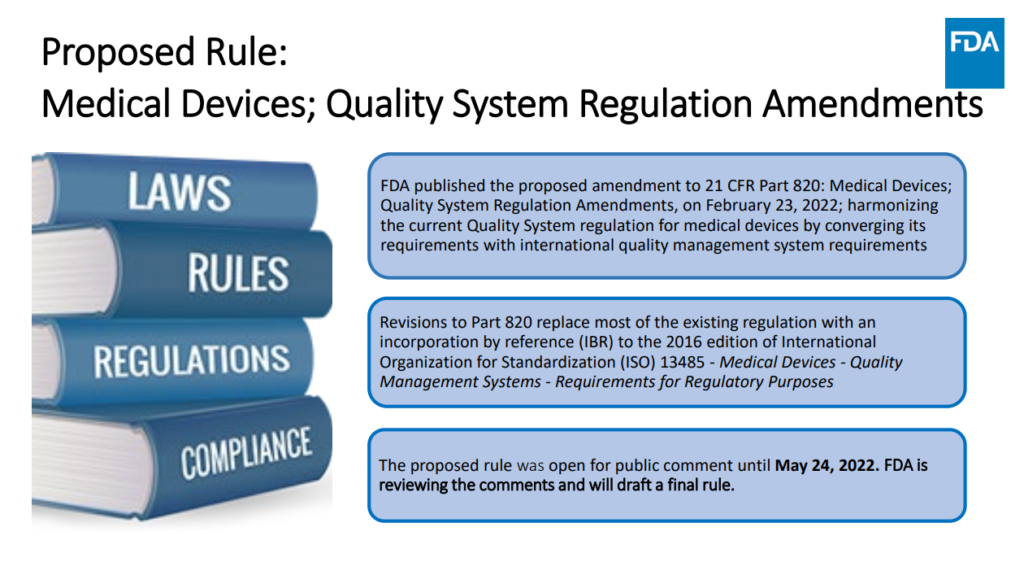
The move to QMSR represents a transition from reactive compliance to proactive, risk-based management. It is a realization that in a global MedTech market, quality cannot be siloed by geography or administrative legacy.
The heart of your regulatory operations is no longer a static filing cabinet filled with DHFs and DMRs; it is a living, connected system that integrates risk management across the entire product lifecycle. As the line between international standards and U.S. law vanishes, one question remains for leadership: Is your quality system a barrier to entry, or is it your most valuable commercial asset?
Contact us to download the bilingual English-Vietnamese PDF standard: from only $50
On the path toward integration and export, correctly understanding and applying international standards is essential. Yet language and technical terminology often pose real barriers. We are pleased to introduce our bilingual (English – Vietnamese) standards documentation service, translated by our own team of certification consultants.
What We Provide
• A clause-by-clause bilingual comparison, easy to consult and file.
• Professional Vietnamese translation in correct technical terminology, ready to use.
• Interpretation notes and application guidance from hands-on experts.
• Fast delivery in editable, easy-to-store PDF/Word format.
Standards Covered
ISO management systems (9001, 14001, 45001, 37001); sustainability certifications (ISCC, FSC, VFCS/PEFC); textiles and recycled materials (GRS, OCS, OEKO-TEX); social responsibility and ESG (SMETA, EcoVadis, Fairtrade), and many other industry standards upon request.
Why Choose Us
Our documents are translated by professionals who directly consult on and audit certifications, so the translation is accurate not only in language but also in real-world application — saving you time and reducing errors when preparing documentation.
Pricing
From only USD 50 per document, depending on length and complexity. Please send us the standard name to receive a free, accurate quotation.
How to Order
1. Contact us with the name of the standard you need.
2. Receive a quotation and delivery time.
3. Make payment and receive your document by email.
Payment
Bank transfer via QR code (provided with the quotation), or via PayPal: ducluongservices@gmail.com.
We look forward to accompanying you on your certification journey.
Best regards,
CONTACT INFORMATION
Hotline: +84 933096426 – +84 868 591 260
Email:
Website:
No responses yet