Why Has Travelife Become the “Golden Ticket” for Asian Tourism Enterprises?
When tourists from Northern Europe, Germany, and the United Kingdom book tours to Southeast Asia, their first question increasingly is no longer “5-star or 4-star hotel?” but rather “Does this enterprise hold any sustainability certification?”. This is the reality that every tour operator, travel agency, and accommodation provider in Asia is facing – and Travelife Certification is the global answer to this question.
This article does not merely explain what Travelife is. It dives deep into implementation strategies, practical lessons from successful Asian enterprises, and provides a concrete action roadmap to help your business gradually conquer this prestigious certification.
Part I: The Big Picture of Travelife
1. Travelife – Beyond a Certificate
Travelife is not just a stamp on the office wall. It is a comprehensive sustainability management ecosystem, operated by two independent organizations:
| Organization | Headquarters | Scope | Target Audience |
|---|---|---|---|
| Travelife for Tour Operators | Netherlands | Training & certification | Tour operators, travel agencies |
| Travelife Ltd (Accommodation) | United Kingdom | Assessment & certification | Hotels, resorts, homestays, lodging providers |
Both share the Travelife brand and adhere to the Global Sustainable Tourism Council (GSTC) Industry Criteria – a UN-backed standard.
2. History and Global Reputation
- 2007: Travelife was established with financial support from the European Commission
- 2012: Launch of large-scale sustainability training programmes
- 2024: Travelife for Accommodation released a revised standard (the first revision since 2014), officially recognized by GSTC
- Today: Over 1,500 tour operators have participated in training, more than 500 enterprises have achieved Travelife Certified status, supported by 35+ national tourism associations
3. The Relationship Between Travelife and GSTC
This is a key point that many Asian enterprises have not fully grasped:
GSTC = The standard-setting authority (the rule maker)
Travelife = The certification body that operates under those standards (the certifier)
When GSTC “recognizes” Travelife, it confirms that the Travelife standard is equivalent to the global benchmark. This is why Travelife certification is accepted in every international tourism market.
Part II: The Travelife Three-Tier System – In-Depth Analysis
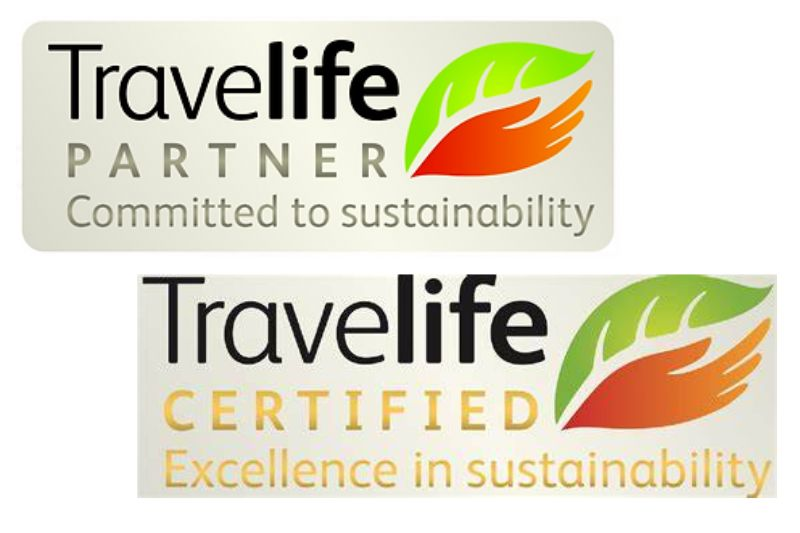
Travelife Engaged – “The First Step”
Goal: Commitment and learning
Implementation time: 6-12 months
Core investment: Annual membership fee + staff training time
At this stage, the enterprise does not need to meet any criteria other than:
- Registering as a member
- Completing core online training courses
- Designating an internal “Sustainability Coordinator”
- Beginning to collect basic data on energy, water, and waste consumption
Tip for Asian enterprises: Don’t rush past this stage. This is when you build a “sustainability mindset” across the entire organization, especially within Asian work cultures that often tend toward “going through the motions” at the start.
Travelife Partner – “The Serious Player”
Goal: Embed the sustainability management system into operations
Implementation time: 12-18 months after Engaged
Number of criteria to meet: Approximately 100-130 core criteria
To be recognized as a Partner, the enterprise must submit a self-assessment report with evidence covering:
- An officially issued sustainability policy
- A KPI measurement system
- Internal training for at least 80% of staff
- Implementation of at least 5-7 specific initiatives
Travelife Certified – “The Elite Tier”
Goal: Achieve the highest international standard
Implementation time: 12-24 months after Partner
Number of criteria to meet: Nearly 250 criteria (tour operators) or 261 criteria (accommodation)
This is the only tier that mandates an independent on-site audit by a Travelife-approved auditor. Re-audit cycle: every 2 years.
Part III: 8 Critical Assessment Domains
Unlike popular articles that merely list general topics, below is an analysis of the 8 critical assessment domains that every Asian enterprise must thoroughly understand:
Domain 1: Sustainable Corporate Governance
- Organizational structure with a clearly defined Sustainability Officer role
- Periodic sustainability reporting (in line with GRI or equivalent)
- Senior leadership commitment
Domain 2: Environmental Management
- Carbon footprint measurement (Scope 1, 2, 3)
- Greenhouse gas (GHG) emission reduction plan
- Use of renewable energy
- Water conservation, wastewater treatment compliance
Domain 3: Waste and Materials Management
- Waste segregation at source
- Commitment to “no single-use plastics”
- Recycling and reuse
- Hazardous waste management
Domain 4: Human Rights and Labour
- Transparent employment contracts
- Wages above the regional minimum
- Diversity & Inclusion
- Workplace harassment prevention
- Equal career development opportunities
Domain 5: Safety and Protection
- Child Safeguarding policies
- Modern slavery prevention in the supply chain
- Occupational Health and Safety (OHS)
- Sexual harassment prevention
Domain 6: Local Community and Culture
- Procurement from local suppliers
- Hiring local residents
- Cultural heritage preservation
- Support for social enterprises
Domain 7: Biodiversity and Animal Welfare
- No use of wildlife in tourism programmes
- Protection of surrounding ecosystems
- Wildlife observation codes of conduct
Domain 8: Communication and Customer Education
- Provision of responsible tourism information to customers
- Behavioural guidance at destinations
- Transparent marketing, no greenwashing
Part IV: Lessons from Successful Asian Enterprises
Case Study 1: Lux Travel DMC (Vietnam)
- Journey: 10 years from Engaged (2015) → Partner (2023) → Certified (2025)
- Lesson: Persistence and long-term investment. In 2025, Lux Travel DMC became Vietnam’s first luxury tour operator to achieve Travelife Certified status, honoured at ITB Berlin 2025.
- Commitment: Targeting “net positive” impact by 2030
Case Study 2: Easia Travel (4 ASEAN Countries)
- Scope: Achieved Travelife Certified status in Vietnam, Laos, Cambodia, and Thailand
- Lesson: The sustainability model can be replicated across borders
- Highlight: Passed over 200 criteria covering office management, product portfolio, international business partners, and customer communication
Case Study 3: Aitken Spence Travels (Sri Lanka)
- Highlight: Complied with over 150 criteria during the assessment process
- Lesson: Deep commitment to the environment and local community is the key to success
Part V: A 24-Month Roadmap to Travelife Certified
This is a practical roadmap for Asian enterprises aiming to achieve the highest tier within 2 years:
Quarters 1-2: Kick-off (Months 1-6)
✅ Register for Travelife Engaged
✅ Establish a Sustainability Committee
✅ Conduct internal training round 1
✅ Audit the current state (Gap Analysis)
✅ Draft the sustainability policy
Quarters 3-4: Basic Implementation (Months 7-12)
✅ Set up the KPI measurement system
✅ Launch 5-7 priority initiatives
✅ Conduct internal training round 2 (department-specific deep dives)
✅ Build SOPs for each criterion
✅ Goal: Achieve Travelife Partner
Quarters 5-6: Expansion and Refinement (Months 13-18)
✅ Implement all ~250 criteria
✅ Assess the supply chain
✅ Roll out periodic sustainability reporting
✅ Engage in community activities
✅ Conduct a Mock Audit
Quarters 7-8: Official Audit (Months 19-24)
✅ Finalize documentation
✅ Register for the Travelife Certified audit
✅ Host the independent auditor team
✅ Address any non-compliance points (if any)
✅ Goal: Receive Travelife Certified certification
Part VI: Investment and Expected ROI
Investment Costs (Estimated for a Medium-Sized Enterprise)
| Item | Estimated Cost (USD) |
|---|---|
| Travelife membership fee (3 years) | 2,000 – 5,000 |
| Training and system development | 5,000 – 15,000 |
| Technology and equipment investment | 10,000 – 30,000 |
| Independent audit fee | 3,000 – 8,000 |
| Professional consulting (optional) | 5,000 – 20,000 |
| Total Investment | 25,000 – 78,000 |
Expected ROI Within 3 Years
- Operational cost savings: 10-30% (electricity, water, materials)
- Increase in service pricing: 8-15% for the high-end international segment
- Customer retention rate increase: 20-40%
- Expansion of B2B international partnerships: Access to hundreds of European tour operators that require GSTC certification
- Investment payback: Average of 18-36 months
Part VII: Common Mistakes by Asian Enterprises
Mistake 1: Treating Travelife as “Just a Marketing Project”
Travelife is an enterprise-wide initiative that requires participation from leadership, operations, HR, and procurement – not merely a communication campaign.
Mistake 2: Rushing to “Skip Stages”
Many enterprises want to achieve Certified status within the first year. In reality, there are no reasonable shortcuts – Travelife auditors are particularly strict about evidence of operational practice for at least 6-12 months.
Mistake 3: Greenwashing
Making “green” claims without specific evidence is the biggest risk. Travelife requires that every commitment must be backed by measurable data.
Mistake 4: Overlooking the Supply Chain
Many enterprises focus on internal matters and forget that Travelife criteria also assess partners and suppliers. Selecting local suppliers with equivalent certifications is a mandatory requirement.
Mistake 5: Failing to Invest in Dedicated Personnel
Sustainability requires at least one person dedicating ≥50% of their time to this work. “100% double-duty” is a recipe for failure.
Part VIII: Integrating Travelife with Other Management Systems
The Travelife standard does not exist in isolation. Smart enterprises integrate it with other international standards to optimize their resources:
| International Standard | Compatibility with Travelife | Integration Benefits |
|---|---|---|
| ISO 14001 (Environment) | High | Systematic environmental management framework |
| ISO 9001 (Quality) | Medium | SOP processes and continuous improvement |
| ISO 26000 (CSR) | Very High | Conceptually equivalent |
| ISO 45001 (Safety) | High | Supports labour-related criteria |
| GRI Standards (Reporting) | High | Sustainability reporting framework |
| B Corp Certification | Medium | Boosts credibility in the US market |
| EarthCheck/Green Globe | Equivalent | Diversifies certifications |
Part IX: Future Trends – Travelife 2026 and the New Requirements
The 2024-2025 (latest) version of the Travelife standard has introduced more stringent requirements regarding:
🔹 Greenhouse gas (GHG) emissions measurement – more detailed, covering Scope 1, 2, 3
🔹 Solid waste management – quantitative reduction targets
🔹 Single-use plastics control – elimination commitment
🔹 Child Safeguarding – clearer policies
🔹 Modern slavery prevention in the supply chain
🔹 Animal welfare – particularly for wildlife experiences
This is a clear signal: international standards are rising every year. Enterprises that start early will gain a significant advantage over those that “wait and see” before acting.
Part X: Critical Questions for Business Leaders
Before committing to invest in Travelife, leadership must answer 5 questions:
- Do our target customers care about sustainability certification? If your target market is the EU, Northern Europe, UK, Germany, or Australia → the answer is YES.
- Are we committed long-term (3-5 years) to the sustainability journey? Travelife is not suitable for enterprises seeking “quick wins.”
- Is senior leadership ready to be directly involved? Without CEO/Chairperson backing, the project will fail.
- Can we allocate at least one full-time Sustainability personnel? This is a necessary condition.
- Are we willing to be transparent about operational data with a third party? Travelife requires independent audit – there is no room for “hiding.”
Conclusion: Travelife Is a Strategic Investment, Not an Expense
In the next decade, sustainable tourism will no longer be a “nice to have” but a “minimum requirement” to compete in international markets. Travelife Certification, with its comprehensive criteria and GSTC recognition, is the passport that helps Asian enterprises – particularly those in Vietnam – step confidently into the global tourism arena.
The journey from Engaged to Certified is a journey of transforming management mindsets, not merely meeting criteria. It is an opportunity for enterprises to restructure their operations, enhance their brand value, and create a positive legacy for the community.
Partner with Experts – Contact for Consultation
Our team of experts has accompanied many Asian enterprises on the path to international standards, with deep experience in:
🎯 Comprehensive Gap Analysis & current state assessment
🎯 Sustainability Officer training to international standards
🎯 Sustainable management system consulting integrated with ISO 14001, ISO 26000
🎯 Travelife audit preparation support with a high success rate
🎯 Advanced training on GSTC, ESG, CSR for leadership and staff
Begin your Travelife journey today – contact us to receive a free initial consultation!
#TravelifeCertification #GSTC #SustainableTourism #AsianTourism #ESGTourism #TravelifeCertified #TravelifePartner #ResponsibleTravel #GreenCertification #ISOIntegration
Suggested Internal Links:
- Sustainability Officer training course
- ISO 14001 consulting for tourism enterprises
- Official GSTC training course
- ESG consulting for enterprises
Recommended External Links:
- gstc.org (Global Sustainable Tourism Council)
- travelife.info
- iso.org (ISO 14001, ISO 26000)
Contact us today to receive dedicated advice and the most suitable solution for your business!
Hotline: +84 933096426 – +84 868 591 260
Email:
Website:
Partners in Vietnam:
Contact Vietnam representative: Duc Luong Services
Hotline: +84 933096426 – +84 868 591 260
Email: ducluongservices@gmail.com
Website:
STC VN Co., Ltd.
Hotline: +84 933096426 – +84 868 591 260
Email: info@staunchlyservices.com.vn
Website: https://stauchlyservices.com.vn
No responses yet