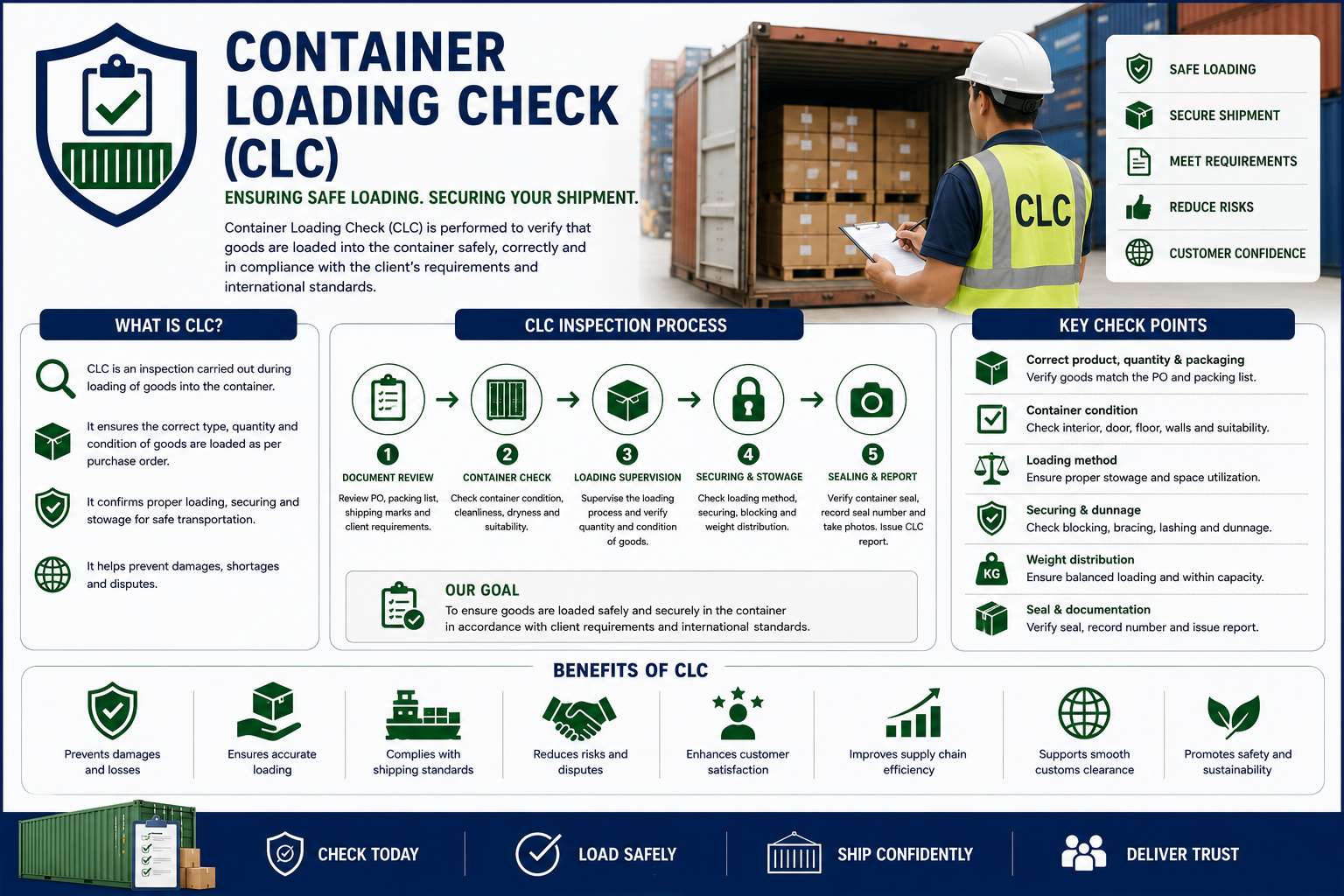
In the era of multimodal transoceanic transportation, a technical defect in a container shell or a minor imbalance in weight distribution is no longer an internal warehouse glitch; it is a financial and legal catastrophe. If executive leadership still views the Container Loading Check (CLC) as routine manual labor at the dock or a superficial photo-op before the truck departs, your enterprise is exposing itself to severe insurance claim rejections, axle overload penalties (VGM Penalty), and cargo damage liabilities running into hundreds of thousands of dollars. The CLC process was not created to slow down dispatch schedules; it is a Cargo Loading Forensic System, transforming every container interior into a rigorously sealed asset protection space defined across three dimensions: Container Structural Integrity, Dynamic Load Balance, and High-Security Seal Authenticity.
An undetected hairline fracture allowing seawater ingress, an unbraced gap lacking dunnage bags (Dunnage Bag), or a misrecorded seal number on shipping documents will instantly invalidate marine insurance coverage during a maritime casualty, converting total loss value directly into an unrecoverable hit on your balance sheet. Conversely, executing the CLC protocol with absolute precision and systemic rigor serves as an unassailable defense shield—allowing exporters to master logistics execution, eliminate demurrage and detention charges (Demurrage/Detention), and safeguard net profit margins against oceanic turbulence.
Logistics Friction Reference Frame: The CLC process does not measure performance through vague promises of careful handling; CLC measures success via absolute weather-tightness (Weather-tightness), center of gravity balance coefficients (Center of Gravity Balance), and the legal integrity of the 5-Stage Photo Proof repository (5-Stage Photo Proof). We structure the CLC system around hard operational metrics: Volumetric Utilization Rate (Volumetric Utilization Rate), Floor Loading Pressure Limits (Floor Load Limit), and Verified Gross Mass Variance (VGM Tolerance ≤2%). A loading operation that fails to govern these variables is effectively surrendering its net margin to ocean carriers and underwriters.
For Chief Operating Officers (COOs), Logistics Directors, and Supply Chain Risk Auditors, mastering the CLC architecture is an absolute operational imperative to freeze damage liabilities, neutralize legal disputes, and protect global brand equity.
1. System Anatomy: Three Structural Drivers Shaping the Transport Defense Capability of CLC
The core architecture of the CLC audit framework is dissected into three uncompromising control pillars that directly determine cargo survivability at sea and the legal validity of shipping documentation:
Pillar 1: Container Structural & Environmental Audit
- Zero-Light & Moisture Protocol: Auditors must step inside the container and fully close both doors to detect microscopic light penetrations—a clear indicator of punctures, structural tears, or thin rust spots capable of leaking seawater or rain. The floor must be verified as completely dry, free of grease, and cleared of foreign chemical odors or biological residue.
- Mechanical Structure & CSC Plate Audit: Surveying all six container planes, locking bars, handles, and door hinges. Mandatory verification of the Container Safety Convention Plate (CSC Plate) ensures the container remains legally certified for stacking weight loads (Stacking Capacity) aboard container vessels.
Pillar 2: Volumetric & Dynamic Load Control
- SKU & Quantity Forensic Audit: Directly inspecting every pallet or carton entering the container door, cross-referencing in real time against the Packing List (Packing List). This completely eliminates risks of short-shipment, incorrect stock-keeping units (SKU), or loading pre-damaged outer packaging.
- Center of Gravity Balance & Structural Dunnage: Enforcing the principle of keeping the center of gravity dead-center on the floorbed to prevent axle overload during road transit and vessel list at sea. Deploying pressure-certified air dunnage bags (Air Dunnage Bag) and heavy-duty lashing straps (Lashing) to eliminate 100% of void space, preventing domino collapse during wave impacts.
Pillar 3: Sealing Security & Document Lock
- ISO 17712 / C-TPAT High-Security Seal Forensic Audit: Directly inspecting the locking mechanism and applying the bolt seal (Bolt Seal) immediately upon closing container doors. Performing spin-and-pull tests to verify permanent lock engagement, capturing high-resolution photos as irrefutable legal evidence.
- Verified Gross Mass Synchronization (VGM): Auditing and confirming the total container weight (VGM) via certified weighbridges or total cargo plus tare calculations. Ensuring weight variances remain strictly within allowable limits (≤2%) to prevent carrier loading rejections (NO LOAD) or administrative fines.
2. Operational Mechanics: The Risk Scanning and Valuation Algorithm of CLC
To ensure CLC does not degenerate into a performative photo checklist, independent marine auditors and insurance underwriters apply strict data verification filters:
- Pre-Loading Container Rejection Filter: Establishing clear rejection criteria at the warehouse gate. If a container exhibits structural frame warpage, rotted wooden flooring, or unresolvable foul odors, the system triggers an immediate Rejection Order (Rejection Order), forcing the drayage provider to replace the equipment prior to loading.
- Optimization Formula for Volume & Weight Distribution:Container Space Efficiency Ratio=Usable Container Capacity (m3)Actual Cargo Volume (m3)×(1−100Center of Gravity Offset)The calculation engine drives operations toward an optimal equilibrium: maximizing volumetric space utilization while keeping center of gravity offset near 0.
- 5-Stage Photographic Proof Repository: Mandatory archiving of five real-time photo sets embedded with timestamps and geotags: (1) Empty container with open doors, (2) 25% loaded, (3) 50% loaded, (4) 100% loaded with dunnage installed, and (5) Doors fully closed with high-security seal number clearly visible. Missing any single stage renders the CLC report invalid before insurance underwriters.
3. Strategic Balance Sheet: Corporate Valuation Through the CLC Control Metric
Rigorous execution of the CLC framework establishes a stark divide between elite export manufacturers with advanced logistics governance and reactive, high-risk shippers:
| Strategic Financial Indicators | Shippers Mastering CLC Architecture | Shippers Operating Passively Without CLC |
|---|---|---|
| Cargo Loss & Claim Dispute Costs | Near 0%. Cargo arrives intact at destination; 100% of legitimate carrier-caused claims are settled rapidly due to complete CLC evidence files. | Extreme financial exposure. Crushed, wet, or moldy cargo; insurance claims routinely denied due to lack of proof regarding initial loading integrity or container condition. |
| Port Demurrage & Detention Expenses | Fully optimized. Fast-track green channel customs clearance; 100% accuracy in VGM and seal records keeps containers on scheduled vessel sailings without demurrage. | Cost spikes. Containers held at terminal due to VGM discrepancies, broken seals, or suspected fraud; port storage fees erode 15−30% of shipment margins. |
| International Wholesale Buyer Retention | Reaches 95-98%. Global buyers gain complete confidence in logistics execution, unlocking long-term, high-value supply contracts. | Buyers cancel accounts after repeated damaged arrivals; brand gets flagged as a “High-Risk Supplier” across global procurement databases. |
4. The 4-Step Attack Roadmap: Eliminating Transport Risks, Locking In CLC Standards
To ensure 100% of containerized export shipments achieve absolute safety against ocean swells and customs audits, enterprises must execute a four-phase operational rollout:
- Step 1 – Container Audit Station & 7-Point Inspection Protocol: Train warehouse personnel to execute the standardized 7-point inspection (Outside/Undercarriage, Doors, Floor, Ceiling, Left Wall, Right Wall, Front Wall) immediately as the tractor-trailer pulls up to the dock.
- Step 2 – Technical Dunnage & Lashing Enforcement: Mandate the use of AAR-certified inflatable air bags and load-rated lashing straps. Strictly prohibit placing heavy cargo over light packages or leaving unbraced voids between cargo blocks.
- Step 3 – High-Security Sealing & VGM Audit: Execute ISO 17712 bolt sealing under joint supervision of the QC lead and drayage driver. Weigh and lock precise VGM figures prior to issuing the Shipping Advice (Shipping Advice).
- Step 4 – Digital CLC Archiving & Insurance System Integration: Upload all CLC reports, weight data, and the 5-stage photo suite to the enterprise ERP/WMS platform. Automate instant dispatch of CLC files to overseas buyers and underwriters the moment the container leaves the yard.
Conclusion
Container Loading Check (CLC) is far more than observing workers stow boxes inside a steel box, nor is it a superficial administrative routine. It is the absolute financial & legal shield — the ultimate defender of cash flow and brand longevity across the global supply chain.
An enterprise that proactively masters, strictly enforces, and digitizes CLC audit metrics builds an unbeatable operational advantage. It stands as an absolute declaration of logistics management maturity, enabling your cargo to shatter technical barriers and command total trust from the world’s most demanding commercial partners.
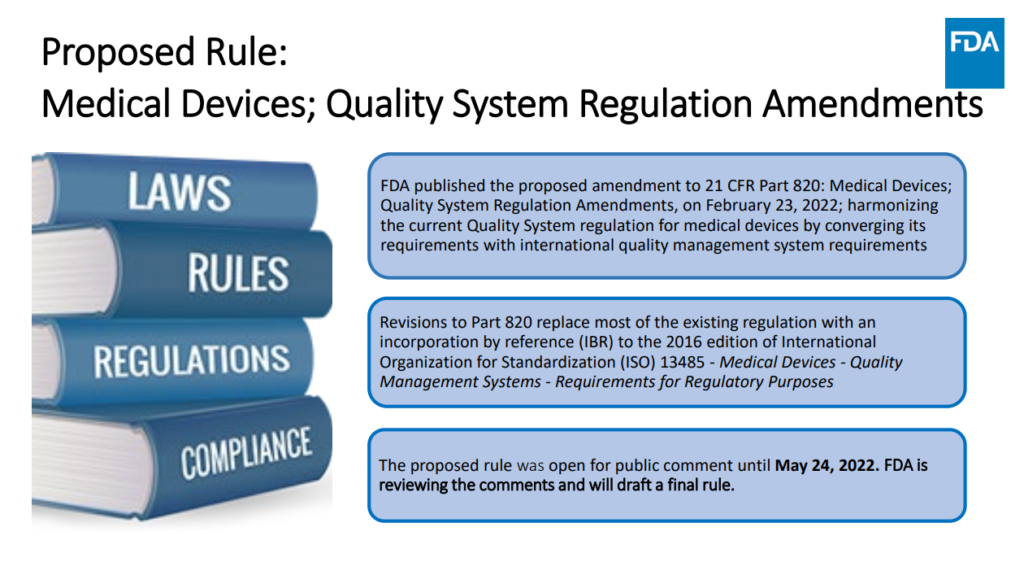
CONCLUSION: A Living System, Not a Filing Cabinet
The move to QMSR represents a transition from reactive compliance to proactive, risk-based management. It is a realization that in a global MedTech market, quality cannot be siloed by geography or administrative legacy.
The heart of your regulatory operations is no longer a static filing cabinet filled with DHFs and DMRs; it is a living, connected system that integrates risk management across the entire product lifecycle. As the line between international standards and U.S. law vanishes, one question remains for leadership: Is your quality system a barrier to entry, or is it your most valuable commercial asset?
Contact us to download the bilingual English-Vietnamese PDF standard: from only $50
On the path toward integration and export, correctly understanding and applying international standards is essential. Yet language and technical terminology often pose real barriers. We are pleased to introduce our bilingual (English – Vietnamese) standards documentation service, translated by our own team of certification consultants.
What We Provide
• A clause-by-clause bilingual comparison, easy to consult and file.
• Professional Vietnamese translation in correct technical terminology, ready to use.
• Interpretation notes and application guidance from hands-on experts.
• Fast delivery in editable, easy-to-store PDF/Word format.
Standards Covered
ISO management systems (9001, 14001, 45001, 37001); sustainability certifications (ISCC, FSC, VFCS/PEFC); textiles and recycled materials (GRS, OCS, OEKO-TEX); social responsibility and ESG (SMETA, EcoVadis, Fairtrade), and many other industry standards upon request.
Why Choose Us
Our documents are translated by professionals who directly consult on and audit certifications, so the translation is accurate not only in language but also in real-world application — saving you time and reducing errors when preparing documentation.
Pricing
From only USD 50 per document, depending on length and complexity. Please send us the standard name to receive a free, accurate quotation.
How to Order
1. Contact us with the name of the standard you need.
2. Receive a quotation and delivery time.
3. Make payment and receive your document by email.
Payment
Bank transfer via QR code (provided with the quotation), or via PayPal: ducluongservices@gmail.com.
We look forward to accompanying you on your certification journey.
Best regards,
CONTACT INFORMATION
Hotline: +84 933096426 – +84 868 591 260
Email:
Website:

No responses yet