
1. Introduction: The Strategic Tension Between Multilateralism and Regionalism
In the architecture of international trade, safeguard measures serve as a critical “emergency valve.” Under Article XIX of the GATT 1994, these instruments permit a sovereign state to temporarily suspend trade concessions to protect domestic industries from sudden, unforeseen surges in imports that cause or threaten serious injury. However, the application of safeguards exists within a profound strategic tension. While the WTO’s Most-Favored-Nation (MFN) principle demands that such measures be applied to all importing sources unconditionally, modern Free Trade Agreements (FTAs) often mandate preferential exemptions for regional partners.
The purpose of this report is to analyze the “Parallelism Principle,” the definitive legal doctrine established by the WTO Appellate Body to resolve this friction. For trade remedy authorities, this principle represents a mandatory compliance threshold. Failure to observe the strict symmetry required by parallelism frequently results in the successful challenge and dismantling of national trade defenses. This analysis begins by examining the foundational legal conflict arising from Article XIX of the GATT 1994.
2. The Legal Framework: Safeguard Measures in the WTO and FTA Context
Article XIX of the GATT 1994 acts as a safety mechanism, allowing members to react to economic shocks that could otherwise undermine political support for trade liberalization. However, the rise of mega-regional agreements has complicated the administration of these “global” safeguards.
Comparison of Safeguard Regimes
| Regulatory Criteria | WTO Global Safeguard (Art. XIX GATT) | FTA Preferential Safeguards (e.g., CPTPP Art. 6.4) |
| Trigger Mechanism | Unforeseen developments; sudden surges in imports causing or threatening serious injury. | Similar injury/surge triggers, often tied to the specific tariff elimination schedule of the FTA. |
| Application Scope | Unconditional MFN: Measures must be applied to all products, regardless of source. | Partner Exclusions: Mandates excluding FTA partners from global safeguard duties. |
| Legal Conflict | Mandates non-discriminatory, universal application across all WTO members. | Mandates exclusion unless partner imports account for a “substantial share” of the injury. |
As identified in Article 6.4 of the CPTPP and similar provisions in other FTAs, a dangerous middle ground exists: the “Substantial Share” exception. Authorities often operate under the assumption that they can exempt FTA partners by default. However, as a matter of strategic risk, authorities frequently fail because they do not provide a separate, data-driven analysis proving that these partners do not contribute a “substantial share” of the injury. This administrative oversight creates the legal friction that necessitates the Principle of Parallelism.
3. Deconstructing the Principle of Parallelism: Scope of Investigation vs. Application
Parallelism is the primary legal mechanism used by the WTO to harmonize the conflict between FTA exemptions and MFN obligations. It serves as a check against “cherry-picking” data to justify trade protectionism.
There must be a strict legal symmetry between the scope of investigation and the scope of application. If an authority includes an FTA partner’s imports in its “serious injury” calculus, it must include those same imports in the final safeguard measure.
To understand the risk, one must view the safeguard proceeding in two distinct phases:
- The Investigation Phase: The authority analyzes global import data to determine if a surge is causing injury. Authorities are often tempted to include FTA partner data here to reach the “injury threshold” more easily.
- The Application Phase: The authority determines the scope of the final tariff, often choosing to exempt FTA partners to honor regional commitments.
Legal Consequences of Non-Symmetry: A legal breach occurs if there is a mismatch between these phases. If an authority uses imports from an FTA partner to prove that a domestic industry is harmed (Phase 1), but then refuses to tax those imports in the final decree (Phase 2), the measure is flawed. In WTO litigation, such a measure will be struck down because the authority has failed to prove that the imports actually subject to the tax were sufficient, on their own, to cause the injury.
4. Case Study Analysis: US — Definitive Safeguard Measures on Imports of Wheat Gluten
The Wheat Gluten dispute (DS166) remains the landmark case solidifying the doctrine of parallelism and serves as a cautionary tale for modern trade authorities.
Dispute Overview
- The USITC Investigation: The United States International Trade Commission (USITC) factored in imports from all global sources, including its NAFTA partners (Canada and Mexico), to reach the required “injury threshold.”
- The Presidential Decree: The subsequent US decree imposed the safeguard tariff but exempted Canada and Mexico, citing NAFTA’s preferential requirements.
- The EC Challenge: The European Communities (EC) argued that the US could not legally use NAFTA imports to satisfy the injury threshold while simultaneously refusing to tax those exact imports.
- The WTO Appellate Body Ruling: The US lost. The Appellate Body ruled the measure inconsistent with WTO law due to the lack of symmetry.
The “Gap-Filling” Violation: The critical takeaway from this case is the prohibition of “gap-filling.” The US used NAFTA data to “bridge the gap” to an injury level it could not have proven using global (non-NAFTA) data alone. This behavior is strictly prohibited. For modern agreements like the CPTPP, authorities must ensure that the injury is isolated to non-FTA sources if those FTA partners are to be exempted from the final measure.
5. Strategic Risk Management for Policy Makers and Trade Lawyers
Administrative precision in the investigation phase is the only defense against WTO litigation. For a Senior Counsel, the priority is auditing the data set long before a decree is signed.
Compliance Strategy for FTA Environments
To maintain FTA preferences while remaining WTO-compliant, authorities must adopt the following:
- Isolate Injury Data: If the intent is to exempt FTA partners, authorities must prove that imports from non-FTA sources alone are sufficient to cause serious injury.
- Audit for Substantial Share: If a partner is included in the investigation but later exempted, the authority must provide a distinct, data-backed justification proving they do not represent a “substantial share” of the injury.
- Strict Symmetry Verification: Ensure the final decree covers the exact universe of countries analyzed in the injury calculus.
Implications for Vietnam’s Trade Landscape
Vietnam possesses a high-density FTA network (RCEP, CPTPP, EVFTA). A review of Vietnam’s extensive library of trade remedy decrees—including 1933/QD-BCT (MSG), 715/QD-BCT (Fertilizer), and various decrees for Steel (918/QD-BCT) and Plastic (1900/QD-BCT)—reveals a complex regulatory environment. Counsel Directive: Each of these product-specific regimes must be audited for “Data Symmetry.” As Vietnam increases its use of trade remedies, it must verify that the imports used to justify injury in these specific decrees are identical to the imports subject to the duties. Any deviation to protect an ASEAN or RCEP partner without isolating the data constitutes a high-probability litigation risk.
Risk Checklist for Trade Counsel
- Verify Data Symmetry: Does the injury data set match the tariff application list?
- Audit Article II GATT Commitments: Ensure the measure does not breach bound tariff rates through “administrative errors” or “temporary stabilization” tools.
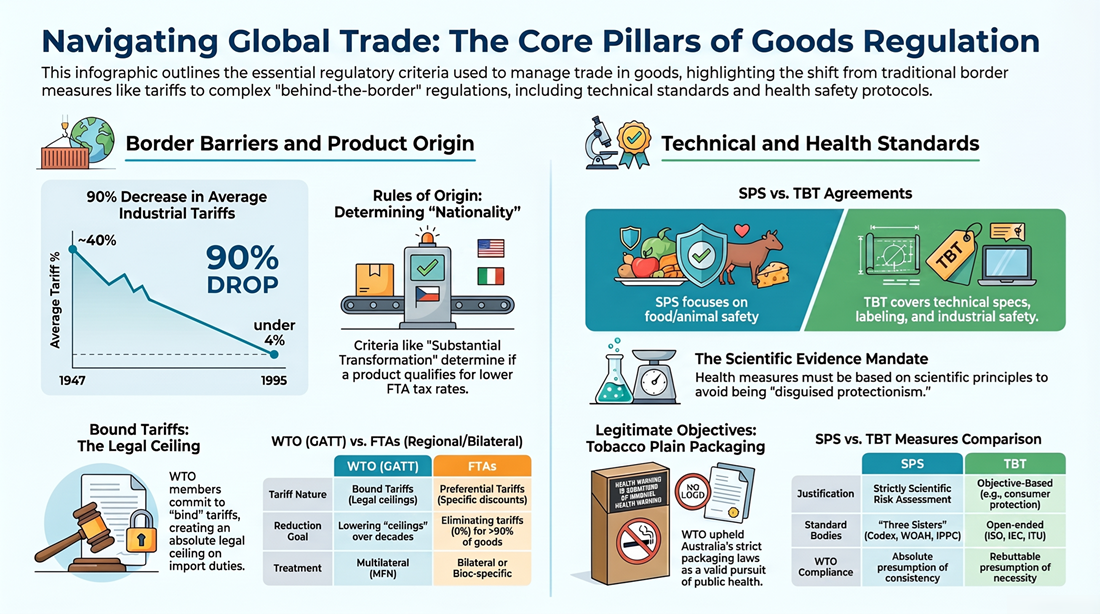
- Distinguish Legitimate Objectives: While the Australia — Plain Packaging case allows for “Legitimate Objectives” (e.g., Public Health) under TBT/SPS rules, recognize that safeguards are governed by injury and surges. Do not conflate TBT regulatory autonomy with the stricter data requirements of safeguard parallelism.
6. The Future of Trade Remedies in a Proliferating FTA Landscape
The Principle of Parallelism is the essential bridge between the competing demands of the WTO and regional trade blocs. Absolute symmetry between the scope of investigation and the scope of application is no longer a best practice—it is a legal necessity.
The strategic takeaway is clear: “technical errors” or “unilateralism” are insufficient defenses. As established in Russia — Tariffs (DS485) and India — IT Products (DS319), bound tariff commitments under Article II are absolute. The WTO has consistently rejected arguments that inconsistencies are merely “temporary stabilization tools” or “administrative errors” during nomenclature conversion. National authorities must operate with surgical precision; any failure to maintain parallelism is an invitation for authorized retaliation.
Why Your 1996 Trade Promises Still Matter: 5 Surprising Truths About Global Commerce
1. Introduction: The Invisible Rules Governing Your World
Why does a dispute over “chlorinated chicken” or “hormone-treated beef” spark a minor geopolitical crisis? Why does the latest smartphone in your pocket—a piece of technology that would have looked like science fiction in the mid-nineties—behave according to the rules of a treaty signed in 1994?
The answer lies in the “hidden architecture” of the global economy. Most people assume that international trade is simply about loading containers onto ships, but the real action happens in the fine print of WTO rulings and FTA frameworks. We live in a era defined by a constant, high-stakes tension: the right of a nation to exercise its sovereignty and protect its citizens versus the legal commitments it made to ensure a predictable global market. These rules dictate the price of your data plan and the safety of your dinner, often based on promises made decades ago.
2. Takeaway 1: Technological Evolution is No Excuse for Breaking Promises (DS319/DS529)
In the boardroom, “innovation” is the ultimate trump card. In trade law, it’s often a legal distraction. This was the hard lesson learned in the India — Tariff Treatment on Certain IT Products case.
Under the 1996 Information Technology Agreement, India committed to 0% tariffs on a range of IT products under Articles II:1(a) and II:1(b) of GATT 1994. Fast forward to 2014, and India—aiming to bolster its “Make in India” campaign—imposed 10% to 20% tariffs on smartphones and advanced routers. India’s legal team argued a “historical intent” defense: smartphones didn’t exist in 1996, so they couldn’t possibly be covered by a 1996 promise.
The WTO Panel was unmoved. They ruled that if a product’s function matches the technical description in the country’s schedule, it is covered, regardless of when it was invented. The strategic takeaway for policymakers is clear: unilateralism is forbidden. If a country wants to exclude new technology from old promises, it must officially renegotiate its schedule under Article XXVIII.
“Tariff lines are bound by their functional and technical descriptions, not by a frozen-in-time snapshot of technology. Technological evolution does not invalidate a country’s legal commitments.”
The Strategist’s View: For the modern tech firm, this means your market access is protected by the wording of a treaty, not the vintage of your invention.
3. Takeaway 2: “Commercially Restrictive” Doesn’t Always Mean “Illegal” (DS435)
One of the most common misconceptions in business is that if a law hurts your sales, it must be a trade violation. The Australia — Tobacco Plain Packaging case fundamentally debunked this.
Australia mandated that cigarettes be sold in uniform, drab dark brown packaging with 75% graphic health warnings, stripping away all branding. Tobacco-exporting nations argued this violated TBT Article 2.2 by creating an “unnecessary obstacle to international trade.”
The WTO validated Australia’s move, creating a clear distinction: a measure can be “commercially restrictive” without being “unnecessary.” Because Australia provided statistical data proving that plain packaging reduced smoking rates, they successfully defended their “Legitimate Objective” of public health.
“The measure is commercially restrictive but not ‘unnecessary’ (Australia proved with statistical data that plain packaging successfully reduced smoking rates).”
The Strategist’s View: Regulatory autonomy remains intact for health and safety, provided the state can back its restrictions with a measurable, legitimate outcome.
4. Takeaway 3: The “Parallelism” Trap in Economic Protection (DS166)
When an industry faces a sudden surge in imports, governments often reach for “Safeguard Measures” (temporary taxes) under Article XIX of GATT. However, many fall into the “Parallelism” trap, as seen in the US — Safeguard Measures on Wheat Gluten case.
The U.S. conducted an investigation that included imports from all sources—including NAFTA partners Canada and Mexico—to prove that a surge was causing “serious injury.” But when it applied the actual tax, it exempted its NAFTA friends. The WTO ruled this illegal under the “Symmetry Rule.” You cannot use a partner’s data to prove there is a problem and then leave them out of the solution.
Compliance Strategy: If a policymaker wants to exclude FTA partners from a safeguard tax, they must completely exclude that partner’s data during the initial injury investigation phase.
The Strategist’s View: In trade remedies, the scope of the investigation must perfectly match the scope of the application. You cannot “cherry-pick” your data to protect your allies.
5. Takeaway 4: In Food Safety, Science is the Ultimate Arbiter (DS26/DS48)
In the world of the Sanitary and Phytosanitary (SPS) Agreement, “gut feelings” about food safety are legally worthless. This was established in the EC — Measures Concerning Meat and Meat Products (Hormones) case.
The European Community (EC) banned hormone-treated beef, claiming health risks. However, international standards set by the “Three Sisters”—specifically the Codex Alimentarius (alongside WOAH and IPPC)—permitted residual hormone levels. Under SPS Articles 3.3 and 5.1, a member can go stricter than the international baseline, but only if they provide a “verifiable scientific risk assessment.” The EC failed to do this, relying instead on political pressure and consumer anxiety.
“Under SPS, if EC go stricter than the international baseline, EC must back it up with absolute, empirical science.”
The Strategist’s View: The WTO treats international standards as the “safe harbor.” To deviate, you don’t just need a reason; you need a lab report that can withstand global scrutiny.
6. Takeaway 5: Goods are “In” by Default; Services are “Out”
The most profound “hidden architecture” difference lies between GATT (Goods) and GATS (Services).
- Trade in Goods (GATT): Operates on a “Negative-List” approach. Everything is covered unless you specifically carve it out. Furthermore, National Treatment (Article III) is “Unconditional”—once a product crosses the border, you must treat it like a local product.
- Trade in Services (GATS): Operates on a “Positive-List” approach. Sectors like banking or AI-delivery are “out” by default unless a country explicitly “schedules” them. Crucially, National Treatment (Article XVII) is “Conditional”—you only treat foreigners like locals in the specific sectors you have promised to open.
This makes goods trade inherently more predictable and “open” than services, which are governed by “Behind-the-Border” domestic regulations rather than simple tariffs.
The Strategist’s View: For service providers, “market access” isn’t a right; it’s a specific, negotiated concession that varies wildly from one country to the next.
7. Conclusion: The Future of Friction
We have moved beyond the era of “Lowering Border Barriers” and entered the era of “Reforming Domestic Laws.” The friction of the next decade won’t be about a 5% tariff; it will be about carbon-border taxes and AI regulations.
As we deploy carbon adjustment mechanisms, the big question is: are these “border measures” (GATT) or “technical regulations” (TBT)? As we regulate AI, will it be seen as a service (GATS) or a good? These 1990s commitments are the bedrock, but as the lines between physical goods and digital services blur, we may be heading toward a massive era of renegotiation. Until then, your 1996 promises remain the law of the land.
Contact us for a business consultation
ISC Global Co., Ltd. Hotline: +84 933 096 426 – +84 868 591 260 Email: info@iscglobal.asia | van.pham@iscglobal.asia Website: iscglobal.asia | iscglobal.edu.vn

No responses yet