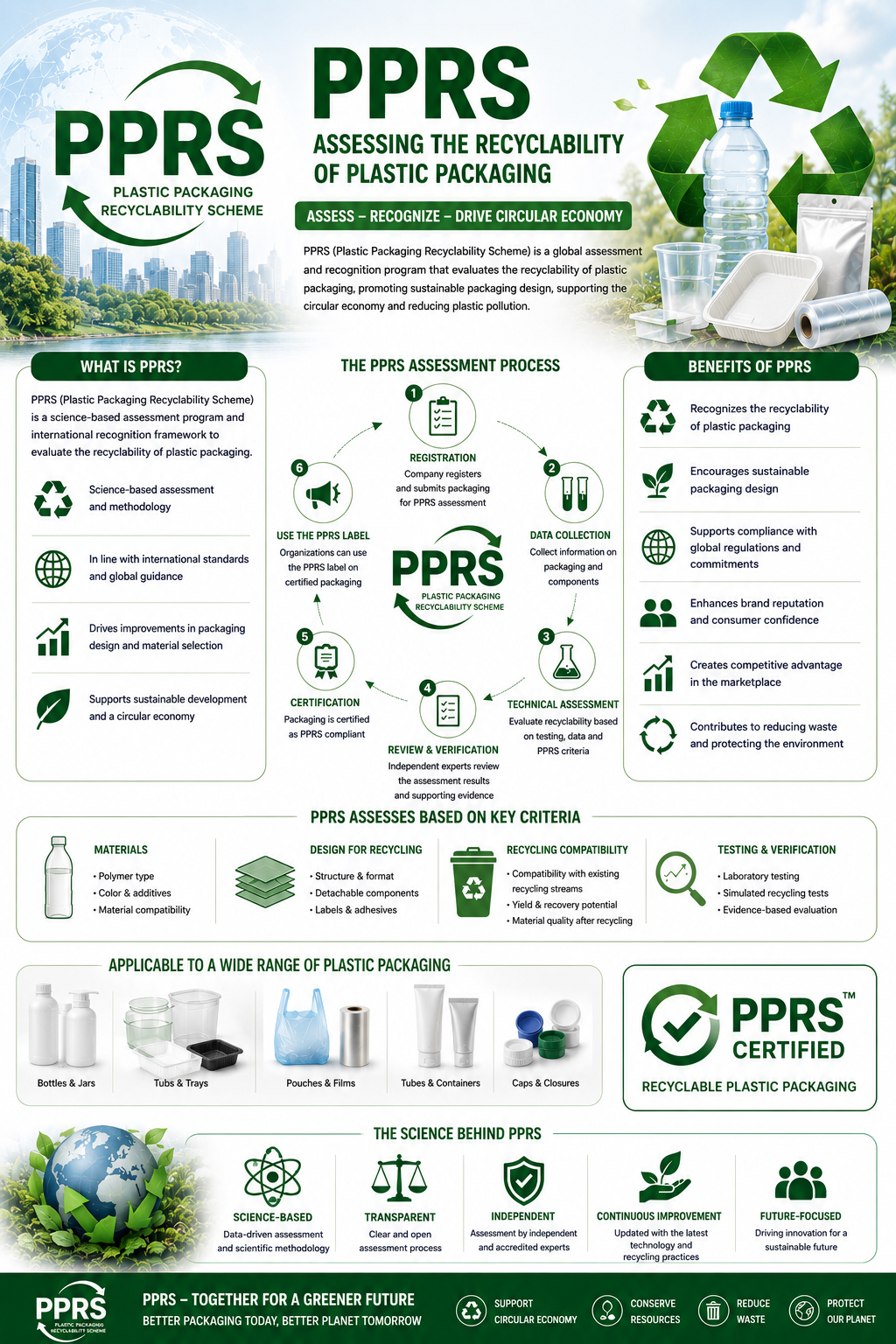
In today’s cross-border trade warfare, plastic is no longer merely a low-cost packaging material; it is a high-stakes financial risk variable. If your corporate board still views the Plastic Pollution, Recovery & Recycling Standards (PPRS) as a superficial Corporate Social Responsibility (CSR) gesture, your enterprise is actively opening itself up to brutal tariff penalties. From the EU Plastic Tax (€800/tonne) to Extended Producer Responsibility (EPR) mandates across North America and East Asia, developed markets have converted environmental regulations into a trade protectionism buffer. The PPRS framework was not designed to appeal to goodwill; it is a Quantitative Material Friction System (Material Friction System), dissecting plastic flows across three critical survival axes: Source Design Efficiency, Traceability Integrity, and Circular Return on Capital.
A single error in declaring Post-Consumer Recycled (PCR) ratios or using restricted plastics (such as PVC or EPS) immediately triggers cargo holds at destination ports, compounding demurrage fees (Demurrage), and causing permanent environmental credit downgrades. Conversely, mastering PPRS allows an enterprise to proactively eliminate the burden of plastic taxes, lower production costs, and secure exclusive supplier status with global Tier-1 retail conglomerates.
The Plastic Financial Friction Reference Frame: PPRS does not measure vague green promises; PPRS measures the tax deducted per product unit and the safety margin of the supply chain. We structure the PPRS matrix around hard quantitative variables: Virgin Plastic Elasticity Ratios (Virgin Plastic Ratio), Recyclability Coefficients (Recyclability Coefficient), and Nurdle Leakage Margins (Nurdle Leakage Margin) across shop-floor operations. Any facility failing to optimize these hard metrics automatically writes its own name off the vendor lists of high-value supply chains.
For Chief Financial Officers (CFOs), Chief Operating Officers (COOs), and seasoned supply chain strategists, decoding the underlying PPRS mechanics for plastics is a matter of survival to defend net profit margins, hedge against legal liabilities, and clear every stringent technical barrier at global ports.
1. Anatomical Blueprint: Three Kinetic Engines Dictating PPRS Material Performance
The core architecture of PPRS is split into three dynamic axes, directly dictating product cost structures and customs clearance speeds:
Pillar 1: Source Design Optimization & Risk Elimination (Eco−Design & Material Dematerialization)
- Mono-Material Integration Ratios: Mandating the elimination of multi-layer composite plastics that cannot be mechanically separated. PPRS quantifies the transition rate toward single-polymer structures (such as 100% PET or 100% PP), allowing post-consumer waste to feed directly into recycling streams without incurring intermediate sorting costs.
- Packaging Weight Reduction Index (Weight Optimization): Measuring the capacity of R&D units to down-gauge packaging while retaining structural mechanical protection. Every gram of virgin plastic eliminated directly slashes manufacturing Cost of Goods Sold (COGS) and reduces tax liabilities at port entry.
Pillar 2: Supply Chain Traceability & Data Integrity (Traceability & PCR Integrity)
- PCR/PIR Content Verification: Quantifying and verifying the exact percentage of Post-Consumer Recycled (PCR) and Post-Industrial Recycled (PIR) content via digital audit trails. PPRS neutralizes corporate greenwashing by mandating strict cross-verification under Global Recycled Standards (GRS).
- Internal Environmental Protocol – Operation Clean Sweep (OCS): Enforcing technical containment across the factory floor. Any leakage of plastic resin pellets (Nurdles) into facility drainage systems is classified as a severe operational violation, directly docking the plant’s compliance rating.
Pillar 3: Tariff Immunity & Circular Lifecycle Velocity (Tax Immunity & Circular Velocity)
- Global Plastic Tax Immunity Thresholds: Evaluating product alignment against stringent EU and US thresholds (e.g., products containing over 30% PCR plastic qualify for full tax exemption). This serves as a direct metric of an enterprise’s pricing competitiveness.
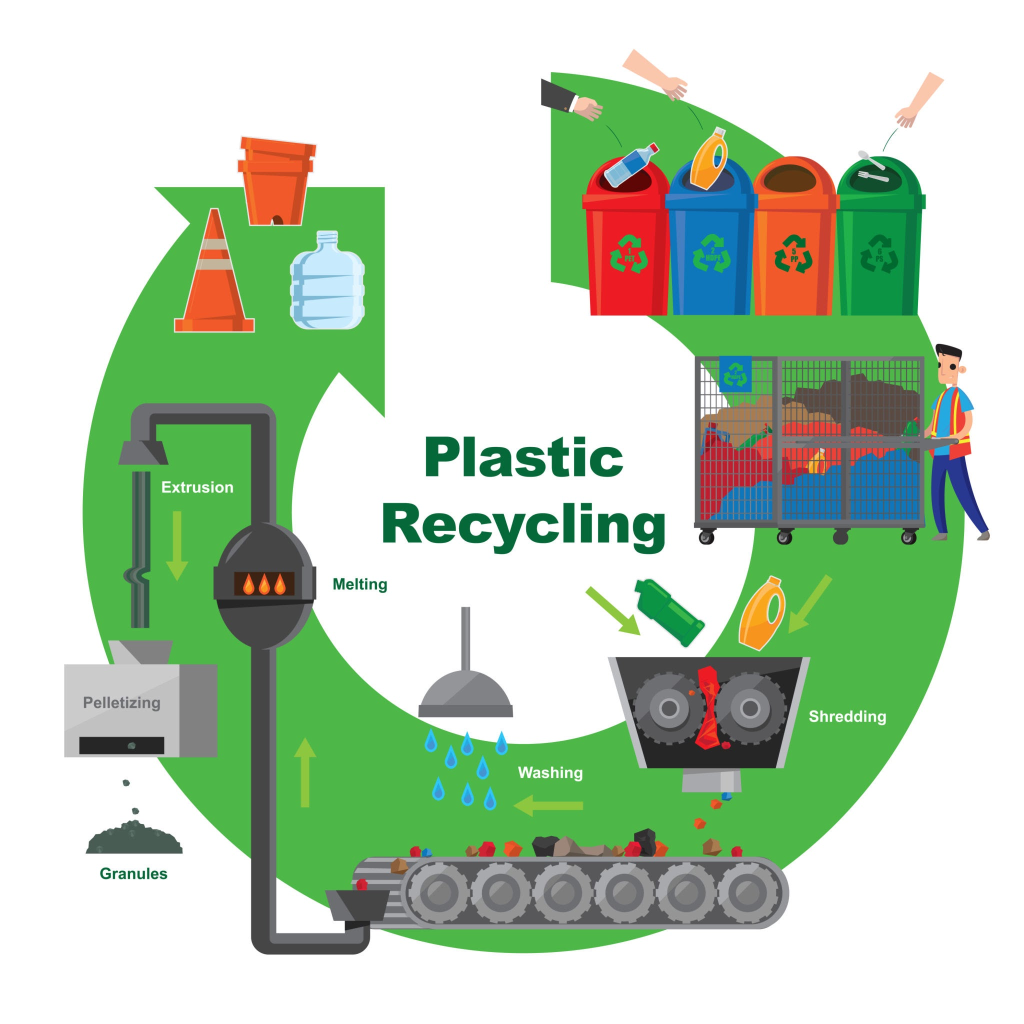
- Closed-Loop Infrastructure Metrics: Measuring the proportion of industrial plastic waste (PIR) generated on the shop floor that is recovered, re-pelletized, and immediately fed back into the production cycle, eliminating raw virgin material purchasing costs.
2. Operational Mechanics: The Analytical Algorithms Scoring Plastic Risk
To prevent PPRS from devolving into theoretical reports, PPRS audit systems deploy uncompromising data-verification filters:
- Mass Balance Forensic Audit Filters: The PPRS algorithm scans deep into procurement data, raw resin input tonnages, extruder/molding machine operating capacities, and final output volumes. Any discrepancy between purchased PCR resin volumes and claimed PCR content in finished goods triggers an automated fraud flag.
- The Environmental Penalty Formula (Plastic Tax & Penalty Formula): Investment funds and risk management divisions utilize mathematical models derived from PPRS data to calculate profit erosion:Profit Erosion from Plastic=Tax Rate/Tonne×Total Tonnage×(1−Actual PCR%)If the actual PCR percentage sits at 0%, the accrued tax penalty hits selling expenses directly, slashing the enterprise’s EBITDA.
- Port Entry Barrier Matrix: PPRS cross-references data with compliance registries of major shipping alliances. Products utilizing hard-to-recycle polymers or toxic additives are automatically flagged for red-lane customs audits, requiring mandatory laboratory testing before clearance.
3. The Strategic Balance Sheet: Corporate Valuation via PPRS Governance Metrics
Executing PPRS for plastics creates a sharp divide between modern supply chain leaders and legacy operators:
| Financial & Sales Indicators | Enterprises Mastering PPRS for Plastics | Legacy Operators Trapped in Single-Use Models |
|---|---|---|
| Plastic Tax & Tariff Penalties | Near zero. Products secure a green passport, gaining full exemption from plastic taxes across EU/US markets. | Record high. Absorbs full plastic tax burdens (€800/tonne in the EU), eroding 5−15% of net profit margins. |
| Global Contract Win Rates | Reaches 80−90% in Tier-1 tenders (Walmart, Unilever, Procter & Gamble) by fulfilling 100% of sustainable packaging criteria. | Disqualified during initial technical rounds due to an inability to provide verifiable PCR origin certificates. |
| Raw Material Input Costs (COGS) | Optimized by maximizing internal waste recycling (PIR) and locking in long-term fixed-price PCR supply contracts. | Subject to extreme volatility linked to global crude oil prices due to a 100% dependency on virgin resins (Virgin Plastic). |
4. The 4-Step Assault Roadmap: Eliminating Plastic Liabilities, Escalating Field PPRS Scores
Improving an enterprise’s PPRS index is not a public relations campaign; it is a rigorous technical overhaul executed across 4 phases:
- Step 1 – Audit Plastic Footprints & Isolate Vulnerabilities: Audit the entire material supply chain. Isolate specific product lines relying on virgin resins, hard-to-recycle polymers, or excessive packaging weights to place them on an emergency redesign shortlist.
- Step 2 – Overhaul Eco-Design & Restructure R&D: Mandate R&D teams to transition 100% of packaging structures to mono-materials and integrate a minimum of 30% PCR plastic. Eliminate dark pigments or additives that blind near-infrared (NIR) sorters at recycling facilities.
- Step 3 – Enforce Shop-Floor Operation Clean Sweep (OCS): Install containment filtration systems across all factory drainage networks. Enforce tight-band protocols for resin pellet storage and transfer, eliminating 100% of pellet losses into the surrounding environment.
- Step 4 – Lock Digital Integrity & Secure PPRS Certification: Deploy digital plastic traceability software within the enterprise ERP ecosystem. Package all GRS certificates and mass balance reports for seamless international customs verification, locking in a dominant position in the green supply chain.
Conclusion
The Plastic PPRS Standard is not a voluntary environmental slogan, nor is it a metric that can be manipulated through qualitative reporting. It stands as a financial verdict or a certificate of operational survival before the supreme court of global export markets.
An enterprise that knows how to read, command, and weaponize plastic PPRS metrics into a commercial weapon will always secure priority order allocations from the world’s most lucrative buyers. It stands as an ironclad declaration of execution excellence, smashing through tariff barriers and establishing a commanding grip on the circular economy.
Contact us to download the bilingual English-Vietnamese PDF standard: from only $50
On the path toward integration and export, correctly understanding and applying international standards is essential. Yet language and technical terminology often pose real barriers. We are pleased to introduce our bilingual (English – Vietnamese) standards documentation service, translated by our own team of certification consultants.
What We Provide
• A clause-by-clause bilingual comparison, easy to consult and file.
• Professional Vietnamese translation in correct technical terminology, ready to use.
• Interpretation notes and application guidance from hands-on experts.
• Fast delivery in editable, easy-to-store PDF/Word format.
Standards Covered
ISO management systems (9001, 14001, 45001, 37001); sustainability certifications (ISCC, FSC, VFCS/PEFC); textiles and recycled materials (GRS, OCS, OEKO-TEX); social responsibility and ESG (SMETA, EcoVadis, Fairtrade), and many other industry standards upon request.
Why Choose Us
Our documents are translated by professionals who directly consult on and audit certifications, so the translation is accurate not only in language but also in real-world application — saving you time and reducing errors when preparing documentation.
Pricing
From only USD 50 per document, depending on length and complexity. Please send us the standard name to receive a free, accurate quotation.
How to Order
1. Contact us with the name of the standard you need.
2. Receive a quotation and delivery time.
3. Make payment and receive your document by email.
Payment
Bank transfer via QR code (provided with the quotation), or via PayPal: ducluongservices@gmail.com.
We look forward to accompanying you on your certification journey.
Best regards,
CONTACT INFORMATION
Hotline: +84 933096426 – +84 868 591 260
Email:
Website:
No responses yet