
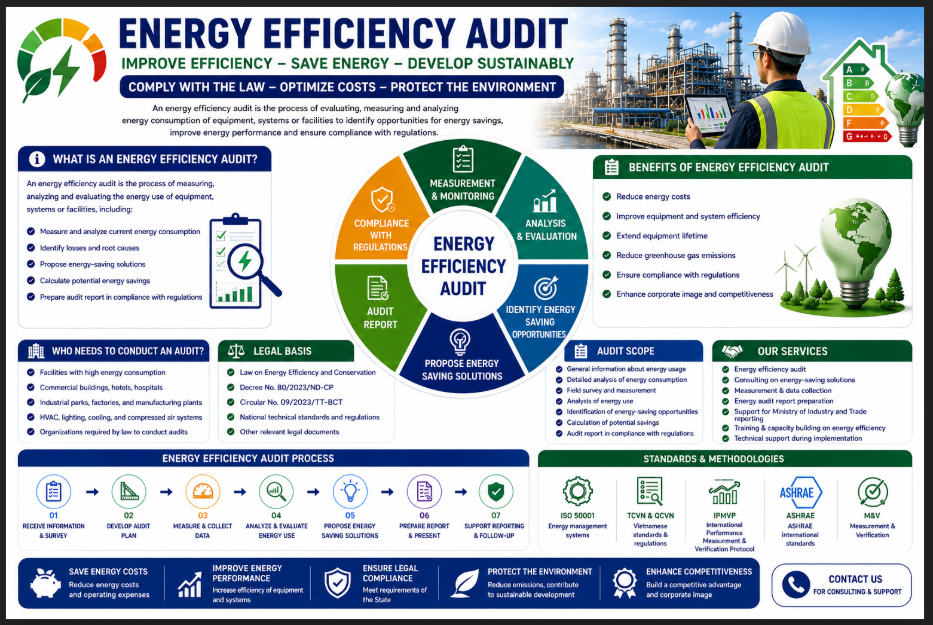
If your enterprise’s Research and Development (R&D) department still views energy efficiency evaluation as a manual post-production step using basic power meters, you are steering your product lines into a hazardous regulatory zone. Leading technology markets, such as the EU (Ecodesign Directive/EPREL) and North America (Energy Star), have shifted entirely to automated digital tracking and dynamic load testing.
An electronic device is no longer disqualified simply for over-current consumption during active operations; it will be summarily expelled from the market if its power management algorithms operate inefficiently during static states.
The New Technical Reference Frame: Modern green regulations do not evaluate theoretical efficiency. They measure an integrated power consumption matrix: from the quiescent leakage current of semiconductor components and the conversion efficiency of DC-DC power stages, to the circuit-breaking behavior of embedded firmware when the device transitions into Standby or Networked Standby modes. A variance of just one milliwatt ($1\text{mW}$) over the designated threshold in standby mode is enough to downgrade a product’s energy label from a premium bracket to a poor-efficiency category (Levels E, F, G), completely wiping out your enterprise’s profit margins.
For Chief Technology Officers (CTOs) and Lead Hardware Engineers, mastering energy efficiency testing and optimization represents a design revolution to maximize power density per unit cost.
1. Technological Bottlenecks: Hardware Design Flaws Privately Burning Product Efficiency
Through deep technical field evaluations, we have isolated 3 root causes that frequently cause hardware equipment to fail energy efficiency certifications at international laboratories:
- Inversion Losses within the Power Supply Stage: Utilizing low-cost power ICs, MOSFETs, or inductors with high parasitic internal resistance causes a significant volume of input power to dissipate as useless thermal energy. This decreases overall efficiency while driving up internal operating temperatures, forcing cooling systems to work harder and consume additional auxiliary power.
- Embedded Firmware Power State Blind Spots: Firmware fails to correctly configure the deep sleep modes of the microcontroller (MCU) or SoC. When the device is idle, peripherals and RF transceiver modules (Wi-Fi, Bluetooth) continue to draw current and scan for signals, pushing standby power consumption past the strict $0.5\text{W}$ threshold dictated by new Ecodesign mandates.
- Thermal and Aging Tolerances Drift: A product may exhibit excellent power-saving performance during the first 10 minutes of testing within an internal lab. However, after 2 hours of continuous operation under heavy load, elevated temperatures alter the resistance and capacitance values of passive components, causing efficiency to collapse when subjected to independent verification by international partners.
The consequence of these bottlenecks is a direct rejection of product registration on the EPREL (EU) database or a revocation of the Energy Star label, forcing enterprises to halt distribution, face indefinite inventory holds, and manage a wave of order cancellations from international retailers.
2. Solution Matrix: Restructuring the Component Chain and Synchronizing Embedded Firmware
To break down protectionist technical barriers, our engineering protocol intervenes directly within the hardware architecture and embedded firmware layers through 4 technical tollgates:
- Redesigning the Power Stage via Wide-Bandgap Semiconductors (GaN/SiC): Replacing traditional silicon power architectures with high-performance Gallium Nitride (GaN) or Silicon Carbide (SiC) power ICs to push conversion efficiency beyond $95\%$, minimizing board-level thermal dissipation.
- Engineering Dynamic Voltage and Frequency Scaling (DVFS) Frameworks: Rewriting embedded firmware code to integrate algorithms that automatically modulate processor voltage and operating frequency based on real-time computational workloads, instantly forcing peripheral modules into zero-current sleep states when idle.
- Automated Testing with High Dynamic Range Power Analyzers: Deploying high-precision digital power analyzers within ISO/IEC 17025 accredited laboratories to scan and log the complete current profile down to the micro-ampere ($\mu\text{A}$) scale, completely neutralizing measurement errors before official compliance submission.
- Digitization of Centralized Energy Data Declaration Files: Compiling validation logs, circuit layouts, and duty-cycle load analyses into a standardized XML format, ready for seamless submission and immediate activation of energy QR codes on international regulatory portals.
3. Techno-Economic Indicators: Technology Profit Margins per Saved Watt
Mastering energy efficiency testing is not an inflation of manufacturing costs; it is an active engineering methodology to scale up the commercial surplus value of your product:
| Technical Parameters | Ecodesign-Mastered Hardware | Legacy Technology Equipment |
| Energy Label Bracket Achieved | Reaching elite tiers (Level A, B, or Energy Star), positioning the product in the high-tech bracket and maximizing B2B pricing leverage. | Trapped in low-efficiency brackets (Level E, F, G), forcing deep price discounts and aggressive competition in low-margin value tiers. |
| Hardware Stability & Lifespan | Optimizing operational efficiency reduces internal operating temperatures by $10^\circ\text{C}$ to $15^\circ\text{C}$, doubling capacitor lifespans and lowering warranty return rates. | Equipment continuously runs hot, accelerating component aging and driving up system failure rates during the post-market warranty phase. |
| Supply Chain Penetration Speed | Swiftly clearing the rigorous technical audits of global purchasing groups to secure placement on high-value corporate procurement tenders. | Disqualified during the initial RFQ/screening phases due to a failure to meet the minimum green criteria defined in sustainable procurement rules. |
4. 4-Phase Action Roadmap: Structured Phasing from R&D to Mass Production
We deploy our energy efficiency optimization protocols through a structured, modular roadmap aligned with hardware revision cycles:
- Phase 1 – Power Profiling (Hardware & Firmware Audit): Utilizing high-speed current-shunt probes to map the detailed energy footprint of each component on the PCB, pinpointing precise coordinates of current leakage and parasitic losses.
- Phase 2 – Hardware Tuning and Code Recompilation: Executing power-stage component swaps and optimizing PCB traces to decrease parasitic resistance, while reconfiguring firmware interrupt tables to drive standby power consumption to its absolute minimum.
- Phase 3 – Validation Testing in an ISO 17025 Lab: Conducting official measurements within standardized anechoic/thermal chambers, securing verified efficiency test reports, and completing international eco-label registrations.
- Phase 4 – Mass Production Calibration & Quality Handover: Transferring automated power measurement fixtures to end-of-line QC stations on the factory floor, ensuring that $100\%$ of mass-produced units maintain energy tolerances identical to the certified golden sample.
5. Turning Tangible ESG Targets into Reality via Power Technocracy
Optimizing energy efficiency within hardware product lines serves as the most concrete, measurable proof of an enterprise’s alignment with ESG (Environmental, Social, Governance) benchmarks tracked by global institutional funds:
- The Environmental Pillar (Environment): Decreasing energy consumption across a product’s operational lifecycle directly cuts Scope 3 carbon emissions, contributing data-backed reductions toward global Net-Zero initiatives.
- The Social Pillar (Social): Delivering smart, high-efficiency technology solutions that reduce monthly utility bills for end-users while relieving grid overload pressures in destination countries.
- The Governance Pillar (Governance): Transitioning to transparent technical data metrics and green design frameworks protects the enterprise from “greenwashing” allegations, driving up corporate valuation before global investment boards.
Conclusion
Energy efficiency validation and hardware tuning have outgrown the status of an isolated administrative procedure. It is a fierce competitive race centered on molecular-level hardware layout design and micro-instruction firmware engineering.
Possessing a product portfolio optimized for peak energy efficiency allows your enterprise to establish an insurmountable technological gap against competitors, neutralize technical barriers in developed economies, and confidently command a leadership position within the global technology value chain.
Contact us today to receive dedicated advice and the most suitable solution for your business!
Hotline: +84 933096426 – +84 868 591 260
Email:
Website:
Partners in Vietnam:
Contact Vietnam representative: Duc Luong Services
Hotline: +84 933096426 – +84 868 591 260
Email: ducluongservices@gmail.com
Website:
STC VN Co., Ltd.
Hotline: +84 933096426 – +84 868 591 260
Email: info@staunchlyservices.com.vn
Website: https://stauchlyservices.com.vn


No responses yet