Overview of The Vegan Society and the Vegan Trademark Certification System
About The Vegan Society
The Vegan Society is one of the pioneering organizations in the vegan movement in the world. Founded in 1944 in the United Kingdom, The Vegan Society is not only the origin of the term “vegan” but also the first organization to lay the foundation for the modern concept of vegan living. Since its inception, the organization has played a central role in promoting public awareness of the benefits of a vegan lifestyle for health, the environment, and animal rights.
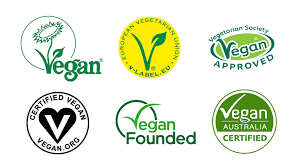
In 1990, The Vegan Society created the Vegan Trademark – a trademark that helps consumers identify vegan products quickly, conveniently and accurately. Since then, the Vegan Trademark has become the standard symbol for vegan products, recognized and trusted on a global scale.
Vegan Trademark Core Definitions and Requirements
According to the standards of The Vegan Society, products affixed with the Vegan Trademark must strictly meet the requirements of origin and production process:
- Do not use any products, by-products, or animal derivatives at any stage of product production and/or development.
- All ingredients, including additives, flavorings and preservatives, must be of plant or mineral origin.
This strict control system is to ensure that products bearing the Vegan Trademark are fully in line with the vegan living philosophy, without affecting animals from the source of raw materials to the finished product.
Detailed Certification Criteria
1. Product ingredients
Products that want to achieve Vegan Trademark certification must comply with the following strict criteria:
- Absolutely free of animal-derived substances such as meat, dairy, eggs, honey, gelatin and any additives of animal origin.
- All raw materials used must be plant-based or mineral, not of animal origin whether primary or secondary.
- Derivatives, synthetic flavors, enzymes, texturing agents… must also have a clear plant or mineral origin.
2. Production Process
The production and product development process is also a key factor in the approval of Vegan certification:
- No animal testing: Businesses may not conduct, authorize, or authorize any form of animal testing on the final product or any component of the product. This applies to both businesses and third parties over which the business has effective control.
- Cross-contamination control: Manufacturers must take reasonable and feasible measures to prevent and minimize the risk of cross-contamination between vegan products and non-vegan products/ingredients in the same production facility or production line.
- Traceability: The entire supply chain from raw materials to finished products must be transparent, allowing for traceability and periodic inspections.
3. Quality Control and Evaluation Process
To ensure the highest transparency and reliability, The Vegan Society conducts rigorous audits:
- Production Facility Audit: The organization will physically inspect the business’s factory, production line, and quality control system to ensure compliance with vegan standards.
- Considering the entire supply chain: Not only focusing on the final product, The Vegan Society also strictly controls from the source of raw materials, the process of storage, transportation, to packaging and distribution.
- Periodic inspection and re-evaluation: Enterprises need to maintain certification conditions and be ready to cooperate in periodic or irregular inspections and re-evaluations.
Benefits of Vegan Trademark Certification
1. International prestige
Vegan Trademark is the world’s first professional vegan brand, with more than 30 years of experience in the field of vegan product authentication. Owning this trademark means that the business is positioned as a prestige in the global vegan community, serving customers with a strong sense of ethics, health and the environment.
2. Brand identity and customer trust
The Vegan Trademark logo has now become a sign of identification trusted and chosen by consumers around the globe. When the product carries this symbol, customers are easily aware and assured of quality standards, enhancing trust as well as competitiveness for businesses in the market.
3. Expand export opportunities and develop markets
In the context of developed markets such as Europe, North America, Oceania, and many Asian countries increasingly prioritizing eco-friendly and vegan products, Vegan certification opens up great opportunities for businesses to access and expand their export market share.
4. Meet new consumer trends
Modern customers, especially the younger generation, are increasingly interested in the origin and impact of products on animals, the environment and personal health. Owning Vegan certification helps businesses meet the increasing needs of this group of customers, while creating a sustainable competitive advantage.
The Vegan Society’s Vegan Standard is a prestigious and objective certification system, aiming to protect animals, develop sustainably, and raise social awareness about vegan lifestyles. Strict compliance with the criteria of the standard not only contributes to building a business brand but also plays a positive role in changing consumption habits, protecting the environment and public health.
With more than 30 years of establishment and development, Vegan Trademark has become a global symbol, a bridge between businesses and conscious consumers, contributing to spreading a humane and sustainable lifestyle for the present and the future.
Vegan Standard Training, Consulting, and Certification Services
A comprehensive solution for businesses towards sustainable development and meeting the trend of green consumption
General Introduction to Vegan Standards
The Vegan standard is not only a nutritional trend but also a new standard in modern manufacturing, business and lifestyle. Products or services that meet Vegan standards ensure that they do not use animal-derived ingredients, are not tested on animals, and adhere to strict principles of quality, safety, and ethics throughout the entire supply chain. Vegan certification is becoming increasingly important, especially as global consumers increasingly focus on health, the environment, and animal rights.
The Importance of Vegan Training, Consulting, and Certification
- Consumer health protection: Vegan products are usually low in cholesterol, rich in fiber, and help reduce the risk of chronic diseases.
- Environmental protection: Vegan production helps reduce greenhouse gas emissions, save water, and reduce deforestation.
- Enhancing corporate social responsibility: Achieving Vegan certification demonstrates a company’s commitment to the community and sustainable development trends.
- Increase brand value: Products with Vegan certification easily reach international customers, especially in fastidious markets such as the EU, the US, and Canada.
Vegan standard training services
Vegan standard training is the first step to help businesses and organizations understand the requirements, processes and benefits when aiming for Vegan certification. The training program usually includes:
- An overview of Vegan and international standards: Help students grasp an overview of history, principles and prestigious certification organizations such as Vegan Society (UK), V-Label (Europe), Certified Vegan (USA)…
- Vegan production process analysis: Learn about raw materials, additives, processing, storage and packaging processes that meet Vegan standards.
- Quality Control and Prevention of Cross-contamination: Guidance on how to identify and eliminate animal hazards and contaminants during operation.
- Vegan Supply Chain Management: Training on supplier selection, ingredient control, and transportation to Vegan standards.
- Internal audit skills training and preparation of certification documents: Equip yourself with internal audit skills, process evidence and complete Vegan certification applications.
- Practice and handle situations: Simulate real-life situations for students to practice their ability to identify and solve problems related to Vegan standards.
The training course can be designed flexibly and suitable for each subject: senior managers, production staff, quality control departments, product research and development departments, etc.
Vegan Standard Consulting Service
Vegan standard consulting plays a key role in helping businesses realize their certification goals in a time-saving, cost-effective and resource-saving way. The Vegan standard consultation process usually includes:
- Status survey and distance assessment: The consultant conducts a survey of the entire production process, from raw materials, processing lines to storage, packaging and distribution.
- Analyze and propose solutions: Advise on how to choose vegan ingredients, replace animal-derived additives, recommend options to optimize the production process.
- Support for building a Vegan quality management system: Propose to build processes, work instructions, and inspection forms in accordance with international Vegan standards.
- Internal personnel training: Organize in-depth training sessions for officers and employees on identifying, controlling risks and handling situations related to Vegan standards.
- Test and evaluation: Simulate the assessment process of the certification body so that businesses are familiar with the actual criteria and requirements.
- Support in preparing and completing Vegan certification applications: Advise on how to prepare documents and documents and coordinate with certification organizations throughout the inspection process.
- Accompanying after certification: Periodic consultation on maintaining and improving the Vegan management system and supporting the handling of problems that arise after being certified.
Vegan Certification Services
Vegan certification is authentic proof of compliance with international standards in the production, processing and sale of vegan products. Businesses need to pay attention to the following factors when applying for certification:
- Choose a reputable certification organization: Some globally recognized organizations such as Vegan Society, V-Label, Certified Vegan, Vegan Action…
- Prepare complete documents: Businesses need to provide documents related to the production process, the origin of raw materials, quality control processes, and evidence of animal exclusion.
- Meet physical inspection requirements: Certification bodies will conduct on-site inspections, evaluate processes, store product samples, and interview personnel directly.
- Compliance with traceability standards: Products must be traceable to clear raw materials, ensuring that there is no cross-contamination from animals.
- Maintenance and recertification: Vegan certification usually has a validity period of 1-3 years, businesses need to maintain and periodically re-evaluate at the request of the certification body.
Vegan certification applies not only to food but also to cosmetics, home appliances, pharmaceuticals, personal care products, fashion and many other industries.
Benefits of using Vegan training, consulting and certification services
- Access to the global market: Certified Vegan products easily enter the international market, improving export capabilities.
- Building trust with customers: Vegan labels are a guarantee to help customers rest assured about the quality and origin of products.
- Increased competitive advantage: Businesses can price higher than non-Vegan certified competitors.
- Meet the trend of green consumption: Vegan certification shows that the business keeps up with the trend of sustainability, contributing to the protection of the environment and animal rights.
- Minimizing legal risks: Incidents related to animal origin or cross-contamination will be strictly controlled according to international standards.
The process of implementing Vegan training, consulting and certification services
The service deployment process can be summarized as follows:
- Receive information and business needs.
- Survey the current situation and develop an appropriate training/consulting plan.
- Conduct professional training and organize practical counseling sessions.
- Support to complete documents, internal audits, and simulate certification evaluations.
- Accompanying businesses throughout the assessment process and after receiving the certificate.
Vegan standard training, consulting and certification services are a comprehensive solution to help businesses not only meet strict requirements for quality and safety but also affirm their position in the international market. The application of Vegan standards not only brings economic benefits but also contributes to building an image of an environmentally friendly, socially responsible business and ready to accompany the green living trend of the modern world.

No responses yet