In the context of globalization and the strong shift toward green energy, Vietnam’s biomass industry (wood pellets, wood chips, agricultural residues) is facing unprecedented growth opportunities. However, accompanying these opportunities are increasingly stringent technical barriers. Major power plants and energy corporations in Japan, South Korea, and Europe are not just buying “fuel”—they are purchasing the assurance of legal origins, transparency, and emission reduction commitments.
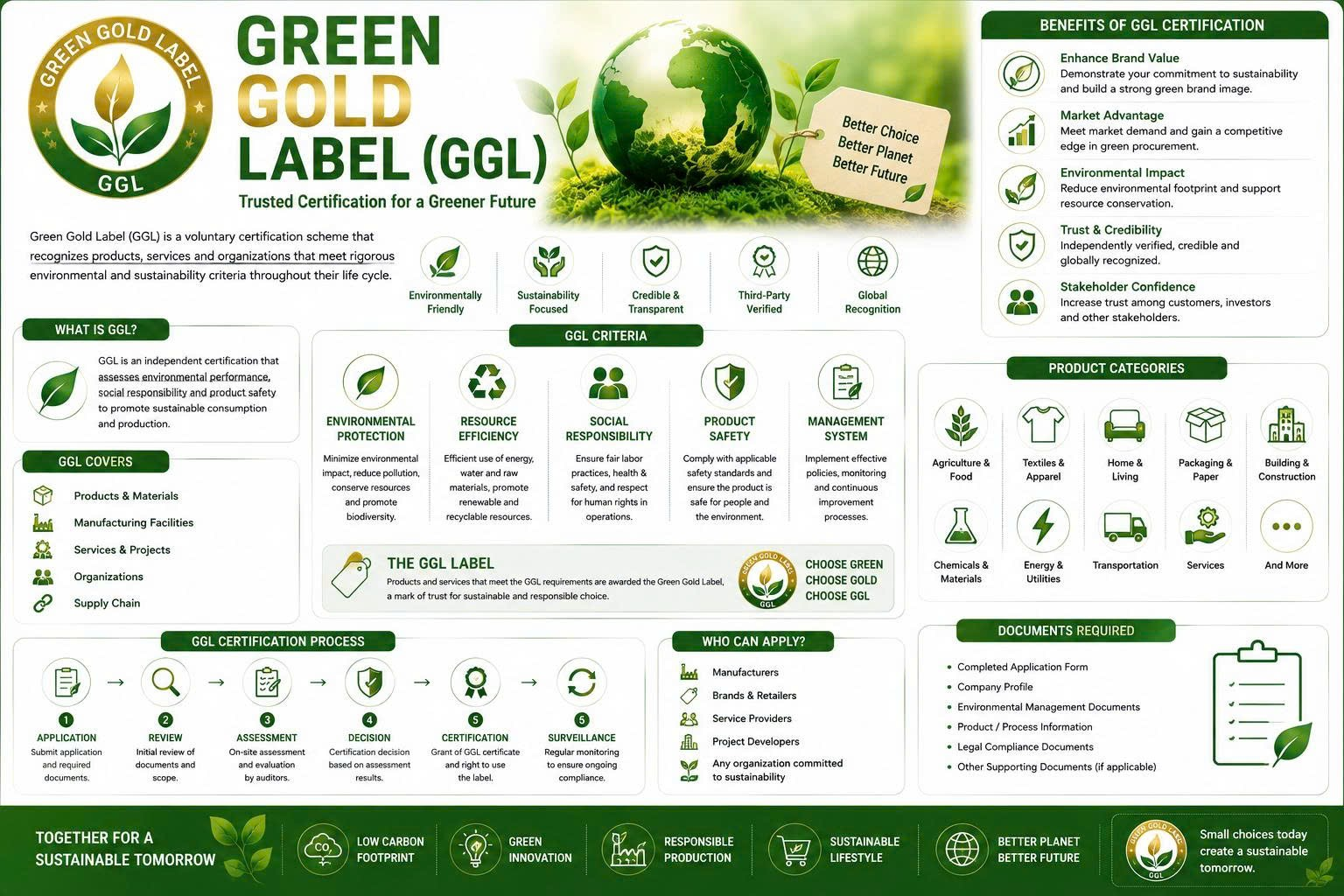
To overcome these barriers, the Green Gold Label (GGL) Certification is the most powerful “green passport,” serving as strong evidence of your enterprise’s sustainable development capabilities.
1. The Essence of the Green Gold Label (GGL) Certification System
Established in 2002, the Green Gold Label (GGL) is one of the oldest and most prestigious international certification systems dedicated exclusively to sustainable biomass for the energy and bio-based sectors.
Unlike standards that focus on a single segment, GGL provides a comprehensive monitoring framework covering the entire Chain of Custody (CoC). From the plantation or agricultural collection areas, through processing plants, to logistics (trading, transportation), and finally to the energy production plant—every link must be controlled, measured, and verified for sustainability.
The absolute strength of GGL lies in the GGLedger™ platform. All transactions involving certified biomass are declared online, ensuring 100% real-time traceability and completely eliminating the risk of commercial fraud.
2. Decoding the Strategic Benefits of GGL Certification
Investing in GGL certification is not just a compliance cost; it is a strategic investment that brings long-term value:
- Unlocking high-end export markets: GGL certification ensures your biomass products confidently meet strict purchasing standards (such as Japan’s FIT scheme or the EU’s Renewable Energy Directives).
- Elevating your ESG (Environmental, Social, and Governance) profile: GGL provides verifiable data, acting as powerful evidence to help your business score high in independent assessments by international clients.
- Optimizing operational & risk management: Implementing GGL requires businesses to systematize quality management, inventory records, and occupational safety, thereby minimizing material loss and accident risks.
- Staying ahead of the green transition: GGL requires Greenhouse Gas (GHG) Accounting, creating a perfect stepping stone for businesses to familiarize themselves with managing their carbon footprint within the supply chain.
3. “Bottlenecks” When Enterprises Implement GGL Independently
Despite understanding the importance of GGL, many biomass manufacturing plants still encounter major challenges that make the audit process lengthy, costly, or even unsuccessful:
- Traceability (CoC) crisis: Confusion in establishing physical boundaries and data flows to completely separate GGL and Non-GGL biomass.
- The “maze” of Greenhouse Gas (GHG) calculation: GGL’s requirement for calculating carbon emissions in production and transport (according to GGL 1a guidelines) demands an understanding of international standard methodologies and complex energy consumption data collection—skills that factories often lack.
- Lack of synchronization with existing systems: Building an entirely new, isolated GGL process causes redundancy and overlap with existing management systems, increasing the workload for employees.
4. In-depth GGL Consulting & Training Services from ISC Global
As a leading international standard training and certification partner, ISC Global is proud to offer a comprehensive, practical GGL consulting solution tailored to the specific scale of each factory.
We do more than just help you “pass the audit”; we build the most sustainable, optimized, and flexible operational system for your business.
Our Consulting Roadmap:
- Phase 1: Survey & Gap Analysis: ISC Global experts will visit your facility to assess current infrastructure, storage procedures, and legal records to pinpoint exactly what needs to be improved against GGLS1 and GGLS2/S5 standards.
- Phase 2: Traceability Management System (CoC) Design: We develop standard operating procedures (SOPs), forms, and work instructions to ensure the material flow is strictly controlled from the security gate to the point of export, fully complying with GGLedger™ requirements.
- Phase 3: GHG Accounting Expertization: We assist in setting up spreadsheets and procedures for collecting energy and fuel consumption data, accurately calculating CO2 equivalent emissions according to GGL standards, helping the factory overcome the most difficult technical hurdle.
- Phase 4: Training & Practical Operation: We conduct general awareness training for all employees (on occupational safety, material sorting) and in-depth training for the Internal Audit Team.
- Phase 5: Accompanying during the Certification Body (CB) Audit: We stand side-by-side with your business when the CB conducts the audit, representing you in technical explanations and guiding the thorough resolution of any Non-Conformities (NCs).
The ISC Global Difference – More Than Just GGL
ISC Global’s unique strength lies in our deep ecosystem of knowledge. Our GGL implementation is built on a foundation of holistic management thinking:
- Seamless ISO System Integration: We will skillfully integrate the GGL documentation structure with your existing platforms, such as ISO 14001 (Environmental Management), ISO 45001 (Occupational Health & Safety), and ISO 50001 (Energy Management), ensuring your administrative apparatus does not become bloated.
- Expanding the Vision for Sustainable Development: The GHG inventory capabilities established for GGL will be standardized by ISC Global according to international methodologies. This creates a solid foundation for your enterprise to build a Net Zero roadmap, set Science Based Targets (SBTi), and improve your sustainability scores on platforms like EcoVadis as requested by global partners.
Opportunities Don’t Wait for Delayed Steps!
Let the GGL certification system become your core competitive advantage in the global biomass supply race. Investing in GGL today is an investment in your world-class brand positioning for tomorrow.

Contact us to download the bilingual English-Vietnamese PDF standard: from only $50
On the path toward integration and export, correctly understanding and applying international standards is essential. Yet language and technical terminology often pose real barriers. We are pleased to introduce our bilingual (English – Vietnamese) standards documentation service, translated by our own team of certification consultants.
What We Provide
• A clause-by-clause bilingual comparison, easy to consult and file.
• Professional Vietnamese translation in correct technical terminology, ready to use.
• Interpretation notes and application guidance from hands-on experts.
• Fast delivery in editable, easy-to-store PDF/Word format.
Standards Covered
ISO management systems (9001, 14001, 45001, 37001); sustainability certifications (ISCC, FSC, VFCS/PEFC); textiles and recycled materials (GRS, OCS, OEKO-TEX); social responsibility and ESG (SMETA, EcoVadis, Fairtrade), and many other industry standards upon request.
Why Choose Us
Our documents are translated by professionals who directly consult on and audit certifications, so the translation is accurate not only in language but also in real-world application — saving you time and reducing errors when preparing documentation.
Pricing
From only USD 50 per document, depending on length and complexity. Please send us the standard name to receive a free, accurate quotation.
How to Order
1. Contact us with the name of the standard you need.
2. Receive a quotation and delivery time.
3. Make payment and receive your document by email.
Payment
Bank transfer via QR code (provided with the quotation), or via PayPal: ducluongservices@gmail.com.
We look forward to accompanying you on your certification journey.
Best regards,
CONTACT INFORMATION
Hotline: +84 933096426 – +84 868 591 260
Email:
Website:
No responses yet