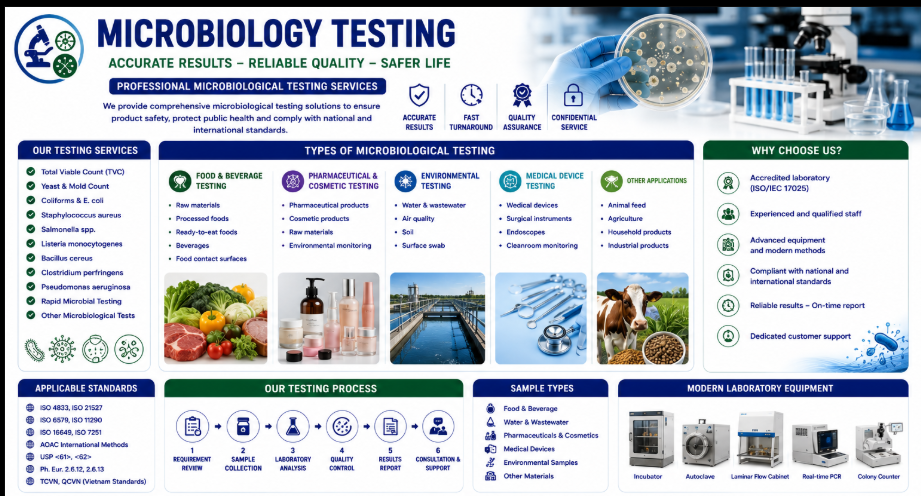
If your executive board and quality control (QA/QC) departments are still evaluating microbial cleanliness using traditional static agar plate culturing methods, or treating sterility certifications as mere end-of-line paperwork, you are operating high-precision hardware and premium product systems on the brink of total failure. In high-value manufacturing tiers demanding near-zero micro-tolerances—such as implantable medical devices, optoelectronic components, pharmaceuticals, and next-generation cosmetics—microorganisms are not merely agents of spoilage; they are complex biological destructive entities armed to collapse your export shipments under the stringent regulatory filters of the US FDA or European EMA.
A product lot can easily pass all mechanical impact evaluations and chemical chromatography scans, yet it will face immediate seizure and mandatory destruction at destination ports if the slightest trace of fungal hyphae or an out-of-bounds endotoxin load is detected.
The Micro-Pathogenicity Forensic Reference Frame: We do not wait for visible colony-forming units to sprout on a petri dish to diagnose a failure; we dissect biological data at the nucleic acid sequence and cellular receptor level. This sequence demands the mastery of wide-dynamic-range molecular amplification techniques: from Real-time Polymerase Chain Reaction ($Real\text{-}time\text{ }PCR$) to hunt down pathogen DNA/RNA, to kinetic chromogenic LAL assays to determine cell-wall endotoxin concentrations. A single microscopic biofilm structure adhering inside a facility’s ultra-pure water pipeline is enough to release millions of pyrogenic endotoxins ($Endotoxins$), stripping away the entire legal legitimacy of a finished product batch.
For Chief Technology Officers (CTOs) and Biosecurity Forensic Specialists, establishing a technocratic molecular microbiology barrier is the ultimate defensive weapon to eliminate emergency class-one product recalls and secure a sovereign passport into the world’s most hyper-regulated markets.
1. Microscopic Bottlenecks: Pathogenic Infiltration and Defensive Mechanisms Dismantling Product Integrity
Through structural biological failure analysis ($Biological\text{ }Failure\text{ }Analysis$) and industrial contamination crisis management, we have isolated 3 silent destruction mechanisms engineered by the micro-world:
- Chemical-Resistant Biofilm Shielding Mechanisms: Bacteria colonizing pipeline walls or machinery vectors secrete an extracellular polymeric substance (EPS) matrix that acts as an unbreachable defensive shield. This membrane neutralizes conventional chemical sanitizers, converting critical utilities into permanent reservoirs that continually release active bacteria (such as Pseudomonas aeruginosa) into product lines via massive cross-contamination loops.
- Pyrogenic Endotoxin Residuals via Thermal Stability: A classic factory misconception is trusting that a high-temperature autoclaving cycle ($\text{121}^\circ\text{C}$) or ultraviolet (UV) scanning completely eliminates microbial risks. In reality, while bacterial cells are inactivated, their lipopolysaccharide (LPS) cell walls shatter into highly heat-stable endotoxins. Upon contact with the human body via a medical component, they trigger dangerous pyrogenic shock responses, exposing the enterprise to criminal legal liabilities.
- Fungal Spore Latency and Mechanical Matrix Degradation: Dormant mold spores hide undetected inside corrugated carton packaging layers or raw materials with marginal moisture levels. During prolonged ocean transit through humid tropical climates, these spores wake up, establishing dense hyphal networks that consume polymer matrices, generate hazardous mycotoxins, and permanently degrade both the cosmetic aesthetics and structural properties of protective shells.
The consequence of these micro-bottlenecks is the immediate activation of Class I Recalls across global surveillance networks, forcing the enterprise to absorb hazardous bio-waste destruction costs while facing permanent contract termination by premium global buyers.
2. Technocratic Solutions: Locking Biosecurity Margins via Multi-Tier Molecular Filters
To completely neutralize biological variables, our forensic audit framework intervenes via high-fidelity molecular analytics, isolating biological risks through 4 closed-loop technical tollgates:
- Rapid Genomic Identification via Wide-Dynamic-Range Real-time PCR: Deploying gene amplification systems at the incoming quality control (IQC) bay to detect and identify target indicator pathogens (such as Salmonella, E. coli, and Staphylococcus aureus) at the molecular level within 3 hours, replacing the 5-day latency of traditional static plate cultures.
- Endotoxin Quantification via Kinetic-Chromogenic LAL Technology: Utilizing automated microplate readers paired with lysate reagents derived from horseshoe crab amebocytes to pin down pyrogen toxin loads down to fractions of an international unit ($0.1\text{ EU/mL}$), locking down absolute safety margins for sensitive hardware.
- Cleanroom Micro-Audits and Micro-Particle Mapping: Operating wide-dynamic-range air sampling arrays and surface adhesive tests (Swab Tests) to classify cleanroom environments from ISO 8 down to ISO 5, isolating the manufacturing line from human sheds and ambient micro-dust vectors.
- Digitization of the Digital Bio-Compliance Passport: Packaging PCR threshold cycle ($C_t$) curves, automated kinetic LAL plots, and sterility assurance credentials into a centralized digital technical passport, providing unassailable scientific proof to clear FDA and multinational healthcare procurement audits.
3. Bio-Economics: Converting Compliance Margins into Supply Chain Capital Surplus
Mastering molecular microbiology testing is not an idle laboratory overhead; it is an aggressive financial strategy that directly protects operating margins and capital turnover speeds on the factory floor:
| Risk Metric Indicators | Proactive Molecular Microbiology Governance | Operations Driven by Subjective Intuition |
| Inventory Hold & Clearance Lead Time | Shortens finished good quarantine times by $80\%$ via rapid molecular screening, accelerating the turnover velocity of enterprise working capital. | Cargo is marooned at warehouse docks for days awaiting static agar plates, ballooning logistics overhead and trapping cash flow. |
| Batch Scrap & Material Loss Rates | Detects cellular-level microbial shifts early to execute localized line containment, driving batch scrap rates below $0.1\%$. | Contamination is only unmasked post-packaging, forcing the total destruction of completed lots and incurring double material and energy losses. |
| Global Contract Acquisition Power | Secures certified ISO 17025 sterility and biosecurity data sets, clearing technical entry barriers for premium global supply chains. | Confined to low-tier commoditized domestic markets, facing constant export bans as international quarantine mandates tighten. |
4. Technical Action Roadmap: Phasing Biosecurity Controls from Raw Inputs to Component Core
Our microbiological risk management framework is integrated sequentially, embedding directly into the design and production architecture of the plant:
- Step 1 – HACCP & Bio-Hazard Mapping: Auditing the complete processing topology—from incoming process water and compressed air loops to direct contact tooling surfaces—to establish Critical Control Points (CCPs) against microbial ingress.
- Step 2 – Microbial Challenge Validation: Deliberately inoculating sample matrices with target strains to evaluate the anti-microbial efficacy of raw materials or to validate that sterilization cycles hit a minimum $6\text{-log}$ reduction threshold.
- Step 3 – Independent Certification via ISO 17025 Chambers: Running closed destructive testing procedures within absolute sterile zones to generate official microbiological and endotoxin technical files required for global regulatory filings (CE Mark, FDA 510k).
- Step 4 – Automated Clean-in-Place (CIP/SIP) Digital Locking: Digitalizing validation sensors for Clean-in-Place (CIP) and Sterilize-in-Place (SIP) systems, matching automated chemical and steam delivery to empirical bio-logs to neutralize human-error variables.
5. Driving Verifiable ESG Milestones via Microstructural Biosecurity Frameworks
Enforcing rigorous molecular microbiology testing represents an unalterable execution of a corporate ESG (Environmental, Social, Governance) roadmap backed by hard science:
- The Environmental Pillar (Environment): Isolating microbial vectors at the source eliminates the need for excessive, brute-force applications of toxic industrial biocides and aggressive disinfectants, lowering hazardous chemical discharge burdens on regional wastewater treatment facilities.
- The Social Pillar (Social): Guarantees absolute immunological safety for the end consumer against cross-infections or toxic shock syndrome, while maintaining a bio-secure workplace that shields the floor workforce from dangerous biological agents.
- The Governance Pillar (Governance): Replaces qualitative greenwashing narratives with unalterable, digitized molecular evidence that aligns with World Health Organization (WHO) protocols, maximizing corporate compliance scoring before global institutional investors.
Conclusion
Molecular microbiological and biological characterization is no longer a superficial quality control checkpoint tucked away at the tail end of a line. It is an elite technocratic capability that dictates legal sovereignty, financial margin safety, and international brand equity within the global technology value chain.
Commanding a hardware portfolio that controls microbial pathogenicity via an ironclad molecular testing matrix provides your business with a definitive passport across international borders. It insulates your export revenue from quarantine holdbacks and establishes your brand as a world-class, clean-tech supplier on the global stage.
Contact us today to receive dedicated advice and the most suitable solution for your business!
Hotline: +84 933096426 – +84 868 591 260
Email:
Website:
Partners in Vietnam:
Contact Vietnam representative: Duc Luong Services
Hotline: +84 933096426 – +84 868 591 260
Email: ducluongservices@gmail.com
Website:
STC VN Co., Ltd.
Hotline: +84 933096426 – +84 868 591 260
Email: info@staunchlyservices.com.vn
Website: https://stauchlyservices.com.vn

No responses yet